 GENOTT LTD Editorial Team
If you’ve ever built or rented in Lagos, Abuja, or Enugu or maybe other parts/cities in Nigeria, you already know the painful truth: electricity bills in Nigeria are rarely “just about PHCN.” They’re usually the result of design decisions—hot rooms that demand constant AC, roof spaces that trap heat, living rooms with poor airflow, and window choices that turn your house into a greenhouse. That’s why modern Nigerian house designs that reduce electricity bills are not a luxury trend—they’re a monthly survival strategy.
With Nigerians increasingly paying service-based tariffs (Band A–E) tied to supply hours and public reporting showing Band A pricing around ~₦209.5/kWh in recent tariff adjustments , the cost of “cooling mistakes” can compound quickly. The good news is that the biggest savings often come from passive design—orientation, shading, cross-ventilation, roof and ceiling strategy, and smart space planning—before you spend money on solar or appliances.
This pillar guide breaks down what works in Nigeria’s climates (North vs South), shows practical layout rules, and explains the upgrades that pay back fastest—while keeping the advice buildable, approval-aware, and investor-friendly.
SUMMARY TABLE
| Topic | Key Insight | Notes |
|---|---|---|
| Passive cooling | Reduce heat gain before you “buy power” | Shading + ventilation can lower indoor temps; studies show passive strategies can reduce indoor temperature on average ~2.2°C |
| Cross ventilation | Layout beats gadget spending | Plan airflow paths (inlets → outlets) |
| Roof strategy | Roof is Nigeria’s #1 heat entry point | Insulation + reflective roofing + attic ventilation |
| Windows | Glass choice can raise or reduce cooling load | Louvers + shaded windows often outperform big unshaded glazing |
| Solar-ready planning | Cheapest time to plan solar is during design | Conduit routes + inverter room + roof pitch |
| Cost vs savings | Prioritize “high-impact, low-regret” upgrades | Shade, roof insulation, ventilation first |
| Tariffs reality | Bills can rise with service bands and tariff changes | NERC explains band classifications by hours of supply |
Modern Nigerian House Designs: Why Energy-Smart Design Matters Now
Energy efficiency is no longer a Western talking point—it’s a Nigerian household economics issue. As tariffs and billing practices evolve under service-based banding and with reported tariff increases in recent years , a house that “runs hot” can force a family into:
-
More generator hours (fuel + maintenance)
-
Higher inverter/solar system sizes (bigger CAPEX)
-
Higher cooling appliance spending
-
Poor sleep and reduced comfort (especially in humid zones)
The investor angle is just as important: energy-efficient homes often see better rental desirability and buyer preference, especially in urban markets where tenants ask, “How hot is it? How much do you spend on power?”
So, modern Nigerian house designs that reduce electricity bills focus on one principle:
Stop heat before it enters; move air through the home; then power only what you must.
Step-by-Step Blueprint: How to Design a Low-Electricity Modern Nigerian Home
Step 1: Start With Climate Zone (North vs South Nigeria)
Nigeria is not one climate.
Hot-humid South (Lagos, PH, Warri, Calabar):
-
Moisture + humidity = discomfort even at lower temperatures
-
Priorities: ventilation, shading, moisture control, breathable finishes
Hot-dry / savannah belts (Abuja, Kaduna, Minna):
-
High daytime heat, cooler nights
-
Priorities: shading, roof insulation, thermal control, night purge ventilation
Mixed conditions (Enugu, Ibadan, Benin):
-
Rainy season humidity + dry season heat
-
Balanced approach: ventilation + roof strategy + drainage resilience
Step 2: Orientation and Site Planning to Reduce Heat Gain
Orientation is the cheapest “energy upgrade.”
Practical rules that work in Nigeria:
-
Minimize large glazing facing harsh sun directions
-
Use shaded verandas and buffer spaces on hot sides
-
Create shaded outdoor transition spaces (porches) so heat doesn’t “dump” into the living room
-
Keep kitchen heat away from bedrooms (zoning)
Research and design literature consistently emphasizes orientation, shading devices, and landscaping as major contributors to passive cooling in tropical contexts .
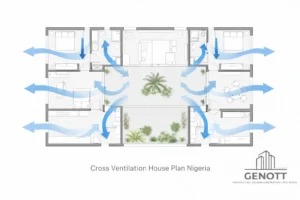
Step 3: Cross-Ventilation Layouts (The Nigerian Airflow Advantage)
Cross ventilation house plans in Nigeria work best when you design airflow intentionally:
What good cross-ventilation looks like
-
Openings on two sides of key rooms (inlet + outlet)
-
Clear airflow path (avoid dead-end corridors)
-
High-level vents or clerestories for hot air escape (stack effect)
Layout moves that increase airflow
-
Courtyard or lightwell (works well for tropical houses; courtyard studies link airflow behavior to improved indoor comfort )
-
Long living/dining axis with openings at both ends
-
Ventilated staircase zones in duplexes
-
Bedrooms with window + louvered vent or secondary opening
Common Nigerian mistake: large sliding doors on one side only, with sealed rooms elsewhere—beautiful, but still hot.
Step 4: Roof Design to Reduce Heat in Nigeria (Highest ROI Zone)
In many Nigerian homes, the roof and ceiling assembly is the biggest heat entry point.
High-impact roof strategies
-
Reflective roofing (reduce solar absorption)
-
Ceiling insulation (reduces heat transfer into rooms)
-
Attic/roof space ventilation (release trapped hot air)
Passive design guidance commonly highlights ventilating roof spaces and using insulation as key measures in tropical climates .
Design tip for modern Nigerian house designs:
Use a “ventilated roof” mindset:
-
Eaves vents + ridge vents (or turbine vents where appropriate)
-
Avoid sealing the roof space into a heat box
Step 5: Shading Systems (Overhangs, Fins, Verandas, Screen Walls)
Shading is your “free AC.”
What works well in Nigeria
-
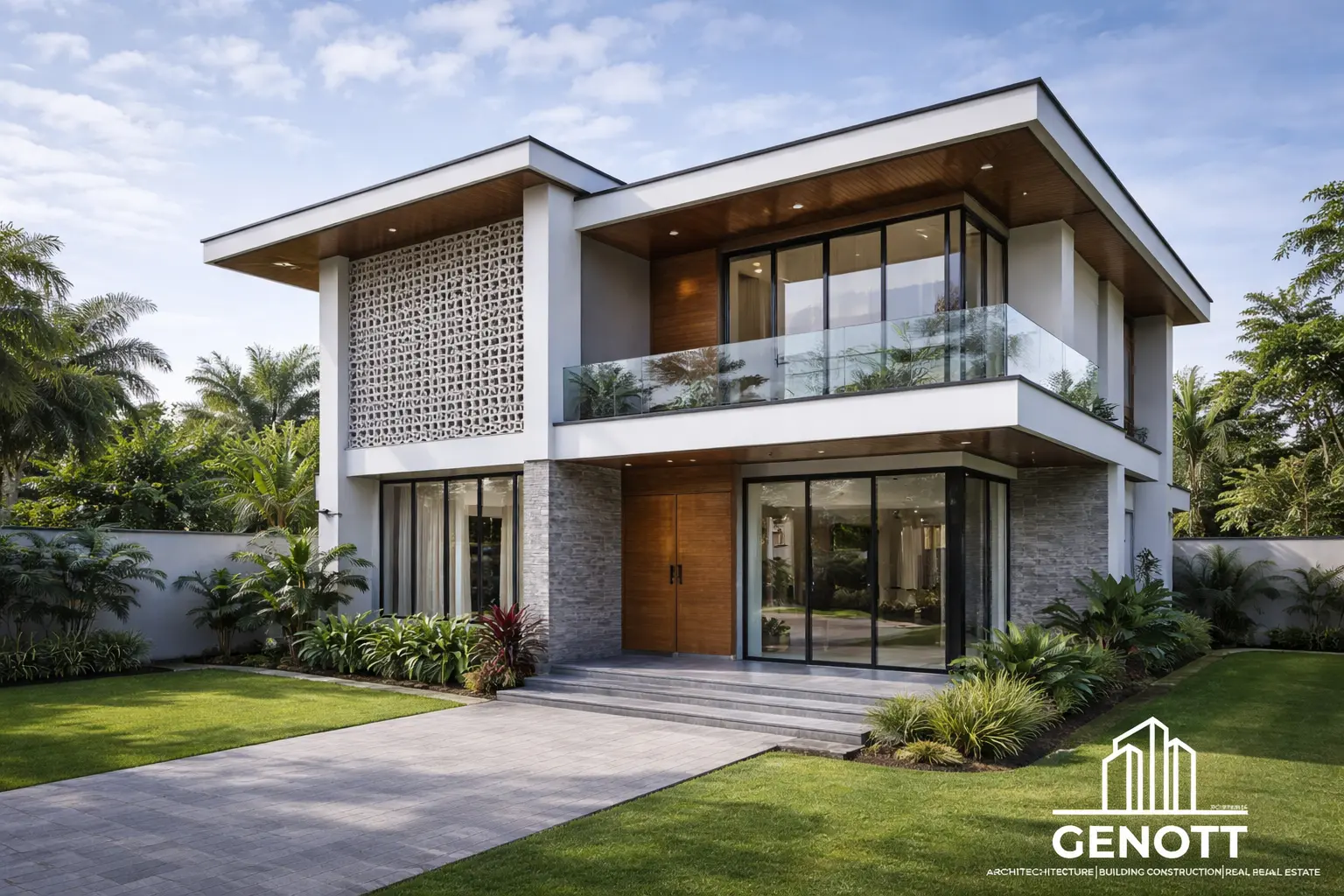
Deep overhangs over windows (especially upper floors)
-
Vertical fins for low-angle sun
-
Perforated screen walls (privacy + shade + airflow)
-
Wrap-around verandas in hot-humid zones
Orientation studies and passive design sources repeatedly emphasize overhangs and shading devices as major cooling contributors .
Step 6: Windows and Glazing Choices (Tinted Glass vs Louvers)
Energy efficient windows in Nigeria aren’t only about “expensive glass.” They’re about control.
Practical window strategy
-
Use shaded windows as first priority (shading beats glass upgrades)
-
Use operable windows for ventilation (not fixed glass everywhere)
-
Consider louvers for airflow in humid zones
-
Use tinted/low solar gain glazing strategically—not as a blanket solution
Reality check: big unshaded glazing can increase cooling demand even if it looks modern.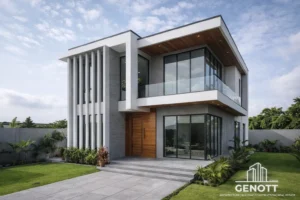
Step 7: Wall Systems and Thermal Mass (Blocks, AAC, Cavity Walls)
Walls matter, but roof and shading usually matter more first.
Options commonly used:
-
Sandcrete blocks + good external finish + shading
-
Cavity wall strategy in high-heat exposure areas
-
Light-colored external finishes (reduce heat absorption)
Investor lens: choose systems that local artisans can execute well. A “perfect” wall system installed poorly loses its benefits.
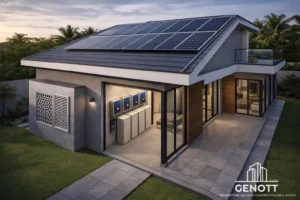
Step 8: Solar-Ready Home Design in Nigeria (Plan It Early)
Solar-ready design is one of the best “future-proof” moves because it reduces later rework.
Solar-ready planning checklist
-
Roof pitch/orientation planned for panels
-
Dedicated inverter/battery room with ventilation
-
Conduit routes (roof → inverter → distribution board)
-
Space for battery expansion and safe clearances
-
Lightning protection planning (risk management)
Solar/inverter equipment pricing in Nigeria varies widely by capacity and quality; published market references show broad bands for inverters and packages —another reason design-first efficiency reduces the size (and cost) of the system you’ll need.
Step 9: Efficient Lighting and Appliance Planning (Low Energy Lighting Design)
Lighting is a quick win:
-
LEDs throughout
-
Zoning circuits (don’t light the whole house for one room)
-
Outdoor lighting on sensors/timers
-
“Task lighting” for kitchens/workspaces
Also plan:
-
Fridge/freezer locations with ventilation
-
AC placement that supports airflow and avoids short-cycling
Cost vs Savings Analysis: What Pays Back Fastest in Nigeria?
Think in “payback logic,” not just aesthetics. The upgrades below are usually the best order of operations for reducing electricity bills in Nigeria.
| Upgrade | Typical Cost Impact | Savings Potential | Why It Works |
|---|---|---|---|
| Roof insulation + ceiling strategy | Medium | High | Cuts top-down heat load |
| Shading devices (overhangs/fins/screens) | Low–Medium | High | Prevents heat gain before it enters |
| Cross-ventilation planning | Low | High | Comfort without power (when climate allows) |
| Light-colored exterior finishes | Low | Medium | Reduces absorption |
| Solar-ready conduits + inverter space | Low | Medium | Avoids costly retrofits |
| Premium glazing everywhere | High | Medium | Better when paired with shading |
Investor note: In many Nigerian projects, the fastest returns come from roof + shade + ventilation, not from buying the most expensive glass or oversized solar systems.
Comparisons: “North vs South” Design Moves That Work
| Design Element | Hot-Humid South (Lagos/PH) | Hot-Dry North/Central (Abuja/Kaduna) |
|---|---|---|
| Priority | Ventilation + shade + moisture control | Shade + roof insulation + thermal control |
| Windows | Operable + louvers + protected openings | Controlled glazing + shading + night ventilation |
| Courtyard | Excellent for airflow | Useful for shade + cooler microclimate |
| Roof | Ventilated roof space + insulation | Strong insulation + reflective roof + venting |
| Landscape | Shade trees + drainage control | Shade trees + dust control |
Common Mistakes Nigerians Make (That Inflate Electricity Bills)
-
Designing for looks, not climate (giant glass façades with no shading)
-
Ignoring roof strategy (no insulation, no ventilation, dark roofing)
-
Sealing rooms that need airflow (single-sided openings)
-
Poor zoning (kitchen heat bleeding into living/bed zones)
-
Overreliance on AC as “design” instead of passive cooling
-
No solar-ready planning (later retrofits become expensive)
-
Skipping drainage/site planning (humid dampness increases discomfort and AC use)
Expert Recommendations
1) Design the house as an energy system
A modern home is a combination of:
-
Heat control (roof/walls/shade)
-
Air movement (ventilation paths)
-
Power strategy (solar-ready + efficient circuits)
2) Use a “cooling hierarchy”
-
Shade
-
Ventilate
-
Insulate
-
Efficient appliances
-
Solar/inverter
3) Build for Nigerian infrastructure realities
Plan for:
-
Water storage + pump power
-
Generator isolation and ventilation
-
Inverter/battery room safe ventilation
-
Maintenance access (don’t trap systems behind finished ceilings)
4) Document decisions early (avoid rework)
Use 3D and material schedules to lock:
-
Shading details
-
Window types
-
Roof buildup (insulation + venting)
-
Electrical zoning
Future Trends: Where Energy-Smart Nigerian Homes Are Going
-
More tropical modern house design in Nigeria (shade screens, verandas, courtyards)
-
“Solar-ready by default” layouts (conduit planning, inverter rooms)
-
Increased demand for passive thermal resilience as energy costs stay a key household pressure
-
More climate-based customization (Lagos vs Abuja vs Enugu design differences)
-
Stronger buyer preference for homes that “run cool” with lower monthly power spend
FAQs
1) What are modern Nigerian house designs that reduce electricity bills?
Homes that prioritize shading, ventilation, roof insulation/venting, and solar-ready planning—so cooling loads reduce before adding power systems.
2) Is passive cooling design in Nigeria really effective?
Yes. Passive strategies (shading, ventilation, orientation) can measurably improve indoor comfort; research reviews report average indoor temperature reductions around ~2.2°C from passive strategies.
3) What roof design helps reduce heat in Nigeria the most?
A reflective roof combined with ceiling insulation and a ventilated roof space (eaves/ridge venting) is typically high impact.
4) Should I use tinted glass or louvers in Nigeria?
It depends on the climate and shading. In hot-humid zones, operable louvers support ventilation; tinted glass helps but works best when windows are shaded.
5) How do I make my home solar-ready during design?
Plan roof areas for panels, reserve an inverter/battery room with ventilation, and run conduits from roof to electrical distribution points before finishing.
6) What’s the fastest payback upgrade for reducing electricity bills in Nigeria?
Often: roof insulation/ventilation plus shading devices—because they reduce the need for AC or long generator hours.
7) Do electricity supply bands affect my monthly bill?
Yes. NERC’s service-based tariff bands classify customers by minimum hours of supply (Band A–E).
8) Can these strategies work in Lagos and Abuja alike?
Yes, but details change: Lagos needs humidity-friendly ventilation and moisture control, while Abuja benefits strongly from roof insulation, shading, and night ventilation.
CONCLUSION
Modern Nigerian house designs that reduce electricity bills are not about buying expensive technology first—they’re about architectural control. When you get orientation, shading, ventilation, and roof strategy right, the house naturally runs cooler and needs less AC, generator time, or oversized solar systems. That’s a monthly savings strategy for families and a value strategy for developers.
If you’re building in Lagos, Abuja, Enugu, Ibadan, or Port Harcourt, start by designing the building envelope and airflow like an energy system. Then add solar and efficient equipment as “amplifiers,” not as repairs for a hot design.
For professional support, GENOTT LTD provides expert guidance in energy-smart architectural design, climate-responsive planning, solar-ready layouts, 3D visualization, and construction-ready documentation—helping Nigerians build homes that are comfortable, modern, and cheaper to power.

 GENOTT LTD Editorial Team