 GENOTT LTD Editorial Team
Understanding how to budget a building project in Nigeria is therefore essential for anyone planning residential or commercial construction. One of the biggest reasons building projects fail in Nigeria is not only poor design, substandard material or lack of labour — it is poor financial planning. Many developers and individuals begin construction with rough estimates instead of structured budgeting strategies, only to discover halfway through that costs have exceeded expectations.
To successfully budget a building project in Nigeria, you must:
-
Define your project scope clearly.
-
Break costs into construction stages.
-
Estimate cost per square meter.
-
Allocate funds based on project phases.
-
Include a contingency reserve of 10–20%.
-
Monitor expenses weekly.
Builders who follow structured financial planning rarely abandon projects due to lack of funds.
QUICK SUMMARY TABLE
| Budget Stage | Key Action | Why It Matters |
|---|---|---|
| Planning | Define project scope | Prevent cost surprises |
| Cost Breakdown | Allocate per stage | Control spending |
| Professional Fees | Include early | Avoid delays |
| Contingency Fund | Reserve 10–20% | Manage inflation |
| Monitoring | Weekly reviews | Prevent overspending |
Why Budgeting is Critical in Nigerian Construction
Building projects in Nigeria fail primarily due to poor cost planning rather than technical challenges. Factors unique to Nigeria include:
-
Rapid material price changes.
-
Exchange rate fluctuations.
-
Labour availability differences between cities.
-
Government approval processes.
For example:
Building costs in Lagos are often higher than Enugu, Nasarawa, Ibadan etc due to logistics and labour demand.
Without structured construction cost management Nigeria builders risk delays, disputes, and abandoned projects.
STEP-BY-STEP: How to Budget a Building Project in Nigeria
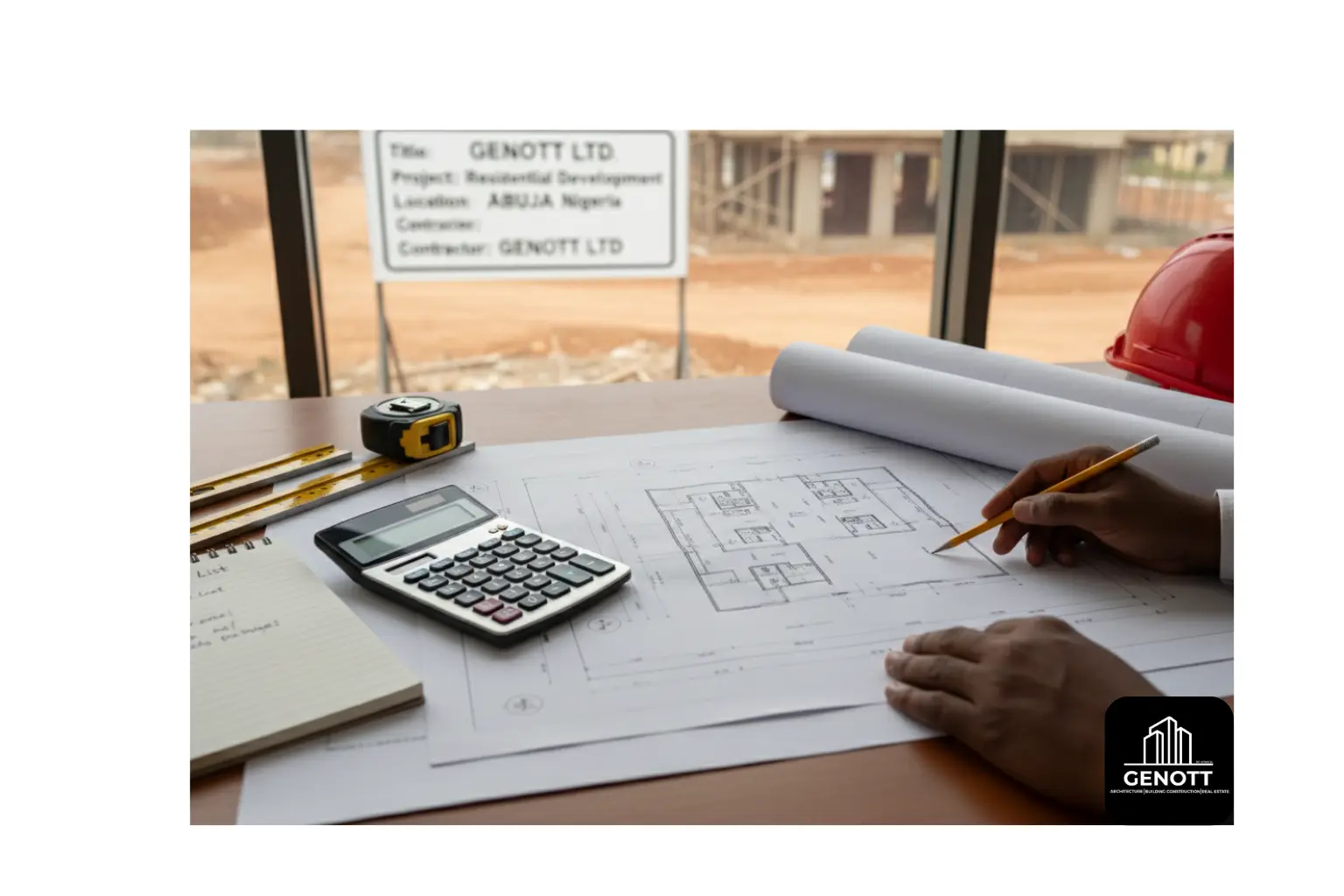
1. Define Scope and Design Early
Start with:
-
Architectural drawings.
-
Structural plans.
-
Building size and finishing level.
Clear scope prevents uncontrolled spending.
2. Create a Building Project Cost Breakdown
Divide into phases:
-
Land preparation.
-
Foundation.
-
Structural work.
-
Roofing.
-
Finishing.
-
Furnishing.
Phase budgeting improves financial clarity.
3. Estimate Construction Cost Per Square Meter
Typical Nigerian range:
₦250,000 – ₦450,000 per sqm.
This provides early budget projection.
4. Include Professional and Approval Costs
Budget for:
-
Architect.
-
Structural engineer.
-
Quantity surveyor.
-
Building plan approval process fees.
Skipping professional services often increases long-term cost.
5. Establish a Building Contingency Fund
Reserve:
10–20% of total budget.
Protects against:
-
Price inflation.
-
Site surprises.
-
Design modifications.
6. Monitor Budget Continuously
Best practice:
-
Weekly cost tracking.
-
Compare planned vs actual spending.
Realistic Cost Allocation Framework
| Stage | Budget Allocation |
|---|---|
| Foundation | 15–20% |
| Structure | 30–35% |
| Roofing | 10–15% |
| Finishing | 30–40% |
| Furnishing | Variable |
Budgeting Strategies Compared
| Strategy | Benefit | Risk |
|---|---|---|
| Lump-sum budgeting | Simple planning | Less flexibility |
| Phase-based budgeting | Better control | Needs tracking |
| Direct labour budgeting | Cost savings | Requires expertise |
Common Budgeting Mistakes Nigerians Make
-
Starting without full budget.
-
Ignoring contingency planning.
-
Underestimating finishing and furnishing cost.
-
Hiring cheapest artisans without supervision.
-
Not tracking expenses regularly.
FAQs
1. How do I budget construction costs accurately in Nigeria?
Use architectural drawings, cost per square meter estimates, and phase-based budgeting.
2. What percentage should contingency funds be?
Between 10% and 20% depending on project complexity.
3. Can building projects be completed without running out of money?
Yes — with strict budget monitoring and realistic planning.
4. Should I build in phases?
Yes, especially if funding is incremental.
Expert Recommendations
-
Hire quantity surveyors for cost estimation.
-
Avoid luxury finishes during structural phase.
-
Monitor building materials cost weekly.
-
Document contractor agreements clearly.
-
Plan cash flow before starting foundation.
Future Trends in Construction Budgeting
-
Digital cost tracking tools.
-
Modular construction methods.
-
Energy-efficient materials reducing long-term cost.
-
Integrated development planning.
Conclusion
Learning how to budget a building project in Nigeria is the most important step toward successful construction. Strategic financial planning, realistic cost estimation, and continuous monitoring allow builders to complete projects without financial strain. With proper budgeting structures, construction becomes predictable, manageable, and financially sustainable.
For professional architecture, construction planning, and integrated project budgeting tailored to Nigerian conditions, GENOTT LTD provides expert guidance from concept to completion.

 GENOTT LTD Editorial Team