 GENOTT LTD Editorial Team
Choosing duplex vs bungalow in Nigeria is one of the most expensive “design decisions” Nigerians make—because it quietly determines your land requirement, foundation type, roof cost, construction timeline, and long-term maintenance. Many people assume a bungalow is always cheaper, or a duplex is always “more premium.” In reality, the cheaper option depends on your plot size, your city, your soil, your roof strategy, and your intended use (family living, rental income, short-let, or estate development).
Nigeria’s 2026 building environment adds pressure: material prices remain volatile (cement has been widely reported in the ~₦10,500–₦12,500/bag range in 2025 depending on location and brand). Inflation trends and FX conditions also shape costs—meaning wrong assumptions can blow budgets mid-project.
This guide breaks the decision down like a developer: CAPEX (construction cost) vs OPEX (running cost), land planning and approvals, foundations and structural systems, roof/ceiling costs, space efficiency, timelines, and what typically performs better in Lagos, Abuja, and Enugu for resale and rental income. If you want a build that stays financially sane from drawing to handover, start here.
SUMMARY TABLE
| Topic | Key Insight | Notes |
|---|---|---|
| Cheapest build “on paper” | Many bungalows cost less per project, but not always per m² | Depends on roof type, span, finishes |
| Land efficiency | Duplex wins on tight plots | Smaller footprint; more floor area upward |
| Foundation cost | Soil and structural system decide the winner | Duplex loads can increase reinforcement demand |
| Roofing cost | Bungalow often pays more for roof area | Larger footprint usually means larger roof coverage |
| Timeline | Bungalow can finish faster | Duplex adds stairs, upper floor works |
| Maintenance | Duplex may have more systems | But bungalow roof can be more complex/costly to maintain |
| Lagos/Abuja ROI | Duplex often performs well in premium markets | Better resale perception; more lettable rooms |
| Material volatility | Cement and major inputs fluctuate | Cement reported ~₦10,500–₦12,500/bag in 2025 |
Duplex vs Bungalow in Nigeria (What You’re Really Deciding)
When people compare duplex vs bungalow in Nigeria, they’re usually comparing “two floors vs one floor.” But the real decision is about how your money is distributed:
-
Land (plot size, setbacks, access, drainage)
-
Substructure (soil, foundation type, reinforcement)
-
Superstructure (blockwork/frames, slabs, columns)
-
Roof (area, complexity, insulation/ceiling)
-
MEP (plumbing/electrical routing across floors)
-
Finishes (tiles, paint, doors, windows—often the biggest variable)
-
Approvals and compliance (planning authority requirements, documentation sets)
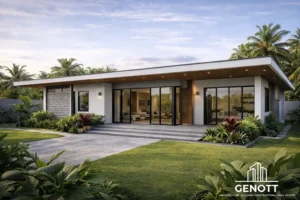
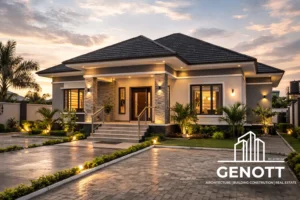
A bungalow can be cheaper if the footprint is compact and the roof is simple. A duplex can be cheaper for the same total floor area if land is expensive or limited—because it stacks space vertically.
So the question “which is cheaper to build duplex or bungalow in Nigeria?” must be answered with: cheaper for what size, on what land, in which city, and for what purpose?
Step-by-Step Decision Framework: How to Choose (Developer Logic)
Use this 6-step filter before you pick a design:
Step 1: Define your goal
-
Family living (comfort, privacy, aging-friendly?)
-
Rental income (number of lettable rooms/units?)
-
Short-let (aesthetics + power/water resilience + parking?)
-
Estate development (repeatability + cost control?)
Step 2: Confirm your land reality
-
Plot size (e.g., 450–600sqm common in many layouts, but varies widely)
-
Setbacks required by your planning authority/estate rules
-
Access and drainage constraints (especially Lagos flood-prone zones)
Step 3: Decide your floor area target
Example:
-
3-bedroom bungalow: often ~120–160sqm (varies)
-
4-bedroom duplex: often ~200–300sqm (varies)
Step 4: Test soil and foundation implications
A geotechnical check is not luxury—it prevents foundation surprises.
Step 5: Price the “big cost drivers” (not just blocks)
-
Roof + ceiling
-
Reinforcement + concrete
-
Windows/doors
-
Plumbing and electrical scope
-
Finishes level (standard vs mid vs premium)
Step 6: Model the resale/rent upside
A duplex can yield higher rent, but only if the market pays for it.
Cost Drivers in Nigeria (2026): Materials, Labour, FX & Inflation
The biggest reason Nigerians struggle with budgeting is assuming prices are stable. They’re not.
Key drivers:
-
Materials: cement, steel, roofing sheets, tiles, electricals
-
Cement was reported in 2025 around ₦10,500–₦12,500 per 50kg bag depending on location/brand.
-
-
Inflation and index changes: Nigeria’s inflation reporting and levels have shifted with methodology updates and recent readings around 15.10% (January 2026) reported in Nigerian media and trackers.
-
FX exposure: many finishing items (tiles, sanitary ware, fittings, elevators in rare cases) have import-linked pricing; macro assumptions cited in policy reporting include exchange rate expectations around ₦1,400/$ in 2026 scenarios.
-
Labour: varies by city and season; labour scarcity spikes during peak building season
Practical budgeting rule (Nigeria): Build a buffer (10–20%) into your estimates and avoid long “stop-start” construction that amplifies price increases.
Land Requirements: Plot Size, Setbacks & Planning Approvals
Land size required for duplex vs bungalow Nigeria
-
Bungalow: needs more land for the same number of rooms because everything spreads horizontally (bigger footprint).
-
Duplex: can fit larger floor area on smaller plots because footprint is smaller.
Why approvals matter
You can have a “perfect design” that fails at planning approval if:
-
setbacks are violated
-
parking is inadequate (especially for terraces/duplexes in estates)
-
drainage discharge is poorly planned
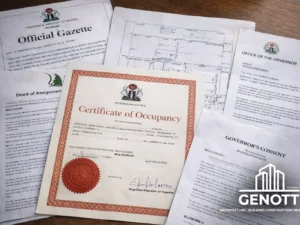
For formal approvals, authorities often require multiple sets of drawings signed by professionals. For example, FHA Abuja guidance mentions submitting multiple sets of architectural drawings signed by an architect registered to practice in Nigeria.
Legal/practice summaries also describe building plan approval processes and typical documentation categories (title evidence, drawings, fees), though requirements vary by state.
Investor note: When land is tight (parts of Lagos and Abuja), duplex solutions often reduce approval stress because you can meet setbacks while achieving floor area.
Foundation & Structural Costs: Load-Bearing Walls vs Reinforced Concrete Frames
This is where “duplex is always more expensive” can become wrong.
Foundation cost for duplex vs bungalow
-
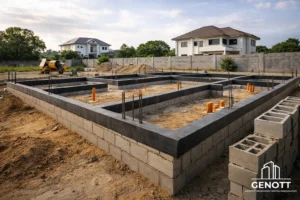
Duplex foundations may be heavier due to higher loads and sometimes demand more reinforcement, depending on structural system and soil.
-
Bungalows can still become expensive if:
-
the design has wide spans
-
the soil is weak (needing raft/piles)
-
the footprint is large (more foundation length)
-
Structural systems you’ll see in Nigeria
-
Load-bearing blockwork (common in smaller bungalows)
-
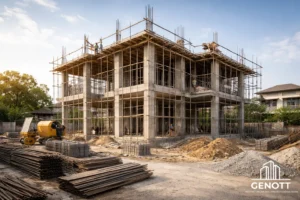
Reinforced concrete frame (columns/beams/slab—common for duplexes and larger buildings)
Decision point: If your bungalow is large (wide footprint) and your duplex is compact (smaller footprint), the duplex may not be as structurally cost-prohibitive as people assume—especially if soil conditions are favourable.
Roofing & Ceiling Costs: Bungalow Roof Complexity vs Duplex Roof Area
Roofing cost for bungalow vs duplex Nigeria is one of the most misunderstood comparisons.
Why bungalows often pay more for roofing
-
Roof cost scales with roof area and complexity.
-
A bungalow typically has a larger roof footprint because the building footprint is larger.
-
Roof geometry (hips/valleys/gables) increases timber and sheet wastage.
Duplex roof reality
-
Duplex footprint is smaller → roof area can be smaller
-
But duplex may add parapets, balconies, gutters, and more detailing
Rule of thumb: If you’re building the same total floor area, a duplex often has lower roof area than a bungalow—one reason duplexes can compete on cost.
Space Efficiency: Footprint vs Vertical Building Advantages
Bungalow advantages
-
Elder-friendly (no stairs)
-
Easy movement and single-level living
-
Often faster to build for smaller sizes
Duplex advantages
-
Better privacy zoning (public downstairs, private upstairs)
-
Strong for large families
-
Better land efficiency in tight urban plots
-
Often more “premium perception” in many Lagos/Abuja buyer segments
Construction Timeline Comparison: Bungalow vs Duplex Build Duration
Time matters because delays = inflation exposure.
Typical timeline logic
-
Bungalow: fewer structural stages (no upper floor slab) → can finish earlier
-
Duplex: adds slab casting, stairs, upper-level blockwork/finishes → longer
But: a bungalow with complex roof geometry and extensive footprint can still drag.
Planning tip: Your biggest time savings come from:
-
completing design and approvals before site works
-
using accurate BOQ and scheduling procurement early for high-volatility items
Running Costs: Maintenance, Repainting, Plumbing & Future Upgrades
Duplex vs bungalow maintenance cost Nigeria depends on detailing and materials more than “floors.”
Bungalow maintenance tends to include:
-
Roof maintenance (bigger roof = more exposure)
-
External repainting (bigger perimeter walls)
Duplex maintenance tends to include:
-
More plumbing vertical runs (risk if poor workmanship)
-
Stair finishes and railing maintenance
-
Potentially higher repainting cost if façade is complex
Reality: The biggest maintenance cost driver is poor construction quality, not typology. Good detailing reduces both.
Rental and Resale Value: What Performs Better in Lagos, Abuja, Enugu?
Lagos
-
Duplexes often perform well in premium corridors (Lekki axis, mainland estates) because buyers pay for:
-
perceived status
-
multiple living spaces
-
future flexibility (short-let, staff quarters, home office)
-
Abuja
-
Duplexes do well in many districts where privacy zoning and premium finishing drive value; however, well-designed bungalows also perform strongly in certain estates where buyers want single-level living.
Enugu
-
Market is mixed; bungalows can sell fast if well-laid out and affordable; duplexes perform well where land is limited or the target buyer prefers “executive” housing.
Investor note: If rental income is your priority, duplex options often allow:
-
more rooms
-
optional subdivision (mini-flat/BQ strategy)
-
higher rent bands when finishing and location match demand
Best Use Cases: Family Living, Short-Let, Student Housing, Estate Development
| Use Case | Usually Better | Why |
|---|---|---|
| Elder-friendly family home | Bungalow | No stairs, easier living |
| Large family privacy zoning | Duplex | Separation of public/private areas |
| Short-let premium target | Duplex (often) | Multiple lounges, room count, “premium feel” |
| Student housing | Depends | Bungalow can be efficient as clusters; duplex can maximize rooms per plot |
| Estate development | Both | Bungalows = affordability; duplex = density/value per plot |
Cost Analysis (Nigeria 2026): Practical Ranges & What They Mean
Because Nigeria’s prices vary by location, specification, and timing, treat these as planning bands—not fixed quotes.
Indicative construction cost per sqm (context)
Some Nigeria-focused cost guides and market summaries in 2025–2026 cite bands like ~₦65,000–₦90,000/m² for standard-to-mid range residential builds depending on city and finishes, with duplex totals often higher due to larger area. (Use as directional only; verify locally.)
Duplex vs bungalow cost comparison (how to model it properly)
Compare same total floor area to avoid misleading results.
Example framing:
-
200sqm bungalow (large footprint) vs 200sqm duplex (smaller footprint, two floors)
Common outcome patterns:
-
Bungalow may spend more on roofing and foundation length
-
Duplex may spend more on reinforcement, slab, and stair structure
-
Finishes can swing either one massively (windows, tiles, doors, fittings)
Best practice: price both options from a BOQ prepared from drawings.
Comparisons & Alternatives: Decision Table Nigerians Can Use
| Decision Factor | Bungalow Often Wins | Duplex Often Wins |
|---|---|---|
| Tight plot size | ❌ | ✅ |
| Same floor area at lower roof area | ❌ | ✅ |
| Elder-friendly | ✅ | ❌ |
| Faster build (small sizes) | ✅ | ❌ |
| Higher rental income potential | Sometimes | Often |
| Premium perception in urban markets | Sometimes | Often |
| Lower structural complexity | ✅ | ❌ |
Common Mistakes Nigerians Make When Choosing Duplex vs Bungalow
-
Comparing a small bungalow to a large duplex (unfair comparison)
-
Ignoring setbacks and parking in the design stage
-
Underestimating roof cost in bungalows (big footprint = big roof)
-
Skipping soil investigation (foundation surprises)
-
Choosing based on “status” instead of market demand
-
No working capital buffer for price changes (cement/steel swings)
-
Poor MEP planning (plumbing/electrical reroutes during construction)
Expert Recommendations : What Professionals Do Differently
-
Start with land + approvals reality
Confirm setbacks, access, drainage routes, and planning authority expectations early. -
Compare like-for-like floor areas
Model costs per sqm and total cost for the same usable floor area. -
Use a roof-first strategy
If bungalow: simplify roof geometry (reduce valleys/hips), plan insulation/ceiling
If duplex: design roof + parapets + gutters to avoid leakage maintenance -
Price by BOQ, not guesswork
Your BOQ should reflect specification level and local market conditions. -
Match typology to your city and buyer profile
Lagos premium rental: duplex often fits
Family comfort + simplicity: bungalow often fits
Tight land: duplex often fits
Future Trends (2026+): What Will Influence Duplex vs Bungalow Decisions
-
Continued focus on land efficiency near major cities
-
Rising interest in energy-smart design (cool roofs, shading, ventilation)
-
Better demand for flexible layouts (home office, short-let adaptability)
-
More cost pressure from macro variables (inflation and FX assumptions affect imported finish items)
FAQs
1) Which is cheaper to build: duplex or bungalow in Nigeria?
It depends on total floor area, roof design, soil/foundation requirements, and finishes. Compare like-for-like sizes using a BOQ.
2) Does a bungalow always have a cheaper foundation?
Not always. A large bungalow footprint can increase foundation length and cost—especially on weak soil.
3) Why is bungalow roofing sometimes more expensive?
Because bungalows often have larger roof coverage for the same usable area, and complex roof geometry increases timber and sheet wastage.
4) Which needs more land: duplex or bungalow?
A bungalow usually needs more land for the same number of rooms because everything sits on one floor; duplexes are more land-efficient.
5) Which is better for rental income in Nigeria?
Often a duplex, because it can offer more rooms and flexible layouts—especially in Lagos and Abuja—if the market supports the rent level.
6) Does a duplex cost more to maintain?
Not automatically. Maintenance depends more on workmanship and detailing. Duplexes can have more plumbing/electrical runs; bungalows can have larger roof exposure.
7) Do I need approvals for both bungalow and duplex?
Yes. Requirements vary by location. Some authorities require multiple sets of signed architectural drawings for approval processes.
8) How do materials and inflation affect building cost in 2026?
Material costs can shift quickly; cement has been widely reported around ₦10,500–₦12,500/bag in 2025 depending on location, and inflation trends influence overall building inputs.
CONCLUSION
The best way to decide duplex vs bungalow in Nigeria is to stop thinking in stereotypes and start thinking in systems: land efficiency, foundation realities, roof area, approvals, timeline, and the market you want to sell or rent to. Many bungalows are cheaper for small family homes and speed-to-finish. Many duplexes become smarter where land is tight, privacy is needed, and rental/resale value rewards extra rooms and vertical planning.
If you model both options with the same usable floor area, price with a BOQ, and plan approvals early, the “cheaper” choice becomes obvious—because it will match your land, your budget discipline, and your buyer/tenant market.
For professional support, GENOTT LTD provides expert guidance in architectural design, BOQ and cost modeling, approvals documentation, and construction delivery planning—helping you choose and build the right option (duplex or bungalow) with cost control, compliance, and long-term value.

 GENOTT LTD Editorial Team