 GENOTT LTD Editorial Team
A 32-year-old Lagos banker earning ₦450,000 monthly purchased her first ₦8.5M plot in Ibeju-Lekki in 2015 using aggressive savings. By 2025, that land appreciated to ₦48M—a 465% return. She now owns a ₦180M property portfolio generating ₦1.2M monthly passive income, built entirely from salary savings and strategic reinvestment.
This isn’t exceptional luck—it’s systematic application of proven real estate investment strategies in Nigeria that transform modest capital into generational wealth. Nigeria’s market offers extraordinary opportunities: 15-30% annual appreciation in emerging corridors, 6-8% rental yields in middle-market properties, and infrastructure-driven 300-500% land appreciation over 5-10 years.
This guide reveals exact real estate investment strategies in Nigeria that consistently build wealth: buy-and-hold rental income generation, land banking in infrastructure corridors, fix-and-flip renovations, commercial property investments, and portfolio scaling. Whether starting with ₦3M or ₦50M, these proven approaches provide clear pathways from initial investment to ₦100M+ portfolios.
QUICK SUMMARY
| Investment Strategy | Initial Capital | Expected Returns | Timeline | Risk Level | Best For |
|---|---|---|---|---|---|
| Buy-and-Hold Rental | ₦15M-₦50M | 5-8% yield + 10-15% appreciation | 3-10 years | Low-Moderate | Passive income seekers |
| Land Banking | ₦3M-₦15M | 200-500% over 5-10 years | 5-10 years | Moderate-High | Patient investors |
| Fix-and-Flip | ₦10M-₦30M | 20-40% per transaction | 6-18 months | Moderate-High | Active investors |
| Commercial Property | ₦30M-₦200M+ | 8-15% rental yield | 3-10 years | Moderate | High-capital investors |
| REITs/Fractional | ₦50,000-₦500,000 | 8-12% annual dividends | 1-5 years | Low-Moderate | Small-capital beginners |
Why Real Estate Investment Strategies in Nigeria Outperform Most Wealth-Building Methods
Nigerian real estate delivers advantages rare globally: double-digit appreciation (10-30% annually in growth areas), tangible inflation-resistant assets, leverage opportunities, tax deductions, and passive rental income. Compare this to stock market volatility (All-Share Index -40% in 2015-2016) or fixed deposits yielding 5-12% while inflation runs 15-25%.
Wealth Multiplication Example:
₦20M Ajah property (2020) with ₦12M cash + ₦8M developer financing:
- 2025 value: ₦42M (110% appreciation)
- Cumulative rental profit: ₦2.8M
- Total wealth created: ₦24.8M
- ROI: 206% in 5 years (41% annually) on ₦12M investment
Nigerian Advantages: Infrastructure projects (Lekki Deep Sea Port, Lagos-Ibadan Expressway) create predictable appreciation corridors. Growing professional class (10M+ earning ₦300K-₦2M monthly) drives sustained rental demand. Real estate preserves value during Naira devaluation—while currency depreciated 40%+ (2015-2025), prime Lagos properties appreciated 150-250%.
The 5 Core Real Estate Investment Strategies for Nigerian Wealth Builders
Strategy 1: Buy-and-Hold Rental Property
Investment Thesis: Purchase quality residential property in high-demand locations, rent to professionals, collect monthly cash flow while building equity.
Target: 2-3 bedroom apartments in Ajah, Sangotedo, Lekki Phase 2 (Lagos); Gwarinpa, Jahi, Lugbe (Abuja). Price: ₦25M-₦50M.
Financial Model (₦35M Property):
Investment:
- Purchase: ₦35M
- Acquisition costs: ₦1.5M
- Initial renovation: ₦2M
- Total: ₦38.5M
Annual Performance:
- Monthly rent: ₦350,000
- Gross rental: ₦4.2M (12% yield)
- Expenses (maintenance, management, tax, vacancy): ₦1.2M
- Net cash flow: ₦3M (7.8% net yield)
5-Year Projection:
- Appreciation (12% annually): ₦61.7M value
- Cumulative rental profit: ₦15M
- Total wealth: ₦38.2M gain (99% ROI)
Success Factors: Strong employment base location, quality property, professional tenant screening, competitive pricing.
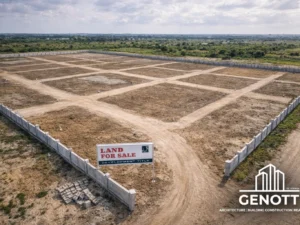
Strategy 2: Land Banking in Infrastructure Corridors
Investment Thesis: Purchase land 5-10km ahead of urban expansion, hold 5-10 years as infrastructure develops, sell at 3-10x appreciation.
Target Locations (2026):
- Lagos: Ibeju-Lekki (₦3M-₦12M), Epe (₦2M-₦8M), Ikorodu (₦4M-₦15M)
- Abuja: Karshi/Kuje (₦2.5M-₦8M), Kwali (₦1.5M-₦5M)
Case Study—Early Lekki (2008-2018):
- 2008 purchase: ₦800,000 (Ibeju-Lekki 500sqm)
- Holding costs: ₦50,000 annually
- 2018 value: ₦15M-₦25M
- Return: 1,050-1,823% (10-18x)
Risk Mitigation: Diversify across 3-5 plots, verify infrastructure funding in government budgets, invest only affordable loss capital (10-20% of portfolio), plan 7-10 year minimum hold.
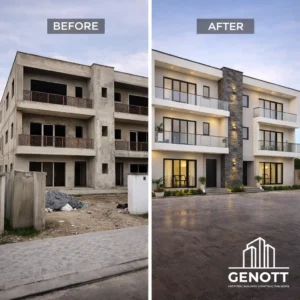
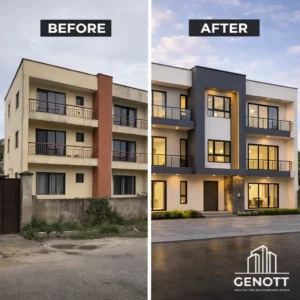
Strategy 3: Fix-and-Flip Renovation
Investment Thesis: Buy undervalued properties needing cosmetic renovation, renovate strategically, sell at market rate for 20-40% profit in 6-18 months.
Surulere Example:
Acquisition:
- Market value (renovated): ₦32M
- Purchase (distressed): ₦22M (31% below market)
- Acquisition costs: ₦800,000
- Total: ₦22.8M
Renovation:
- Kitchen/bathrooms: ₦2.5M
- Flooring: ₦1.8M
- Painting: ₦800,000
- Electrical/plumbing: ₦1.2M
- Security: ₦900,000
- Total: ₦7.2M
Sale:
- Post-renovation value: ₦35M
- Selling costs: ₦1.5M
- Net proceeds: ₦33.5M
- Profit: ₦3.5M (11.7% in 10 months, ~14% annualized)
Critical Success: Accurate valuation, budget discipline (20-25% of purchase), contractor management, market timing.
Strategy 4: Commercial Real Estate
Investment Thesis: Commercial properties deliver higher yields (8-15%) with longer leases (3-5 years vs. 1-2 residential), though requiring larger capital.
Victoria Island Office (₦83M investment):
- Annual rent: ₦10M (12.5% gross yield)
- Net yield: 9.8% after expenses
- Advantages: Corporate tenant stability, longer leases, higher absolute rents
- Challenges: Economic sensitivity, higher vacancy risk, professional management needed
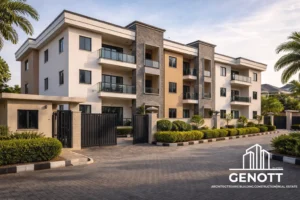
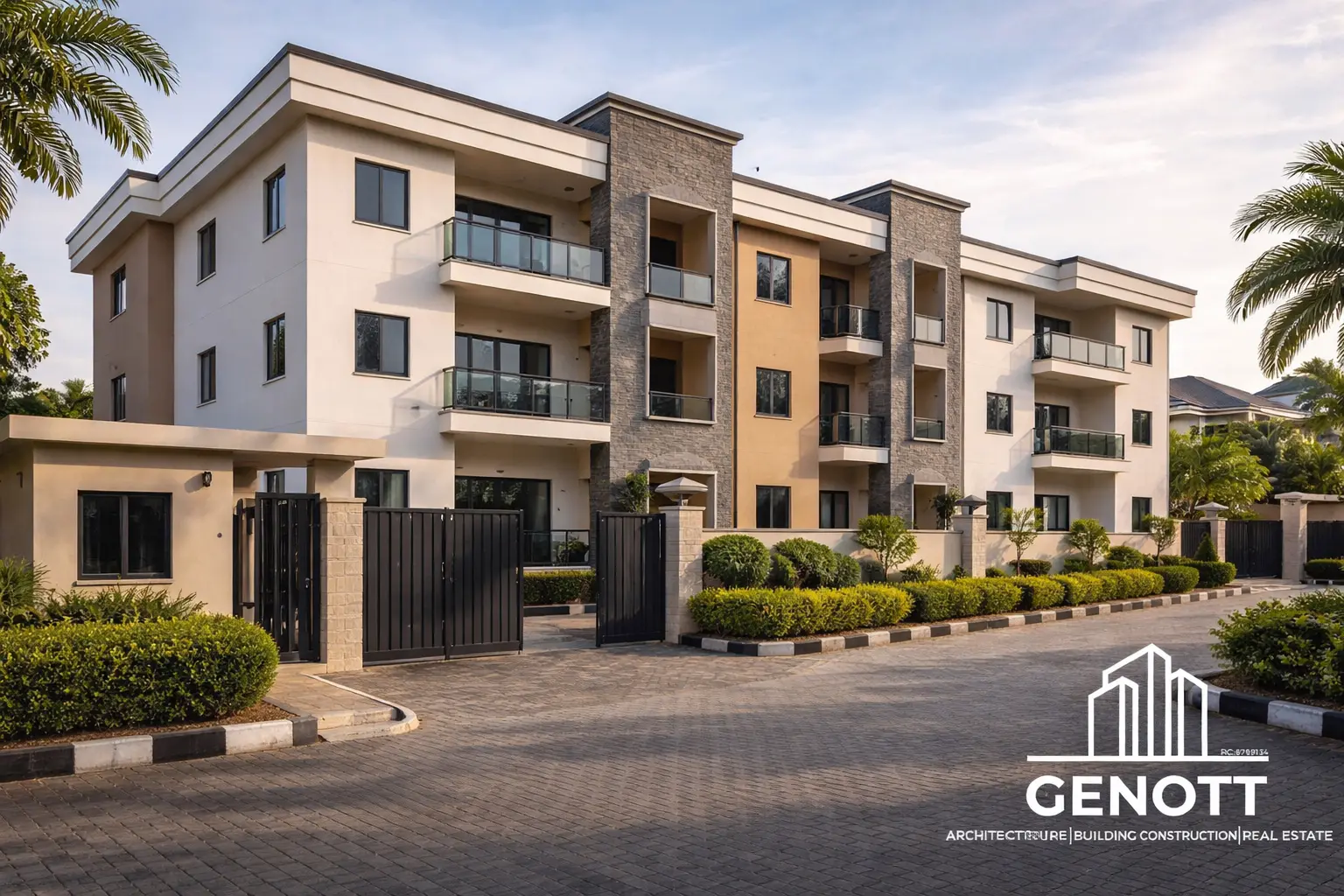
Modern 3-bedroom apartment building, well-maintained complex
Strategy 5: REITs and Fractional Ownership
Low-Capital Entry: ₦50,000-₦500,000 minimum investment in UPDC REIT, Skye Shelter Fund, Union Homes REIT.
Benefits: Professional management, portfolio diversification, NSE liquidity, 8-12% dividends, tax advantages.
Limitations: Lower returns than successful direct investment (8-12% vs. 15-30%+), no control, market volatility.
Financing Strategies—Capital Sources and Leverage Realities
Nigerian Mortgage Economics (2026)
Current Reality:
- Interest rates: 18-25% annually
- Maximum LTV: 60-70%
- Processing: 3-6 months
- Income requirement: Mortgage <33% gross income
Investment Viability:
₦30M property with ₦18M mortgage (20%, 15 years):
- Annual payment: ₦3.47M
- Total paid: ₦52M (₦34M interest!)
- Net rental income: ₦3M
- Cash flow: NEGATIVE ₦470,000 annually
Conclusion: Nigerian mortgage rates make leveraged rental investment uneconomical. Mortgages work for owner-occupiers, rarely investors.
Creative Financing Alternatives
Developer Payment Plans: 30% down, 70% over 24-36 months interest-free (common for ₦30M properties = ₦9M down + ₦875K monthly).
Joint Ventures: Provide development capital (₦30M-₦80M), landowner contributes land, split completed units 60-40 or 70-30.
Cooperative Investment: 5-10 professionals pool ₦5M-₦10M each for ₦50M-₦100M property, share rental income proportionally.
Crowdfunding Platforms: Emerging options (Small Small, Proptua, Landwey) allow ₦100,000-₦5M fractional ownership.
Location Selection—Maximum Risk-Adjusted Returns
Lagos Tier 2 Sweet Spot (Optimal for Most Investors)
| Location | Property Price | Rental Yield | Appreciation | Investment Score |
|---|---|---|---|---|
| Ajah | ₦28M-₦45M | 7-8% | 12-15% | 9/10 |
| Sangotedo | ₦25M-₦40M | 7-9% | 13-18% | 9/10 |
| Yaba | ₦35M-₦65M | 6-8% | 10-14% | 8.5/10 |
| Surulere | ₦30M-₦55M | 6-7% | 9-12% | 8/10 |
Why Tier 2 Dominates: Strong cash flow (6-8%), good appreciation (10-15%), high tenant demand (vacancy <2 months), manageable capital (₦25M-₦65M), established infrastructure.
Abuja Growth Corridors
- Gwarinpa: ₦30M-₦55M, 7-8% yield (civil servants)
- Jahi: ₦35M-₦65M, 6-8% yield (corporate professionals)
- Lugbe: ₦18M-₦35M, 8-10% yield (growth area)
Strategic Advantage: Government employment base provides stable demand less affected by private sector cycles.
Building a ₦100M+ Portfolio—The 10-Year Framework
The “1-3-5-10” Strategy
Year 1: Save ₦8M-₦15M, purchase ₦25M-₦35M property generating ₦250K-₦350K monthly.
Year 3: Original property appreciated ₦6M-₦10M, rental profits ₦5M-₦7M saved. Purchase second ₦30M-₦40M property. Portfolio: ₦60M-₦80M
Year 5: Two properties appreciated ₦15M-₦25M, cumulative rental ₦10M-₦15M. Purchase third property (₦35M-₦45M) + land (₦8M-₦12M). Portfolio: ₦110M-₦150M
Year 10: 3-4 rentals + 2-3 land plots. Combined appreciation ₦80M-₦120M, monthly rental ₦1.2M-₦2M. Portfolio: ₦200M-₦350M
Portfolio Management Essentials
Tenant Retention (Target 70%+):
- Professional screening (employment, references, guarantor)
- Responsive maintenance (24-48 hour issues resolution)
- Fair increases (5-10% annually, not 30-50%)
- Renewal incentives (1-month discount for 2-year lease)
Financial Tracking:
- Separate account per property
- Monthly P&L statements
- Annual ROI calculation
- Tax-compliant records for deductions
Critical Investment Mistakes to Avoid
Mistake #1: Emotional Location Selection
Error: Buying Ikoyi 2-bed (4-5% yield) over Ajah 4-bed (7-8% yield) due to prestige preference.
Impact: ₦15M-₦25M less rental profit over 10 years.
Solution: Separate emotions from investment logic—buy where numbers work.
Mistake #2: Undercapitalization
Error: Budgeting exactly ₦30M for ₦30M property, leaving zero for acquisition costs (₦1M-₦2M), repairs (₦1M-₦3M), vacancy reserve (₦1M-₦2M), emergency fund (₦1M-₦2M).
Solution: Budget purchase price + 25-30%. ₦30M property requires ₦37.5M-₦39M total.
Mistake #3: Overleveraging
Error: ₦20M mortgage at 22% (₦4.4M annual cost) on property yielding ₦900K net.
Impact: Negative ₦3.5M annual cash flow.
Solution: Cash purchases or maximum 30-40% LTV in high-interest environments.
Mistake #4: Skipping Due Diligence
Shortcut Costs:
- Skip lawyer (save ₦300K) → lose ₦15M to fraud
- Skip surveyor (save ₦200K) → buy land 30% smaller than claimed
- Skip title search (save ₦100K) → discover 3 other “owners”
Solution: ₦600K-₦2M due diligence is insurance, not expense.
Mistake #5: Ignoring Market Cycles
Error: Buying at 2013-2014 peak, facing 30-40% declines during 2015-2018 correction.
Solution: Contrarian approach—buy during corrections, sell during booms. Requires 5-10 year perspective.
Tax Optimization and Advanced Strategies
Tax Framework
Rental Income: 7-24% progressive rates. Allowable deductions: mortgage interest, repairs, insurance, fees, depreciation. Proper documentation reduces liability 25-45%.
Capital Gains: 10% of profit. Example: Buy ₦20M, sell ₦45M = ₦25M gain × 10% = ₦2.5M tax.
Optimization: Corporate structure (family company) provides tax flexibility and easier inheritance transfer. Professional advisor (₦200K-₦500K annually) saves ₦500K-₦2M+ in taxes.
Advanced Strategies
Off-Plan Investment: Purchase during construction at 20-40% discount. Example: ₦25M off-plan becomes ₦40M at completion (60% return in 2-3 years). Risks: developer problems, delays, quality issues. Mitigation: research track record, verify approvals, staged payments.
Property Conversion: Convert single-family to 2-4 units, increasing rental income 40-80%. Capital: ₦8M-₦20M. Best: Yaba, Surulere old buildings.
When to Sell vs. Hold: Sell if monthly rent <2% property value, market peak, better opportunities elsewhere. Hold if yield >7%, appreciation intact, market correction.
FAQs
Q: How much money do I need to start real estate investment in Nigeria? A: Minimum entry: ₦3M-₦5M for land banking, ₦15M-₦25M for rental property in middle-market locations, or ₦50,000-₦500,000 for REITs. Most wealth-building strategies require ₦15M-₦30M for quality rentals delivering positive cash flow.
Q: What are the best real estate investment strategies in Nigeria for beginners? A: Start with buy-and-hold rental property in Tier 2 locations (Ajah, Yaba, Gwarinpa) offering 6-8% yields plus 10-15% appreciation. Alternatively, REITs offer ₦50K-₦500K entry with professional management and liquidity.
Q: Is land banking still profitable in Nigeria in 2026? A: Yes, in strategic infrastructure corridors: Ibeju-Lekki (Lekki Deep Sea Port), Epe, Abuja satellites (Karshi, Kuje). Expected returns: 200-500% over 7-10 years. Mitigation: diversify across 3-5 plots (₦3M-₦8M each), verify government budgets, plan 7-10 year hold.
Q: Should I use mortgage financing for investment property in Nigeria? A: Generally no—18-25% rates create negative cash flow. ₦18M mortgage at 20% costs ₦3.47M annually vs. ₦3M net rental income. Better: developer payment plans, joint ventures, cooperative investments, cash purchases.
Q: What rental yield should I target for buy-and-hold properties? A: Target 6-8% net yield in middle-market Lagos/Abuja. Below 5% indicates overpricing. Above 10% signals higher risk. Combined with 10-15% appreciation, total returns should reach 16-23% annually.
Q: Which Lagos locations offer best risk-adjusted returns? A: Tier 2 locations: Ajah (₦28M-₦45M, 7-8% yield), Sangotedo (₦25M-₦40M, 7-9% yield), Yaba (₦35M-₦65M, 6-8% yield), Surulere (₦30M-₦55M, established infrastructure). These outperform Tier 1 (lower yields, high entry) and Tier 3 (speculative, limited rental demand).
Q: How do I verify a property investment opportunity is legitimate? A: Comprehensive protocol: (1) Lands Registry search (₦50K-₦200K), (2) Licensed surveyor verification (₦150K-₦500K), (3) Property lawyer title search (₦200K-₦800K), (4) Multiple physical inspections, (5) Neighbor interviews. Total: ₦600K-₦2M prevents ₦10M-₦50M fraud.
Q: What’s better: one ₦50M property or two ₦25M properties? A: Two ₦25M properties offer superior risk-adjusted returns through geographic diversification, tenant diversification, easier liquidity, and potentially higher combined yields.
Q: How long to build a ₦100M real estate portfolio in Nigeria? A: Using “1-3-5-10” strategy: Year 1 (first ₦25M-₦35M), Year 3 (second property), Year 5 (portfolio ~₦110M-₦150M), Year 10 (₦200M-₦350M). Requires: ₦15M-₦25M initial capital, 30-50% savings rate, strategic reinvestment, disciplined management.
Q: What are the biggest mistakes Nigerian real estate investors make? A: (1) Emotional purchasing over financial logic, (2) Inadequate due diligence saving ₦500K but losing ₦15M to fraud, (3) Overleveraging with 20-25% mortgages destroying cash flow, (4) Undercapitalization budgeting only purchase price, (5) No exit strategy creating illiquid trapped capital.
CONCLUSION
Real estate investment strategies in Nigeria offer extraordinary wealth-building potential—15-30% appreciation in growth corridors, 6-8% rental yields, inflation-resistant assets, and leverage opportunities. Success demands systematic strategy execution, not emotional speculation.
The proven pathways: Buy-and-hold rentals in Tier 2 locations generating cash flow and appreciation. Land banking in infrastructure corridors delivering 200-500% returns over 7-10 years. Fix-and-flip producing 20-40% profits in 6-18 months. Commercial properties yielding 8-15%. REITs providing accessible entry points.
The “1-3-5-10” framework demonstrates realistic wealth building: ₦15M-₦30M first property (Year 1), ₦60M-₦80M portfolio (Year 3), ₦110M-₦150M holdings (Year 5), ₦200M-₦350M generating ₦1M-₦3M monthly (Year 10). This isn’t theoretical but proven by thousands who started with salary savings.
Critical success factors: Comprehensive due diligence (₦600K-₦2M preventing ₦10M-₦50M fraud), strategic location selection prioritizing cash flow, conservative leverage, adequate capitalization (budget 25-30% above purchase), disciplined management maintaining 70%+ tenant retention.
Your ₦100M+ portfolio journey begins with the first ₦15M-₦30M investment executed with professional guidance, thorough verification, and commitment to systematic frameworks that have created financial independence for countless Nigerian investors before you.
For professional real estate investment advisory, property selection, due diligence, portfolio management, and comprehensive expertise across architecture, construction, real estate, agriculture, and transportation, GENOTT LTD provides expert services throughout Lagos, Abuja, Port Harcourt, and Nigeria nationwide.

 GENOTT LTD Editorial Team