 GENOTT LTD Editorial Team
Fish farming investment Nigeria offers strong profit potential due to high demand for catfish and tilapia across urban markets. Startup costs range from ₦2 million to ₦20 million depending on scale, pond type, feed strategy, and management efficiency. Commercial aquaculture operations can achieve 25–40% ROI annually with proper planning.
Nigeria’s growing population and rising demand for affordable protein have positioned aquaculture as one of the most promising agricultural investment sectors. Fish farming investment Nigeria opportunities continue to expand as domestic fish consumption outpaces local supply, creating strong market gaps for investors and commercial farmers. From catfish farming business Nigeria operations supplying urban markets to large-scale commercial fish farming Nigeria enterprises focused on export and processing, aquaculture presents both scalability and profitability.
Despite this potential, many first-time investors struggle with key challenges such as fish pond construction cost Nigeria realities, feed pricing fluctuations, water management issues, and marketing logistics. Without proper planning, these factors can reduce aquaculture profit margin Nigeria businesses expect.
This comprehensive investment guide explains startup costs, pond construction options, ROI expectations, feed cost analysis, processing opportunities, and urban demand trends in Lagos, Abuja, Enugu, and other Nigerian markets — helping you build a profitable and sustainable fish farming enterprise.
SUMMARY TABLE
| Area | Key Insight | Notes |
|---|---|---|
| Startup Cost | ₦2M – ₦20M+ | Depends on pond type |
| ROI | 25–40% annually | Management critical |
| Feed Cost | Largest expense | Monitor pricing |
| Market Demand | Strong urban consumption | Lagos & Abuja key markets |
| Processing Value | Increases profit | Smoked & frozen fish |
Why Fish Farming is a Strategic Investment in Nigeria
Aquaculture plays a major role in reducing Nigeria’s reliance on imported fish. Key drivers include:
-
High demand for catfish and tilapia.
-
Fast production cycles compared to livestock.
-
Growing restaurant and hospitality sector.
-
Urban population expansion.
Cities like Lagos and Abuja have consistent demand for fresh and processed fish, making commercial fish farming Nigeria an attractive agribusiness model.
Step-by-Step Guide to Starting a Fish Farm
1. Choosing Fish Species
Common species:
-
Catfish (Clarias gariepinus) — most popular.
-
Tilapia — growing demand.
-
Hybrid species for commercial growth.
Catfish farming business Nigeria remains dominant due to strong market acceptance.
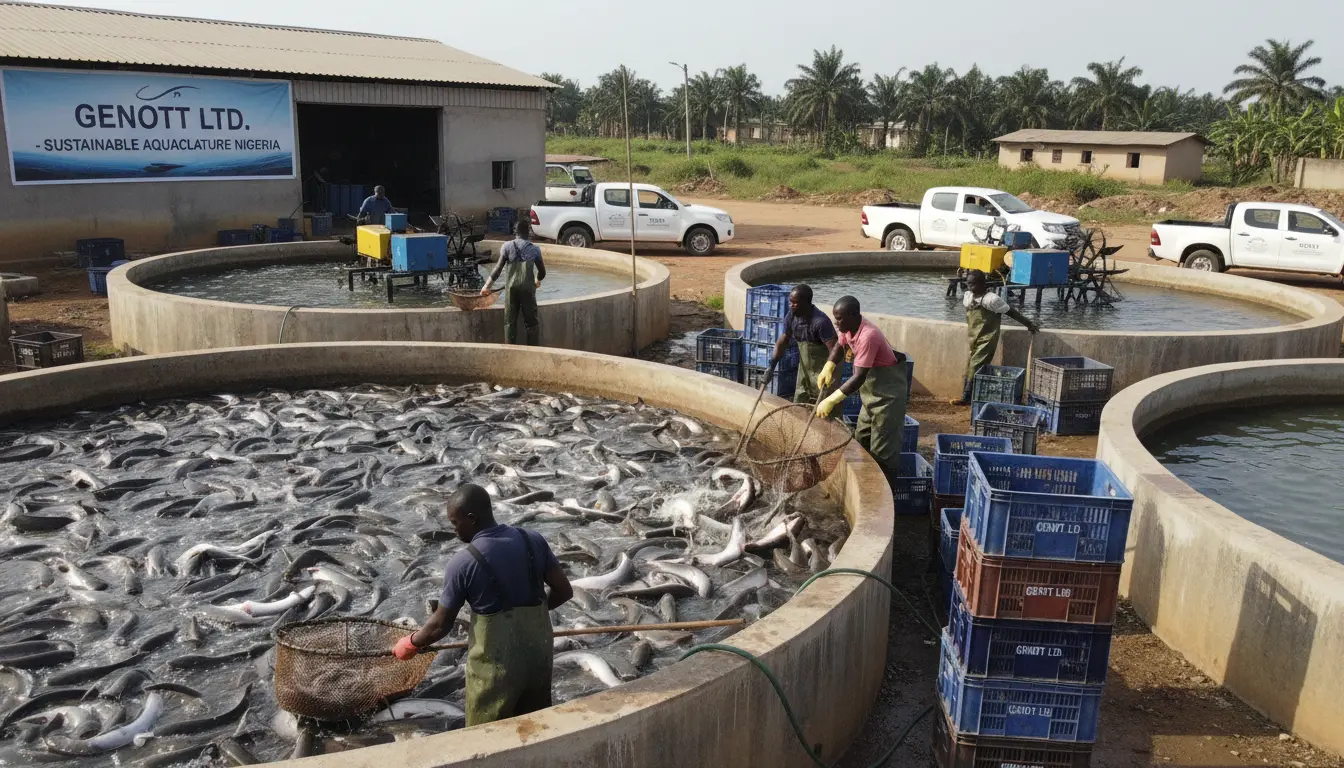
2. Concrete vs Earthen Ponds
Choosing the right pond structure affects startup cost and operational efficiency.
| Pond Type | Advantages | Disadvantages |
|---|---|---|
| Concrete | Durable, easy harvest | Higher initial cost |
| Earthen | Lower startup cost | Harder management |
| Tarpaulin | Mobile, affordable | Limited lifespan |
Fish pond construction cost Nigeria:
-
Small concrete pond: ₦500k – ₦2M.
-
Earthen pond: ₦200k – ₦1M depending on land.
Fish Farming Investment Nigeria
3. Feed Cost Analysis (Major Expense)
Feed represents up to 70% of operational cost.
Feed types:
-
Imported floating feed (higher cost, faster growth).
-
Locally formulated feed (lower cost, variable quality).
Strategies to manage feed cost:
-
Bulk purchasing.
-
Feed formulation partnerships.
-
Proper feeding schedules to reduce waste.
4. Water Quality & Disease Management
Key considerations:
-
Oxygen levels.
-
Temperature management.
-
Regular water replacement.
Disease prevention includes:
-
Biosecurity measures.
-
Proper stocking density.
-
Regular monitoring.
5. Urban Demand Trends
Strong fish demand exists in:
-
Lagos (restaurants and households).
-
Abuja (premium markets).
-
Enugu and Port Harcourt (growing consumption).
Distribution channels:
-
Open markets.
-
Hotels and restaurants.
-
Supermarkets.
-
Direct farm-to-consumer sales.
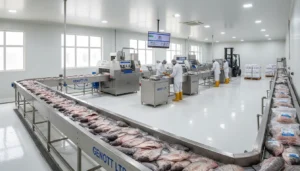
6. Processing Opportunities
Processing increases profit margins:
-
Smoked fish production.
-
Frozen packaged fish.
-
Fish filleting.
Value addition expands aquaculture profit margin Nigeria investors can achieve.

Cost Analysis & Investment Insights
Example medium-scale catfish farm:
| Expense Category | Estimated Cost |
|---|---|
| Pond construction | ₦3M |
| Fingerlings | ₦800k |
| Feed (6 months) | ₦4M |
| Labour | ₦1M |
| Equipment | ₦700k |
| Miscellaneous | ₦500k |
| Total Startup | ~₦10M |
Projected revenue:
₦13M – ₦16M depending on market price.
Production Model Comparison
| Model | Advantage | Risk |
|---|---|---|
| Small-scale | Lower capital | Limited volume |
| Medium commercial | Balanced ROI | Management required |
| Large-scale | High profit | Higher risk |
Common Mistakes Nigerians Make
-
Overstocking ponds.
-
Using low-quality feed.
-
Ignoring water management.
-
No clear marketing strategy.
-
Poor record keeping.
Expert Recommendations
-
Start with manageable scale.
-
Focus on water quality management.
-
Monitor feed conversion ratio.
-
Develop market relationships early.
-
Invest in processing to increase profit.
Future Trends in Nigerian Aquaculture
-
Recirculating aquaculture systems (RAS).
-
Solar-powered aeration.
-
Integrated fish processing facilities.
-
Export-focused aquaculture farms.
-
Digital farm monitoring systems.
FAQs
1. How profitable is fish farming in Nigeria?
Properly managed farms can achieve 25–40% ROI annually.
2. What is the biggest cost?
Feed represents the largest operational expense.
3. Which pond type is best?
Concrete ponds offer durability but higher initial cost.
4. Can fish farming work in urban areas?
Yes, especially using tank or concrete pond systems.
5. How long before harvest?
Typically 4–6 months for catfish.
CONCLUSION
Fish farming investment Nigeria presents strong opportunities for investors seeking scalable agribusiness ventures. With high domestic demand, relatively fast production cycles, and multiple value-chain opportunities, aquaculture remains one of the most promising sectors within Nigerian agriculture. Success depends on strategic planning, proper feed management, water quality control, and effective market positioning.
For professional agribusiness planning, farm infrastructure development, and commercial aquaculture strategy tailored to Nigerian conditions, GENOTT LTD provides expert guidance from concept to market.

 GENOTT LTD Editorial Team