 GENOTT LTD Editorial Team
Poultry farming investment Nigeria offers strong profit potential due to high demand for eggs and chicken meat. Startup costs typically range from ₦3 million to ₦20 million depending on scale, housing system, feed cost, and management efficiency. Successful poultry farms achieve 20–35% annual ROI when properly managed.
Nigeria’s poultry industry is one of the fastest-growing sectors within agriculture, driven by rising population demand for affordable protein sources such as eggs and chicken meat. For investors and entrepreneurs exploring poultry farming investment Nigeria opportunities, the sector presents a compelling mix of relatively fast production cycles, scalable operations, and consistent urban market demand in cities like Lagos, Abuja, and Enugu.
However, many first-time investors underestimate key realities — including poultry farming startup cost Nigeria requirements, feed price volatility, disease management risks, and infrastructure challenges such as power supply and biosecurity systems. Without proper planning, these factors can reduce profitability or lead to financial losses.
This comprehensive investment guide explains layers farming profitability Nigeria models, broiler production business Nigeria strategies, poultry farm ROI Nigeria expectations, and practical insights on building poultry pens, managing feed costs, accessing markets, and minimizing risks. Whether you plan to start a small-scale poultry farm or develop a commercial operation, this guide provides structured expert knowledge to support long-term success.
SUMMARY TABLE
| Area | Key Insight | Notes |
|---|---|---|
| Startup Cost | ₦3M – ₦20M+ | Depends on scale |
| ROI | 20–35% annually | Management critical |
| Housing | Proper ventilation essential | Reduces disease risk |
| Feed Cost | Largest expense | Monitor pricing trends |
| Market Demand | Strong in urban cities | Lagos & Abuja high demand |
Why Poultry Farming is a Strategic Investment in Nigeria
Poultry farming remains one of the most accessible profitable farming businesses in Nigeria because:
-
High consumption of eggs and chicken meat nationwide.
-
Fast production cycles compared to cattle or crop farming.
-
Strong demand from restaurants, supermarkets, and households.
-
Government policies encouraging local poultry production.
Urbanization has increased protein demand, making poultry farming investment Nigeria a reliable agribusiness opportunity.
Step-by-Step Guide to Starting a Poultry Farm
1. Define Production Model (Layers vs Broilers)
Layers Farming (Egg Production)
Advantages:
-
Consistent cash flow.
-
Daily egg production.
-
Stable demand.
Broiler Production Business Nigeria
Advantages:
-
Short growth cycle (6–8 weeks).
-
Fast turnover.
Choosing between layers and broilers depends on capital, management capacity, and market access.
2. Cost of Building Poultry Pens
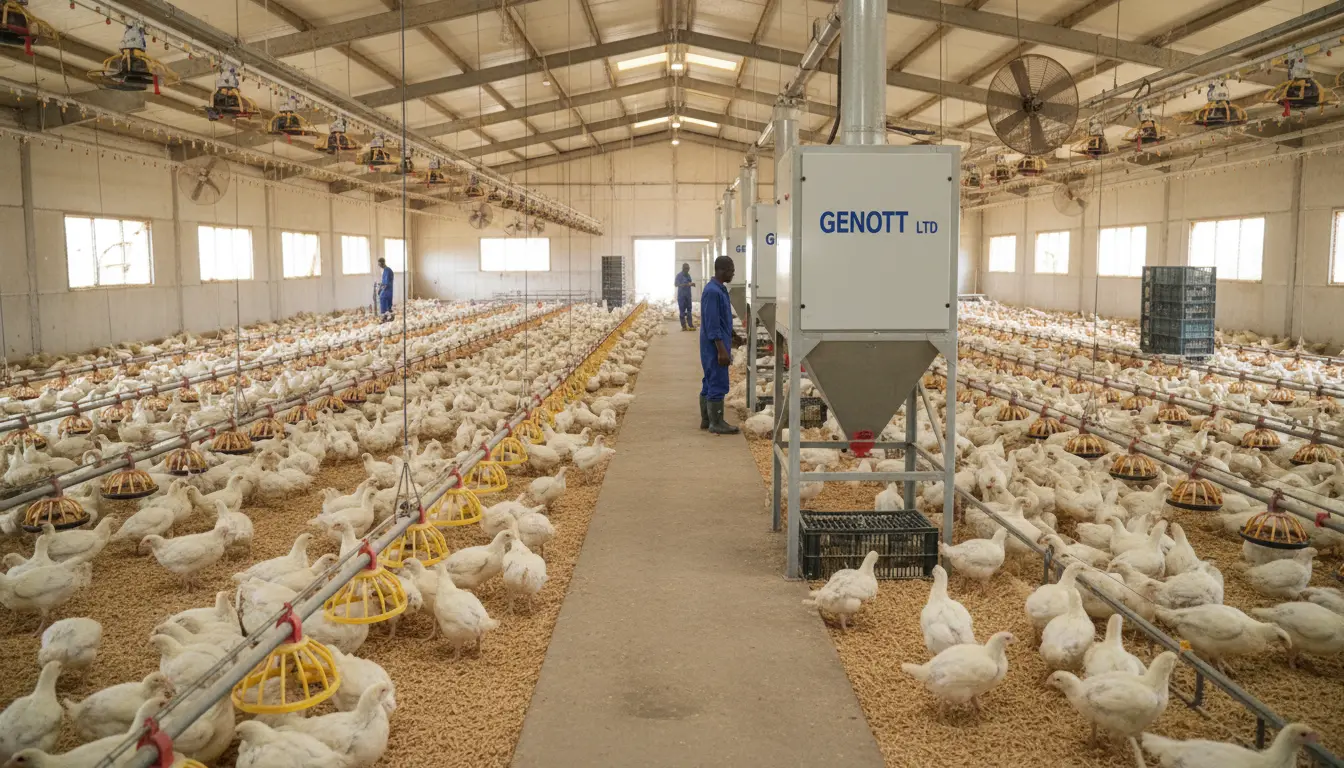
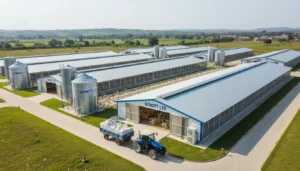
Housing design impacts productivity and disease control.
Types:
-
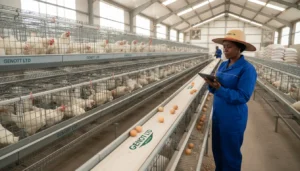
Deep litter system (lower cost).
-
Battery cage system (higher efficiency but higher investment).
Estimated cost:
| Scale | Estimated Pen Cost |
|---|---|
| Small (500 birds) | ₦800k – ₦2M |
| Medium (2,000 birds) | ₦3M – ₦8M |
| Large commercial | ₦10M+ |
Key design considerations:
-
Ventilation for hot Nigerian climate.
-
Drainage system.
-
Predator protection.
Poultry Farming Investment Nigeria
3. Feed Pricing Trends (Major Cost Factor)
Feed accounts for 60–70% of operating expenses.
Common feeds:
-
Starter feed.
-
Grower feed.
-
Layer mash.
Feed prices fluctuate due to:
-
Maize cost.
-
Soybean supply.
-
Transport costs.
Strategies:
-
Bulk purchasing.
-
Feed formulation partnerships.
-
Local feed sourcing.
4. Disease Management & Biosecurity
Common poultry diseases:
-
Newcastle disease.
-
Coccidiosis.
-
Avian influenza.
Preventive measures:
-
Vaccination schedule.
-
Restricted farm access.
-
Proper sanitation.
Biosecurity reduces mortality and protects poultry farm ROI Nigeria.
5. Market Access (Lagos & Abuja Demand)
Urban markets offer:
-
Higher egg prices.
-
Reliable customer base.
-
Distribution networks.
Channels:
-
Supermarkets.
-
Hotels.
-
Fast food chains.
-
Open markets.
Cost Analysis & Investment Insights
Example medium-scale poultry farm (2,000 birds):
| Expense Category | Estimated Cost |
|---|---|
| Housing | ₦5M |
| Chicks | ₦1.5M |
| Feed (3 months) | ₦4M |
| Labour | ₦1M |
| Vaccination | ₦300k |
| Miscellaneous | ₦700k |
| Total Startup | ~₦12.5M |
Expected revenue:
₦16M – ₦18M depending on egg or meat pricing.
Layers vs Broilers Comparison
| Factor | Layers | Broilers |
|---|---|---|
| Income Frequency | Continuous | Batch-based |
| Risk Level | Medium | Medium |
| Cash Flow | Stable | Fast cycles |
| Startup Cost | Higher | Lower |
Common Mistakes Nigerians Make
-
Starting without market plan.
-
Underestimating feed cost.
-
Poor housing ventilation.
-
Ignoring vaccination schedules.
-
Expanding too quickly.
Expert Recommendations
-
Begin with manageable scale.
-
Partner with veterinary consultants.
-
Monitor feed conversion ratios.
-
Implement proper record keeping.
-
Invest in training for staff.
Future Trends in Poultry Farming Nigeria
-
Automated feeding systems.
-
Climate-controlled poultry houses.
-
Organic poultry products.
-
Integrated feed production.
-
Digital farm management tools.
FAQs
1. How profitable is poultry farming in Nigeria?
Well-managed farms achieve 20–35% ROI.
2. What is the biggest expense?
Feed cost is the largest operating expense.
3. Which is better — layers or broilers?
Layers offer steady income; broilers provide faster turnover.
4. How much capital is needed?
Small-scale farms may start around ₦3M.
5. Is poultry farming risky?
Risk exists but can be reduced with proper management.
CONCLUSION
Poultry farming investment Nigeria represents a scalable and profitable opportunity within the country’s expanding agricultural sector. With proper planning, effective disease management, and strategic market positioning, poultry farming can generate consistent income and long-term growth. Understanding startup costs, operational risks, and production strategies helps investors build sustainable agribusiness models.
For professional agribusiness planning, farm infrastructure development, and integrated agriculture investment support, GENOTT LTD provides expert guidance tailored to Nigerian conditions.


 GENOTT LTD Editorial Team