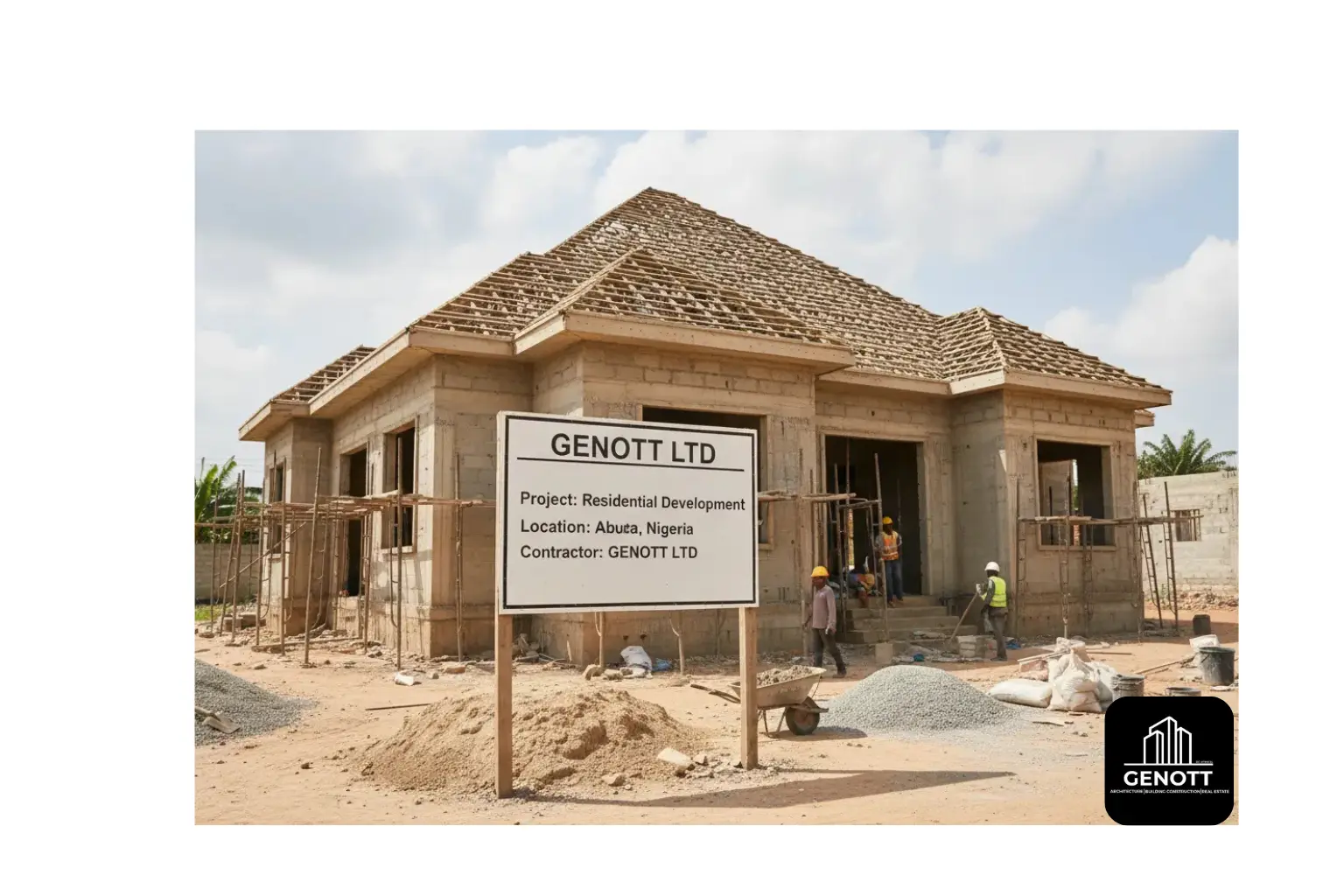
 GENOTT LTD Editorial Team
The cost of building a 3 bedroom house in Nigeria in 2026 typically ranges between ₦25 million and ₦60 million, depending on location, material quality, design complexity, labour costs, and finishing standards. Basic builds cost less, while premium finishes significantly increase total expenses.
Understanding the cost of building a 3 bedroom house in Nigeria has become increasingly important as construction expenses continue to fluctuate due to inflation, exchange rate changes, and evolving building standards. Whether you are planning a residential home for personal use, an investment property, or a family estate project, proper financial planning remains the difference between a successful build and an abandoned project.
QUICK COST OVERVIEW TABLE
| Construction Stage | Estimated Cost (₦) | % of Total Budget |
|---|---|---|
| Foundation | 3M – 8M | 15–20% |
| Structural Work | 8M – 18M | 30–35% |
| Roofing | 3M – 7M | 10–15% |
| Finishing | 8M – 20M | 30–40% |
| Professional & Approval Fees | 1M – 3M | 5–10% |
Why Building Costs Vary in Nigeria
The cost of building a 3 bedroom house in Nigeria is not fixed because several factors influence it:
1️⃣ Location-Based Cost Variation
-
Lagos: Higher labour and logistics cost.
-
Abuja: Stricter regulatory approval requirements.
-
Nasarawa / Enugu / Ibadan: Generally lower labour rates.
Transporting materials in urban areas increases cost.
2️⃣ Inflation & Material Volatility
Building materials cost Nigeria 2026 reflects:
-
Cement price fluctuations.
-
Steel reinforcement cost changes.
-
Imported finishing materials influenced by exchange rate.
Construction budgets must include inflation buffer.
FULL COST BREAKDOWN BY STAGE
1. Land Preparation & Preliminary Work
Includes:
-
Survey verification.
-
Soil testing.
-
Excavation.
-
Site clearing.
Cost Range: ₦500,000 – ₦2,000,000
Pro Insight: Soil testing prevents future structural failure and saves long-term repair cost.
2. Foundation Cost (Critical Stage)
Foundation type determines cost:
-
Strip foundation (stable soil).
-
Raft foundation (weak soil).
-
Pile foundation (waterlogged terrain).
Foundation to finishing cost Nigeria often depends heavily on soil conditions.
Estimated Cost: ₦3M – ₦8M
3. Structural Construction (Framework Stage)
Includes:
-
Blockwork.
-
Columns & beams.
-
Decking (if duplex).
-
Concrete reinforcement.
Estimated Cost: ₦8M – ₦18M
Construction cost per square meter Nigeria ranges between ₦250,000 – ₦450,000 depending on quality.
4. Roofing Stage
The cost of roofing a 3 bedroom house in Nigeria depends on:
-
Aluminium roofing sheets.
-
Stone-coated roofing.
-
Timber or steel trusses.
Estimated Cost: ₦3M – ₦7M
Roof design complexity significantly affects cost.
5. Finishing Stage (Most Expensive Phase)
Finishing includes:
-
Plumbing piping.
-
Electrical piping.
- Plastering.
-
POP ceiling.
-
External Doors and windows (this will keep wires and other important installations save from theft).
- Electrical wiring (ensure the site is secured with external doors and windows before electrical wiring, to avoid theft).
- P.O.P ceiling
-
Tiling.
-
Screeding.
- Wood works (interior doors, wardrobes, shelves and kitchen cabinets etc.)
-
Painting.
- Plumbing fittings installations.
- Electrical fittings installations.
Finishing consumes 30–40% of total house construction budget Nigeria.
Estimated Cost: ₦8M – ₦20M
6. Furnishing and Interior Setup (Final Completion Stage)
After construction and finishing, furnishing transforms the building into a livable home. Many first-time builders underestimate this stage, yet furnishing significantly impacts total project cost.
Furnishing includes:
-
Kitchen cabinets and appliances.
-
Wardrobes and storage units.
-
Living room furniture.
-
Lighting fixtures and decorative elements.
-
Curtains, blinds, and interior décor.
-
Air conditioning units and electrical appliances.
Estimated Cost Range:
👉 Basic furnishing: ₦3M – ₦7M
👉 Mid-range furnishing: ₦7M – ₦15M
👉 Luxury furnishing: ₦15M+
Key cost drivers:
-
Imported furniture and fittings.
-
Smart home installations.
-
Interior design customization.
Expert Insight: Planning furnishing early allows proper electrical and space planning during construction, reducing costly modifications later.
Lagos vs Abuja vs Other Cities
| City | Estimated Total Cost | Cost Drivers |
|---|---|---|
| Lagos | ₦35M – ₦65M | High labour demand |
| Abuja | ₦30M – ₦60M | Regulatory standards |
| Nasarawa / Enugu / Ibadan etc. | ₦25M – ₦50M | Lower labour cost |
Cheapest Way to Build a House in Nigeria
To reduce cost:
-
Use simple architectural design.
-
Avoid excessive cantilevers.
-
Source materials locally.
-
Build in phases.
-
Monitor labour productivity.
Cost reduction should never compromise structural safety.
Direct Labour vs Contractor
| Method | Advantage | Risk |
|---|---|---|
| Direct Labour | Lower cost | Requires supervision |
| Contractor | Faster completion | Higher markup |
Professional oversight improves outcome.
Common Mistakes Nigerians Make
-
Starting without full budget.
-
Ignoring professional drawings.
-
Skipping soil testing.
-
Underestimating finishing costs.
-
Not planning construction timeline properly.
Sample Budget Framework
Example mid-range bungalow (2026 estimate):
| Item | Cost (₦) |
|---|---|
| Foundation | 5M |
| Structure | 12M |
| Roofing | 5M |
| Finishing | 15M |
| Approvals | 2M |
| Total | 39M |
FAQ
1. How much to build a 3 bedroom bungalow in Nigeria in 2026?
Between ₦25M and ₦60M depending on finish and location.
2. What is the most expensive stage of construction?
Finishing stage consumes the largest portion.
3. Can ₦20 million build a 3 bedroom house?
Only possible in rural areas with basic finishing.
4. How long does it take to build?
6–12 months with consistent funding.
5. What affects construction cost most?
Material price fluctuation and design complexity.
Professional Fee & Legal Cost Considerations
-
Architectural design fee: 3–7% of project cost.
-
Structural engineering fees.
-
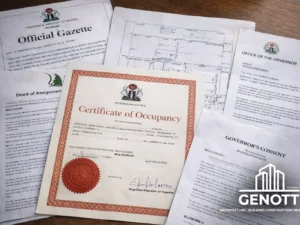
Building plan approval process Nigeria charges.
-
Survey verification.
Ignoring legal processes may result in demolition risk.
Future Construction Cost Trends (2026–2028)
-
Prefabricated housing may reduce labour costs.
-
Smart energy-efficient homes increasing demand.
-
Estate development raising property value.
-
Sustainable materials gaining popularity.
Conclusion
The cost of building a 3 bedroom house in Nigeria varies widely, but structured planning reduces financial risk. Builders must consider foundation requirements, structural integrity, roofing choices, finishing expenses, professional fees, and regulatory approvals. By using realistic budgeting strategies and professional oversight, construction becomes an investment rather than a liability.
For professional architecture, structural engineering, construction management, and real estate development tailored to Nigerian conditions, GENOTT LTD provides expert guidance from foundation to finishing.

 GENOTT LTD Editorial Team