 GENOTT LTD Editorial Team
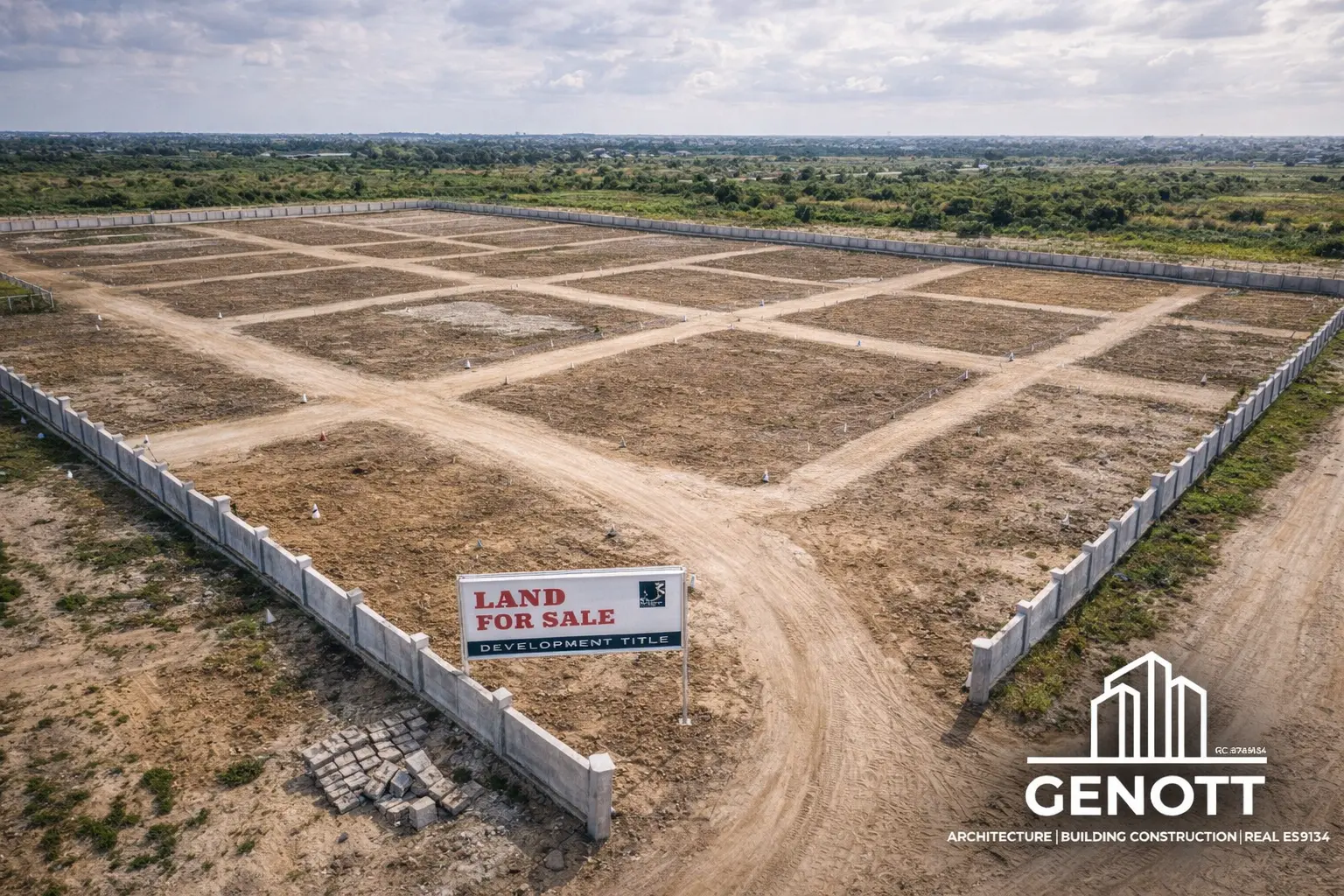
A Lagos land owner inherited 2 hectares of vacant land in Epe, paying ₦150,000 annually in property taxes while the land sat idle generating zero income. After learning how to make money from land in Nigeria without selling, she leased 1 hectare to a fish farmer for ₦600,000 annually, subdivided the remaining hectare into 15 plots selling at ₦2.5M each (₦37.5M total revenue), and now earns passive income while watching her investment appreciate.
This transformation repeats across Nigeria as land owners discover their “dormant” assets can generate ₦200,000-₦20M+ annually through strategic monetization—without selling a single square meter. Yet 70% of Nigerian land owners hold vacant parcels earning nothing, unaware of proven income strategies transforming land into cash-generating assets.
This comprehensive guide reveals exactly how to make money from land in Nigeria through five proven strategies: agricultural land leasing generating ₦50,000-₦3M per hectare annually, commercial land rental income from billboards and telecom masts earning ₦300,000-₦8M yearly, land subdivision creating 11-79% ROI, joint venture development partnerships producing ₦15M-₦60M profits without capital investment, and creative monetization through event spaces, storage facilities, and temporary uses. Whether owning 500 sqm in Lagos or 50 hectares in rural Nigeria, these frameworks turn land liability into income-producing assets.
QUICK SUMMARY
| Income Strategy | Initial Investment | Annual Income Potential | Best For | Timeline to Income |
|---|---|---|---|---|
| Agricultural Leasing | ₦200K-₦800K (land prep) | ₦50K-₦3M per hectare | Rural/peri-urban land | 3-6 months |
| Billboard/Telecom Rental | Minimal (₦50K-₦200K) | ₦300K-₦8M per location | Road frontage land | 1-3 months |
| Land Subdivision | ₦1.1M-₦3.1M per hectare | 11-79% ROI (₦1.7M-₦14M profit) | Growth corridor land | 6-36 months |
| Joint Venture Development | Zero capital required | ₦15M-₦60M profit share | Prime urban land | 18-36 months |
| Event Space/Creative Uses | ₦8M-₦22M development | ₦2.16M-₦22.8M annually | Peri-urban accessible land | 3-6 months |
Why Learning How to Make Money From Land in Nigeria Transforms Wealth Building
Nigerian land ownership traditionally focuses on speculation—buy land, hold 5-10 years, sell at appreciated prices. This “wait and appreciate” strategy leaves capital dormant while property taxes, security costs, and maintenance expenses drain ₦50,000-₦500,000 annually with zero income offset. Meanwhile, strategic land owners across Nigeria generate ₦200,000-₦20M+ annually from the same land parcels through proven monetization strategies.
The opportunity is massive: Nigeria has approximately 98.3 million hectares of total land area, with millions of hectares sitting vacant generating zero income for owners. Understanding how to make money from land in Nigeria without selling unlocks passive income streams while retaining ownership and benefiting from long-term appreciation—the best of both worlds.
Economic Drivers Creating Land Income Opportunities:
Nigeria’s agricultural sector employs 70% of the population but faces severe land access challenges. Commercial farmers, agribusinesses, and food processors desperately need land access without ownership capital—creating robust agricultural leasing markets paying ₦50,000-₦3M per hectare annually depending on location and use.
Telecommunications infrastructure expansion drives telecom mast demand. MTN, Airtel, Glo, 9mobile, and tower companies (IHS, ATC) lease land at ₦400,000-₦6M annually per location for network coverage. Billboard companies lease strategic locations at ₦300,000-₦8M annually. These infrastructure tenants provide stable, long-term income (typically 5-10 year leases with automatic renewals).
Rapid urbanization creates land subdivision opportunities. Lagos grows by 3.2% annually, Abuja by 5.4%, Port Harcourt by 4.1%—urban expansion creates growth corridors where strategic subdivision generates 11-79% ROI transforming ₦15M land purchase into ₦30M revenue within 24-36 months.
Understanding how to make money from land in Nigeria requires matching your specific land characteristics (size, location, access, title, zoning) with appropriate income strategies maximizing return while managing risk.
Agricultural Land Leasing Nigeria—₦50,000 to ₦3M Per Hectare Annual Income
Direct Agricultural Leasing Models
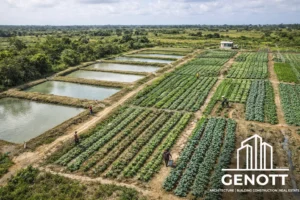
Crop Farming Leases: Commercial farmers lease land at ₦50,000-₦300,000 per hectare annually depending on soil quality, location, and water access. Rice farming land commands ₦100,000-₦250,000 per hectare in suitable areas (Benue, Niger, Kogi, Kaduna). Cassava cultivation leases at ₦60,000-₦150,000 per hectare. Vegetable farming near urban areas (10-30km from Lagos, Abuja, Port Harcourt) generates ₦200,000-₦500,000 per hectare annually due to market proximity and demand.
Example: 5-hectare land in Ogun State (40km from Lagos) leased to vegetable farmer at ₦300,000 per hectare = ₦1.5M annual income. Land preparation costs: Clearing ₦400,000, access road ₦800,000, borehole ₦1M (₦2.2M total investment). First-year net: ₦1.5M – ₦2.2M = -₦700,000. Years 2-10: ₦1.5M annually (no reinvestment needed) = ₦13.5M total income on ₦2.2M investment (514% ROI over 10 years).
Sharecropping Arrangements: Landowner provides land, farmer provides labor and inputs, harvest splits 60-40 or 70-30 favoring landowner. This model works well when landowner lacks capital for land preparation. Example: 3-hectare cassava farm, harvest value ₦2M, 60-40 split gives landowner ₦1.2M annually (₦400,000 per hectare) with zero operational investment.
Fish Farming and Aquaculture Leasing: Fish farmers lease land at ₦200,000-₦800,000 annually for 1-2 hectare pond development. Catfish farming dominates Nigerian aquaculture with 4-6 month harvest cycles providing reliable tenant income. Integrated fish-poultry operations pay ₦400,000-₦1.2M annually. Land near water sources (rivers, streams, or areas with shallow water table suitable for borehole) commands 30-50% lease premium.
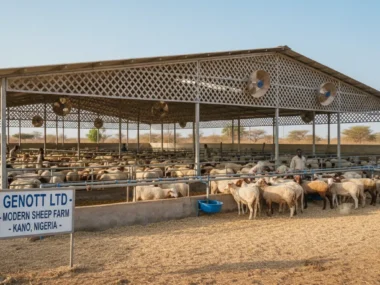
Livestock and Grazing: Poultry farm land leasing generates ₦250,000-₦1M annually for 2-5 hectare operations. Requirements: Distance from residential areas (minimum 500m-1km to prevent complaints), access road for feed/product transport, power supply access. Cattle grazing leases in suitable Middle Belt and Northern areas: ₦30,000-₦100,000 per hectare annually.
Tree Plantation Joint Ventures: Partner with plantation companies for oil palm, rubber, teak, or mahogany. Landowner provides 5-50 hectares, company provides planting costs, maintenance, and harvesting infrastructure. Profit splits 60-40 or 70-30 after maturity. Oil palm produces 3-5 years after planting; teak takes 15-20 years. Example: 10-hectare oil palm plantation generates ₦2M-₦8M annually at maturity, 40% landowner share = ₦800,000-₦3.2M passive annual income.
Agricultural Land Income Optimization
Land Preparation ROI: Basic clearing and stumping costs ₦80,000-₦200,000 per hectare but increases lease value 40-60%. Borehole drilling (₦400,000-₦1.5M) doubles lease rates for irrigation-dependent crops. Access road creation (₦500,000-₦2M per kilometer) is essential—commercial farmers won’t lease inaccessible land regardless of soil quality.
Risk Mitigation: Require 1-2 years lease amount as security deposit upfront. Written lease agreements registered at land registry specify permitted land use, payment terms, soil conservation requirements, and dispute resolution. Include annual soil testing clauses preventing degradation. Require tenant crop insurance and liability coverage. Exit clauses allowing landowner to reclaim land if payments default >3 months.
Commercial Land Rental Income: Billboards, Telecom Masts, Storage Facilities
Billboard and Advertising Lease Income
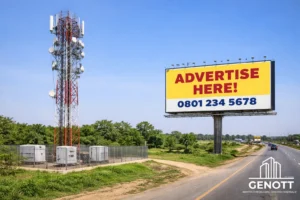
Nigerian billboard companies (Primeboard, MOMAS, Loatsad, Airspace) lease strategic locations at ₦300,000-₦2M annually for standard billboards. Premium locations—Lagos-Ibadan Expressway junctions, Lekki-Epe Expressway high-traffic sections, Abuja Airport Road—command ₦1.5M-₦8M annually. Digital LED billboards pay 50-100% premium: ₦3M-₦12M annually for prime locations.
Ideal characteristics: Road frontage 10m+, high visibility from both traffic directions, heavy traffic corridors (expressways, major roads, roundabouts). Billboard company handles structure construction, maintenance, and advertising sales. Landowner receives fixed annual lease payment (typically 3-5 year contracts with renewal options).
Example: 200 sqm corner plot at Lekki-Epe Expressway roundabout leased to Primeboard at ₦4M annually. Zero landowner investment (company builds structure). Pure passive income requiring no management beyond annual lease renewal.
Telecom Mast Rental Rates Nigeria
MTN, Airtel, Glo, 9mobile, and tower companies (IHS Towers, ATC) lease land for telecommunications infrastructure at ₦400,000-₦2M annually per mast. Urban/suburban locations command ₦800,000-₦2.5M; rural locations ₦400,000-₦1M. Single tower can host 2-4 telecom operators through colocation—landowner earns ₦800,000-₦6M annually when multiple carriers share one tower.
Lease terms: Typically 5-10 years with automatic renewal clauses. Land requirement: 100-400 sqm depending on tower type and equipment shelter. One-time installation fee: ₦200,000-₦1M paid upfront. Tenant handles tower construction, maintenance, electricity costs, and security infrastructure. Landowner provides land access and shares basic security.
Site selection criteria telecom companies prioritize: Network coverage gaps requiring new towers, accessible by heavy equipment (tower components, concrete trucks), stable ground (not flood-prone or swampy), security (not too remote), proximity to power supply.
Storage and Parking Facilities
Container Storage Yards: Logistics companies lease land at ₦500,000-₦3M annually per hectare for container storage. Ideal locations: Near ports (Apapa, Tin Can, Onne), industrial areas, construction boom zones. Infrastructure requirements: Perimeter fencing (₦15,000-₦40,000 per meter), security gatehouse (₦500,000-₦1.5M), access road, drainage.
Commercial Parking Development: Office parking near Victoria Island, Lekki, Maitama, Wuse generates ₦300,000-₦1.5M monthly gross (200-300 spaces). Airport parking near Lagos/Abuja airports: ₦500,000-₦3M monthly. Development costs: Land leveling ₦200,000-₦800,000, fencing ₦800,000-₦3M, lighting ₦500,000-₦2M, ticketing system ₦300,000-₦1M (₦1.8M-₦6.8M total).
Operating model choice: Self-operate for maximum income (requires management), or lease to parking operators for passive ₦150,000-₦800,000 monthly.
Fuel Station Leasing: Oil marketers lease land at ₦2M-₦10M annually depending on traffic volume and access. Requirements: Minimum 800-1,500 sqm, road frontage, proper residential setbacks, DPR (Department of Petroleum Resources) compliance. Lease duration: 10-25 years (fuel companies need long-term security for infrastructure investment).
Land Subdivision Profit Nigeria—11% to 79% ROI Strategy
Strategic subdivision transforms how to make money from land in Nigeria by converting large parcels into standard residential plots capturing urbanization premiums.
Subdivision Economics Example:
Initial Investment:
- 5,000 sqm land purchase: ₦15M (₦3,000/sqm in developing area like Epe, Ibeju-Lekki, or Abuja satellite towns)
- Survey and subdivision planning: ₦300,000-₦800,000
- Documentation and approvals: ₦200,000-₦500,000
- Basic access road (laterite): ₦500,000-₦1.5M
- Perimeter beacons: ₦100,000-₦300,000
- Total: ₦16.1M-₦18.1M
Outcome:
- Result: 8-9 plots of 550-600 sqm each
- Sales price per plot (18-24 months): ₦4,500-₦6,000/sqm = ₦2.48M-₦3.6M per plot
- Total revenue potential: ₦19.8M-₦32.4M from 8 plots
- Profit: ₦1.7M-₦14.3M (11-79% ROI)
Incremental Sales Cash Flow Strategy
Rather than holding all plots until area fully develops, smart subdivision implements staggered sales:
Month 6: Sell 2 plots at ₦2.8M each = ₦5.6M (recovers 37% of ₦15M purchase) Month 12: Sell 2 plots at ₦3.2M each = ₦6.4M (additional 43% recovery) Month 24: Sell 2 plots at ₦4M each = ₦8M (appreciation phase) Month 36: Sell final 2 plots at ₦5M each = ₦10M (peak pricing)
Total revenue: ₦30M on ₦16M-₦18M investment = ₦12M-₦14M profit (67-78% net ROI)
Infrastructure Value Addition
Smart phasing minimizes upfront capital:
- Phase 1 (before sales): Basic surveying, beaconing, minimal access road—invest ₦1M-₦2M creating minimum viable product
- Phase 2 (after 30-50% sales): Drainage, improved road surfacing, perimeter fence—fund from ₦11M-₦18M early sales proceeds
- Phase 3 (after 70% sales): Street lighting (solar: ₦1.5M-₦4M), borehole (₦800,000-₦2.5M), beautification—fund from remaining sales
Perimeter fencing increases plot values 40-70% (security premium buyers willingly pay). Borehole and overhead tank add ₦500,000-₦1M to each plot’s selling price. Street lighting attracts premium buyers seeking developed estates.
Payment Plans Accelerate Sales
- Outright purchase: 10-20% discount (₦2.48M plot for ₦2.23M cash)
- 6-month plan: 30% down, balance over 6 months (5% premium = ₦2.6M)
- 12-month plan: 25% down, balance over 12 months (10-15% premium = ₦2.73M-₦2.85M)
Payment plans attract middle-class buyers unable to pay ₦2.5M cash, create predictable 6-12 month cash flow, and premium pricing offsets default risk.
Documentation costs per plot: Survey ₦80,000-₦150,000, Deed of Assignment ₦50,000-₦150,000, Governor’s Consent ₦100,000-₦500,000 (varies by state) = ₦430,000-₦1.4M total. Factor into pricing ensuring profitability after documentation.
Joint Venture Land Development Nigeria—₦15M to ₦60M Profit Without Capital
Joint ventures allow land owners to participate in development profits without construction capital, making this strategy ideal for how to make money from land in Nigeria when lacking development funds.
JV Model A: Land-for-Equity Partnership
Structure: Landowner contributes land (₦20M-₦100M value), developer contributes construction capital (₦80M-₦400M). Equity splits typically 20-40% landowner, 60-80% developer based on appraised values.
Example: ₦50M land + ₦200M development = ₦250M project. Landowner receives 20% equity = 2 units in 10-unit building (worth ₦50M) or ₦50M cash from sales.
JV Model B: Profit-Sharing After Capital Repayment
Structure: After project sales, developer first recovers construction capital, then remaining profit splits 40-60 or 50-50.
Example:
- Landowner contributes: ₦40M land value
- Developer contributes: ₦160M construction
- Completed project value: ₦280M
- Sales proceeds: ₦280M
- Developer capital recovery: ₦160M
- Remaining profit: ₦120M
- 50-50 split: Landowner ₦60M, Developer ₦60M
- Landowner ROI: ₦60M profit on ₦40M land (150% return in 18-24 months)
JV Model C: Build-to-Rent Partnership
Structure: Hold completed development as rental investment, split monthly income.
Example:
- 12-unit apartment building
- Monthly rent: ₦6M (₦500,000/unit average)
- Annual gross: ₦72M
- Operating expenses (30%): ₦21.6M
- Net operating income: ₦50.4M annually
- 30-70 split: Landowner ₦15.12M annually, Developer ₦35.28M annually
- Landowner benefit: ₦15M+ passive annual income without capital investment, plus property appreciation
Identifying Credible JV Partners
Due diligence essential:
- Request 3-5 completed project references with contact information
- Conduct site visits to previous projects assessing quality, timeline adherence, completion rate
- Verify CAC registration, tax compliance, professional registrations
- Request audited financial statements and bank references
- Engage experienced property lawyer (₦300,000-₦1M) for JV agreement drafting
Critical JV agreement clauses: Independent land appraisal (₦200,000-₦500,000), detailed development budget and timeline, quality specifications preventing cost-cutting, sales strategy and pricing agreement, clear profit distribution waterfall, dispute resolution mechanism (mediation then arbitration), exit provisions if project stalls.
Event Space Rental From Land and Creative Income Strategies
Outdoor Event Venue Development
Converting land into event venue generates ₦2.16M-₦22.8M annually. Investment: Land clearing ₦200,000-₦800,000, perimeter fencing ₦2M-₦6M (for 2,000-5,000 sqm), basic pavilion ₦3M-₦8M, generator and lighting ₦1.5M-₦4M, toilet facilities ₦800,000-₦2M, parking area ₦300,000-₦1M = ₦8M-₦22M total.
Revenue: Weekend rentals ₦150,000-₦800,000 per event depending on facilities and location. Frequency: 2-4 events monthly = ₦300,000-₦3.2M monthly gross. Operating costs (security, cleaning, maintenance): 30-40% of gross. Net monthly: ₦180,000-₦1.9M (₦2.16M-₦22.8M annually) = 10-104% annual ROI.
Premium features driving higher rates: Landscaped gardens (₦1M-₦4M, increases rental 40-60%), permanent open-sided hall (₦8M-₦20M, enables year-round use), kitchen/catering area (₦2M-₦5M, attracts caterers, adds ₦50,000-₦200,000 per event).
Location: Peri-urban areas 15-30km from Lagos, Abuja, Port Harcourt—accessible yet with space and relaxed noise restrictions. Near residential estates (target market proximity) with paved access road.
Religious Use Leasing
Churches and mosques lease land at ₦500,000-₦3M annually for 1,000-3,000 sqm. Lease duration: 10-25 years (religious groups need long-term security for structure investment). Benefits: Very stable tenants, regular payments, minimal landlord maintenance responsibility. Considerations: Noise from services/vigils, weekend traffic, verify organization is registered.
Sports and Recreation Facilities
Football field: Development ₦3M-₦8M (grading, grass, fencing). Revenue: Lease to academies ₦200,000-₦800,000 monthly, weekend tournaments ₦50,000-₦200,000 each.
Tennis courts: ₦3M-₦8M for 2 courts. Revenue: Membership ₦300,000-₦1.5M monthly, hourly rentals ₦2,000-₦8,000.
Film/Photography Location Rental
Nollywood and commercial productions pay ₦100,000-₦500,000 per day for suitable properties with scenic/unique features. Music video shoots: ₦80,000-₦300,000 per day. Marketing: List on location scouting platforms, maintain property photo portfolio.
Temporary and Creative Uses
Construction material storage: ₦100,000-₦500,000 monthly during nearby projects (6-18 months typical duration)
Community gardens: Subdivide into 50-100 sqm plots, lease at ₦30,000-₦100,000 per plot annually. 1-hectare = 100-200 plots = ₦3M-₦20M annual gross
Solar farm leasing: ₦200,000-₦800,000 per hectare annually on 20-25 year leases (suitable for flat, unshaded 5+ hectare parcels)
Food truck park: Lease spaces to multiple vendors at ₦30,000-₦100,000 per vendor monthly
Common Mistakes When Learning How to Make Money From Land in Nigeria
Mistake #1: No Written Agreements
- Error: Verbal lease arrangements with farmers or commercial tenants
- Cost: Disputes over payment terms, land use violations, inability to enforce lease or evict defaulting tenants costing ₦500,000-₦5M in lost income and legal fees
- Solution: Always use written lease agreements registered at land registry specifying payment terms, permitted use, security deposit, insurance requirements, dispute resolution
Mistake #2: Inadequate Title Documentation
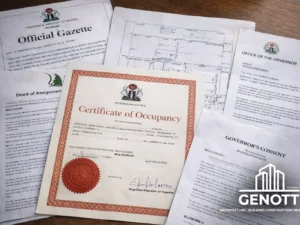
- Error: Attempting to lease or subdivide land with Deed of Assignment instead of Certificate of Occupancy, or land with unclear title/disputes
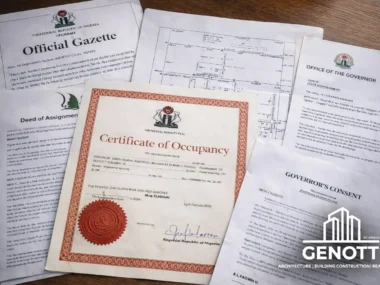
- Cost: Tenants won’t lease land with uncertain title for commercial use, buyers won’t purchase subdivided plots without C of O, deals collapse after months of effort
- Solution: Obtain C of O before major monetization efforts, resolve title disputes upfront, invest ₦500,000-₦3M in proper documentation enabling ₦2M-₦20M annual income
Mistake #3: Underpricing Land Income Potential
- Error: Leasing prime billboard location at ₦500,000 annually when market rate is ₦3M-₦5M, accepting first tenant offer without market research
- Cost: ₦2.5M-₦4.5M annual income lost, multiplied by 3-5 year lease = ₦7.5M-₦22.5M total loss
- Solution: Research comparable lease rates, obtain multiple tenant proposals, engage property consultant (₦100,000-₦300,000 fee worth paying for ₦20M+ income optimization)
Mistake #4: Ignoring Infrastructure Investment ROI
- Error: Holding raw land attempting to lease/sell without basic access road or borehole despite these investments doubling lease value
- Cost: Land leases at ₦80,000/hectare without infrastructure vs. ₦200,000/hectare with ₦1.5M borehole—forgoing ₦120,000 annual income to avoid ₦1.5M investment (12.5-year payback even without considering appreciation)
- Solution: Calculate infrastructure ROI—if ₦2M investment increases annual income ₦300,000 (15% return) or plot values ₦500,000-₦1M each, invest immediately
Mistake #5: No Risk Mitigation in Agricultural Leases
- Error: Leasing farmland without security deposit, soil conservation clauses, or insurance requirements
- Cost: Tenant defaults after 6 months leaving ₦400,000 lease unpaid and degraded soil requiring ₦200,000 rehabilitation
- Solution: Require 1-2 years upfront security deposit, annual soil testing, tenant insurance, clear exit clauses
Strategic Recommendations for Maximizing Land Income
Match Strategy to Land Characteristics:
- Small urban plots (300-1,000 sqm): Billboard/telecom leasing, parking, storage
- Medium plots (1,000-5,000 sqm): Subdivision, joint venture development, event space
- Large rural parcels (5-50 hectares): Agricultural leasing, tree plantations, solar farms
Diversification Reduces Risk: Don’t rely on single income source. 10-hectare land can combine: 5 hectares agricultural lease (₦250,000-₦1M annually), 2 hectares tree plantation JV (₦400,000-₦1.2M annually at maturity), 2 hectares subdivision (₦8M-₦20M one-time profit), 1 hectare event space (₦2M-₦10M annually) = ₦2.65M-₦13.2M annual recurring + ₦8M-₦20M subdivision profit.
Professional Support Worth Investment:
- Property lawyer for lease agreements: ₦100,000-₦300,000 prevents ₦2M-₦10M losses from unenforceable contracts
- Chartered surveyor for subdivision: ₦300,000-₦800,000 prevents boundary disputes costing ₦5M-₦20M
- Agricultural consultant for farming leases: ₦150,000-₦400,000 optimizes crop selection and lease structuring
Start Small, Scale Success: Test income strategies on portion of land before full commitment. Lease 1 hectare to farmer first year, expand to 5 hectares after proven payment reliability. Develop 2-unit pilot in JV before 10-unit phase 2.
FAQs
Q: How much money can I make from 1 hectare of land in Nigeria? A: Income potential varies by strategy and location. Agricultural leasing: ₦50,000-₦3M annually depending on crop type and proximity to cities (vegetable farming near Lagos/Abuja earns ₦200,000-₦500,000/hectare; rice farming in rural areas ₦100,000-₦250,000/hectare). Billboard/telecom on portion with road frontage: ₦300,000-₦8M annually. Subdivision into 15-18 plots: ₦8M-₦30M total profit over 24-36 months. Event space development: ₦2M-₦22M annually. Choose strategy matching your land location and characteristics.
Q: What is the best way to make money from vacant land without selling it in Nigeria? A: Best strategy depends on location. Urban/peri-urban land (Lagos, Abuja, Port Harcourt): Billboard/telecom leasing (₦300,000-₦8M annually, minimal investment), parking facilities (₦150,000-₦3M monthly), or subdivision (11-79% ROI). Rural agricultural land: Crop farming leases (₦50,000-₦300,000/hectare annually), fish farming (₦200,000-₦800,000/hectare), or tree plantation JV (₦800,000-₦3.2M annually at maturity). Land in growth corridors: Subdivision or joint venture development (₦15M-₦60M profit without capital).
Q: How do I lease my land for billboard or telecom mast in Nigeria? A: Contact billboard companies (Primeboard, MOMAS, Loatsad, Airspace) or telecom tower companies (IHS Towers, ATC) directly through their websites or regional offices. Ideal land has road frontage 10m+, high visibility, heavy traffic (for billboards) or fills network coverage gaps (for telecom). Standard process: (1) Submit site details and photos, (2) Company conducts site survey assessing suitability, (3) Negotiate lease rate (₦300,000-₦8M annually depending on location), (4) Sign lease agreement (3-10 years typically), (5) Company installs infrastructure, (6) Receive annual lease payments. You can also engage property consultants specializing in infrastructure leases (₦100,000-₦300,000 fee for securing tenant and negotiating optimal terms).
Q: Is land subdivision profitable in Nigeria in 2026? A: Yes, when done strategically in growth corridors. Example: 5,000 sqm land purchased at ₦15M in developing area (Epe, Ibeju-Lekki, Abuja satellites), subdivided into 8 plots at ₦1.1M-₦3.1M cost, sold at ₦2.48M-₦3.6M each generates ₦19.8M-₦32.4M revenue = ₦1.7M-₦14.3M profit (11-79% ROI in 18-36 months). Success requires: (1) Buying in infrastructure growth corridors 5-15km ahead of development, (2) C of O title (buyers need it for financing), (3) Basic infrastructure investment (road, drainage, beacons), (4) Staggered sales capturing appreciation. Avoid: Oversaturated markets, poor access areas, unclear titles.
Q: How much does agricultural land lease for in Nigeria? A: Rates vary by crop type, location, and land quality. Rice farming land: ₦100,000-₦250,000/hectare annually. Cassava: ₦60,000-₦150,000/hectare. Vegetable farming near cities (10-30km from Lagos/Abuja): ₦200,000-₦500,000/hectare. Fish farming: ₦200,000-₦800,000/hectare (₦400,000-₦1.2M for integrated fish-poultry). Poultry farms: ₦250,000-₦1M for 2-5 hectare operations. Cattle grazing (Middle Belt/North): ₦30,000-₦100,000/hectare. Land with borehole commands 30-50% premium. Peri-urban land (Ogun, Oyo near Lagos; Nassarawa, Niger near Abuja) earns 2-3x rural rates due to market access.
Q: What are the requirements for joint venture land development in Nigeria? A: Essential requirements: (1) Title: Certificate of Occupancy preferred—developers rarely invest ₦100M+ on uncertain Deed of Assignment, (2) Location: Prime residential areas (Lekki, Ajah for Lagos; Maitama, Gwarinpa for Abuja; GRA for Port Harcourt), (3) Size: 1,000-5,000 sqm suitable for 6-20 unit developments, (4) Access: Paved road access, power supply nearby, (5) Zoning: Residential or mixed-use permitting desired density, (6) Legal: Written JV agreement drafted by property lawyer (₦300,000-₦1M) specifying equity split, profit distribution, timelines, quality standards, dispute resolution. Independent land appraisal (₦200,000-₦500,000) establishes fair value for equity calculation.
Q: Can I make money from land in rural areas of Nigeria? A: Absolutely. Rural land income strategies: (1) Agricultural leasing: ₦50,000-₦250,000/hectare annually for crop farming, higher for specialized uses, (2) Tree plantation JV: Oil palm, rubber, teak partnerships generating ₦800,000-₦3.2M/hectare annually at maturity without capital investment, (3) Fish farming leasing: ₦200,000-₦800,000/hectare in areas with water access, (4) Livestock leasing: Poultry ₦250,000-₦1M for 2-5 hectares, cattle grazing ₦30,000-₦100,000/hectare, (5) Agro-processing leases: Rice mills, cassava processing ₦500,000-₦3M annually, (6) Land banking with tree planting: Generate timber income in 5-15 years while land appreciates. Rural land advantages: Lower purchase prices, larger scale operations possible, less competition.
Q: How do I find tenants for agricultural land leasing in Nigeria? A: Multiple channels: (1) Local farming communities: Advertise through community leaders, agricultural extension officers, farmers’ cooperatives, (2) Agribusinesses: Contact rice mills, cassava processors, poultry companies directly—they need land for contract farming, (3) Agricultural development authorities: State and federal agriculture departments maintain databases of commercial farmers seeking land, (4) Online platforms: List on farmland leasing platforms, agricultural forums, (5) Agricultural consultants: Engage specialists (₦150,000-₦400,000 fee) who connect landowners with credible commercial farmers, (6) Nearby commercial farms: Successful operations often seek expansion land. Screen tenants thoroughly: Verify farming experience, financial capacity (bank statements, previous harvest records), require 1-2 years security deposit upfront.
Q: What is the fastest way to start making money from land in Nigeria? A: Fastest strategies requiring minimal preparation: (1) Billboard/telecom leasing: Contact companies, complete in 1-3 months if land is suitable, earn ₦300,000-₦8M annually with zero infrastructure investment, (2) Construction material storage: Lease to nearby construction projects at ₦100,000-₦500,000 monthly (6-18 month contracts), setup time 2-4 weeks, (3) Agricultural leasing: Direct lease to farmers, 3-6 months to first payment, requires basic land clearing (₦200,000-₦800,000/hectare), (4) Parking lot: Simple lots with basic fencing and lighting operational in 6-8 weeks, generate ₦150,000-₦1.5M monthly depending on location. Event space development takes 3-6 months. Subdivision requires 6-36 months. Joint ventures take 18-36 months.
Q: Do I need Certificate of Occupancy to make money from land in Nigeria? A: Not always, but C of O significantly expands and optimizes opportunities. What works with Deed of Assignment or customary title: Agricultural leasing (farmers accept), temporary uses (storage, parking), some billboard leases (company conducts title search). What requires C of O: Telecom mast leasing (companies need secure long-term title), subdivision and plot sales (buyers require C of O for bank financing, resale value), joint venture development (developers won’t invest ₦100M+ without C of O), fuel station leasing (DPR requirement), formal commercial leases. Recommendation: If land value justifies it, obtain C of O (₦500,000-₦3M in Lagos/Abuja) unlocking ₦2M-₦20M+ annual income opportunities vs. ₦200,000-₦2M with weak title.
CONCLUSION
Understanding how to make money from land in Nigeria transforms dormant assets into income-generating investments producing ₦200,000-₦20M+ annually without selling. The five proven strategies—agricultural land leasing (₦50,000-₦3M per hectare), commercial land rental income from billboards and telecom masts (₦300,000-₦8M annually), land subdivision (11-79% ROI creating ₦1.7M-₦14M profit), joint venture land development (₦15M-₦60M profit share without capital), and creative monetization through event spaces and temporary uses (₦2M-₦22M annually)—provide comprehensive frameworks matching any land size, location, or budget.
Success hinges on strategic matching: urban plots excel at billboard/telecom/parking income; peri-urban land optimizes through subdivision or event space development; rural parcels generate consistent agricultural lease income or tree plantation partnerships. Location determines strategy, but every Nigerian land parcel from 500 sqm urban corner to 50-hectare rural farm possesses monetization potential.
Critical implementation factors: proper title documentation (C of O) unlocks premium opportunities, written lease agreements registered at land registry prevent costly disputes, strategic infrastructure investment (roads, boreholes, fencing) doubles income potential with 12-50% annual ROI, professional support (lawyers, surveyors, consultants) costing ₦300,000-₦1.5M prevents ₦2M-₦20M losses and optimizes income.
The transformation from vacant land liability (paying ₦50,000-₦500,000 annually in taxes and security with zero income) to passive income asset (generating ₦200,000-₦20M+ annually while appreciating) begins with strategic assessment, proper preparation, and systematic implementation of proven income models Nigerian land owners successfully deploy across Lagos, Abuja, Port Harcourt, and every Nigerian state.
Your land income journey starts with honest evaluation of your specific parcel’s characteristics (size, location, access, title, zoning), selection of appropriate strategies matching these attributes, investment in essential preparation (documentation, basic infrastructure), and execution of income generation through agricultural leasing, commercial rental, subdivision, joint ventures, or creative uses that transform land from dormant speculation into active wealth creation.
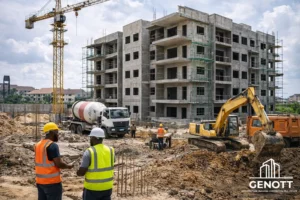
For professional support in agricultural land development, commercial lease structuring, subdivision planning, joint venture development partnerships, and integrated expertise across real estate, agriculture, architecture, construction, and transportation, GENOTT LTD provides comprehensive land monetization and development solutions throughout Lagos, Abuja, Port Harcourt, and Nigeria nationwide.

 GENOTT LTD Editorial Team