 GENOTT LTD Editorial Team
A strong architectural approach solves these problems early. It translates your land, lifestyle needs, and investment goal into a clear plan: brief → concept → schematic design → detailed design → construction drawings—with compliance built in from day one. It also reduces expensive rework by coordinating structural and MEP (mechanical, electrical, plumbing) systems and using 3D architectural visualization in Nigeria to align expectations before blocks are laid.
This pillar guide explains how architectural design in Nigeria works in practice: what you should expect from an architect, how approvals typically flow (including Lagos planning permit systems and FCT development control expectations), what drives design cost, and the design strategies that perform best in Nigeria’s heat, rainfall, and power realities. If you want a project that moves from idea to approval to construction smoothly, start here.
SUMMARY TABLE
| Topic | Key Insight | Notes |
|---|---|---|
| Design stages | Brief → concept → schematic → detailed → construction drawings | Prevents costly changes later |
| Approvals | Planning permits and building plan approval are required through state/FCT systems | Lagos runs electronic submission portals for planning permits. |
| Legal docs | Title evidence + survey plan are common requirements | Often includes C of O / Deed / Survey (varies by state). |
| 3D visualization | Speeds decision-making and reduces redesign | Helps clients “see” outcomes before build |
| Climate design | Ventilation + shading + drainage matter as much as style | Lagos humidity ≠ Abuja dry heat |
| Cost drivers | Size, complexity, MEP coordination, site constraints | Also timelines and approval complexity |
Design and Architecture in Nigeria: Why It Matters (Beyond Beauty)
In Nigeria, architecture is a risk-control tool as much as a creative service. The right design protects you from:
-
Approval delays caused by wrong setbacks, wrong land-use assumptions, or incomplete submissions
-
Construction rework from poorly coordinated drawings
-
Operational discomfort (hot rooms, poor ventilation, dampness, noise)
-
Hidden costs driven by site drainage, weak structural planning, and over-ambitious aesthetics
Whether you’re building a duplex in Abuja, a terrace project in Lagos, or a mixed-use block in Enugu, architectural quality shows up in outcomes investors care about:
-
Faster approvals
-
More accurate pricing and BOQ (Bill of Quantities)
-
Better tenant/buyer appeal
-
Lower maintenance issues long term
A useful mindset: Architecture is the bridge between land (real estate) and construction (delivery).
Architectural Design Process in Nigeria (Concept → Design Development → Construction Drawings)
A professional process keeps your project from becoming “trial and error.”
Step 1: The Brief (Your Business and Lifestyle Logic)
A strong brief includes:
-
Budget range and cost priorities (structure vs finishes)
-
Use-case (family home, rentals, hotel, retail, warehouse)
-
Space needs (parking, guest room, BQ, shopfront, storage)
-
Future-proofing (expansion, solar readiness, water storage, rental conversion)
Nigeria-specific tip: Add “utility resilience” to your brief—generator space, inverter/solar area, tank platform, and service yard.
Step 2: Concept Design (The Big Idea)
This stage sets:
-
Building form and style (modern, tropical, contemporary)
-
Orientation to sun/wind
-
First pass on zoning (public vs private spaces)
-
Site response (setbacks, driveway, drainage direction)
Step 3: Schematic Design (Plans That Can Be Tested)
You’ll see:
-
More accurate floor plans
-
Preliminary sections and elevations
-
Initial structural grid coordination
-
Parking and circulation studies (especially for commercial)
Step 4: Design Development (Where Real Money Decisions Happen)
This is the investor-grade phase:
-
Materials and façade strategy
-
Window/ventilation sizing for comfort
-
MEP routes (AC drainage, plumbing stacks, electrical risers)
-
Fire safety logic for commercial properties
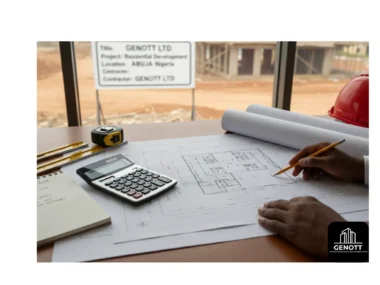
Step 5: Construction Drawings (Approvals + Buildability)
This is what contractors price and build from:
-
Architectural drawings
-
Structural drawings + details
-
MEP drawings
-
Schedules (doors/windows), finishes, specifications
Deliverable mindset: “Pretty drawings” are not enough—construction documentation is where cost control lives.
Approvals & Compliance in Nigeria: Planning Permit, Building Plan Approval & Documentation
Approval processes vary by state, but the pattern is consistent: you submit documents to the relevant planning authority and follow statutory steps.
Lagos (Example: Electronic Planning Permit Systems)
Lagos operates electronic portals for physical planning permit workflows and has published regulations guiding planning permits.
FCT Abuja (Development Control Expectations)
In Abuja, development control oversight is typically referenced as the body responsible for building plan approvals in the FCT.
Certain public guidance (e.g., FHA’s architectural plan requirements) shows expectations such as multiple sets of drawings signed by an architect registered to practice in Nigeria.
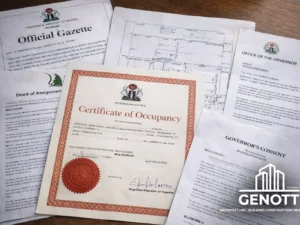
Common documents that often show up in approval checklists
While requirements vary, common themes include:
-
Evidence of title + survey plan
-
Full set of building drawings (architectural, structural, MEP)
-
Receipts/statutory fees and related documentation
Published legal and practice summaries frequently mention these categories.
Practical Nigerian pitfall: People start excavation before approvals. That can trigger stop-work actions and expensive redesign if the building violates planning rules.
Cost Drivers in Architectural Design (Nigeria): What Investors Should Budget For
Architectural design fees and total design costs are shaped by factors that affect time, risk, and coordination.
Key cost drivers
-
Project size and typology
-
Duplex ≠ terrace estate ≠ warehouse ≠ hotel
-
Complexity
-
Cantilevers, basements, tall structures, complex roofs
-
Site conditions
-
Flood-prone land needs better drainage design
-
Slopes require retaining strategies and revised foundations
-
MEP integration
-
Commercial projects require deeper coordination
-
Poor MEP planning leads to ceiling clashes, re-routing, and rework
-
Approval complexity
-
Dense areas or special zones can demand more documentation
The biggest “cost saving” in Nigeria is avoiding rework—design clarity is a financial decision.
Residential Design in Nigeria: Duplex, Bungalow & Terrace Designs That Fit Nigerian Cities
Duplex design (Abuja, Enugu, Ibadan)
Best for:
-
Larger families
-
Prestige builds
-
Mixed owner-occupier + rental strategies (e.g., rent the boys’ quarters or a mini flat)
Design priorities:
-
Cross-ventilation
-
Staircase placement that doesn’t waste space
-
Storage (pantry, linen, utility)
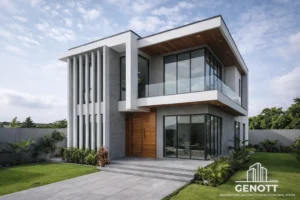
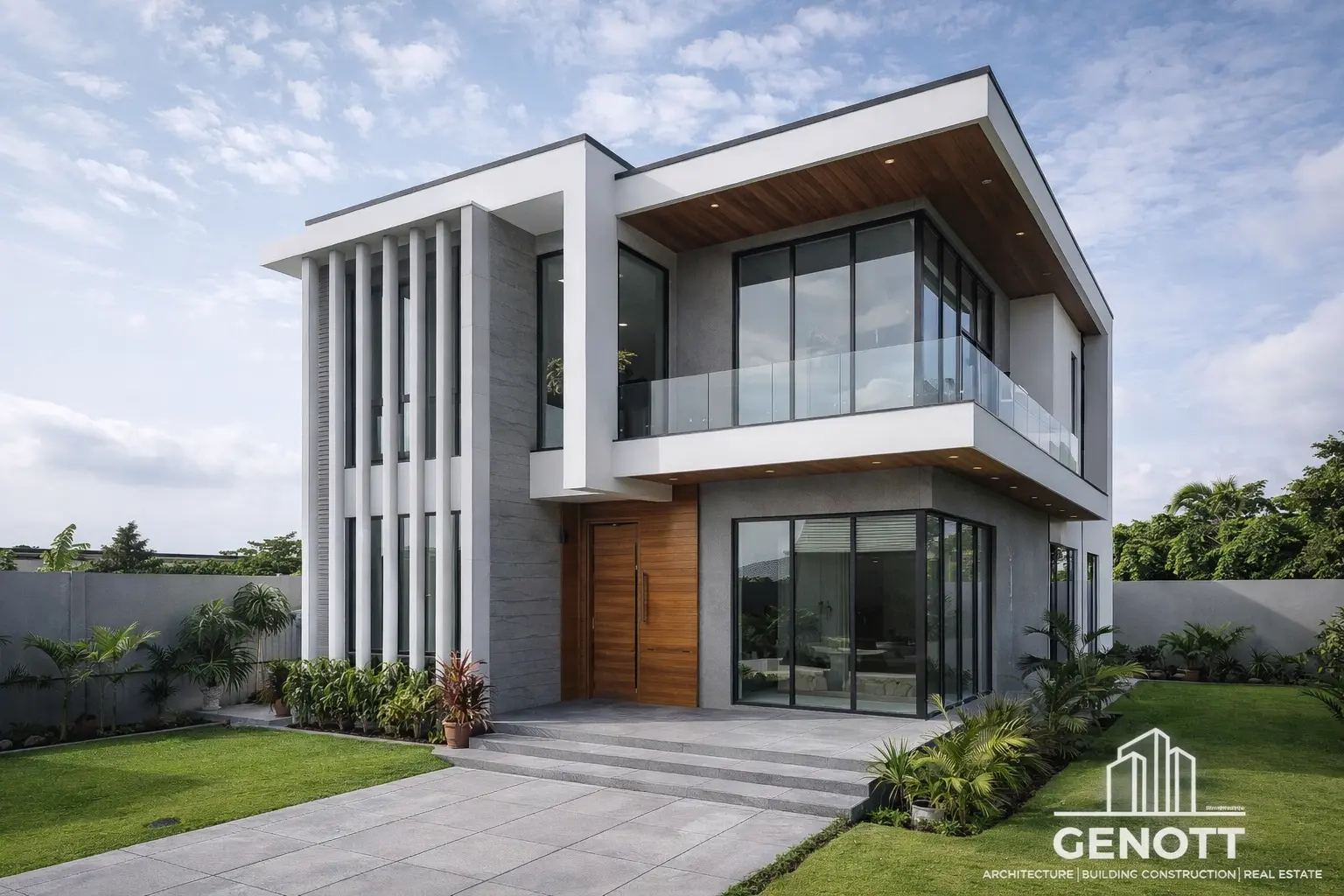
Tropical Modern Duplex with shading fins and large windows
Bungalow design (Lagos outskirts, Ogun, parts of North Central)
Best for:
-
Budget-controlled builds
-
Elder-friendly living (no stairs)
-
Faster construction timelines
Design priorities:
-
Roof ventilation and shading
-
Good drainage and raised plinth in wet zones
Terraces (Lagos, Abuja satellite towns)
Best for:
-
Developer ROI and density
-
Estate-style delivery
Design priorities:
-
Parking geometry
-
Privacy (window placement, acoustic separation)
-
Repetition efficiency (standardized details reduce cost)
Commercial Building Design in Nigeria: Offices, Warehouses, Retail & Mixed-Use
Commercial building design in Nigeria is where function becomes the main aesthetic.
Offices
-
Efficient circulation and core placement
-
Power strategy (inverter/solar room, generator yard)
-
Fire safety and egress planning (especially multi-floor)
-
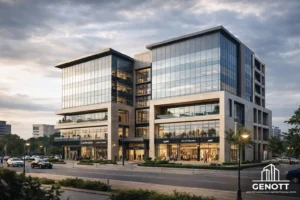
Contemporary Retail and Office Mixed-use facade
Warehouses
-
Yard and truck turning radius
-
Clear height, ventilation, and daylight strategy
-
Floor strength and drainage (especially where heavy forklifts operate)
Retail
-
Visibility and signage zones
-
Customer flow and safety
-
Loading and refuse management
Mixed-use developments
-
Separate residential and commercial access
-
Noise and service separation
-
Strong MEP planning to avoid conflict
Climate-Responsive Architecture: Lagos vs Abuja vs Enugu (Design That Performs)
Nigeria is not one climate. Design should change by zone.
Lagos (humid coastal)
-
Prioritize cross-ventilation + moisture control
-
Avoid trapping humidity with sealed designs
-
Drainage strategy is a must
Abuja (hot-dry with dust periods)
-
Shading, courtyards, and sun control
-
Thermal comfort via roof insulation and orientation
Enugu (mixed humidity + rains)
-
Ventilation plus rain protection (overhangs)
-
Site drainage and erosion control in sloped areas
Investor truth: A “foreign-looking” design can be uncomfortable if it ignores local climate.
Site Planning & Land Constraints: Setbacks, Drainage, Orientation, Parking & Access Roads
This is where architecture meets land development.
Key checks:
-
Road alignment and entry point
-
Setbacks and right-of-way risks
-
Drainage direction and discharge point
-
Parking count and turning radii
-
Septic and soakaway location (if no central sewer)
A small mistake here becomes an expensive mistake later (foundation changes, blocked access, flooding).
Sustainable Building Design in Nigeria (Practical, Not Trendy)
Sustainability in Nigeria is often about resilience.
High-impact options:
-
Solar readiness (roof planning, inverter space, cable routes)
-
Rainwater harvesting (gutters, filtration, storage)
-
Passive cooling (shading, ventilation, stack effect)
-
Daylighting to reduce generator runtime
These reduce operating cost and improve market appeal.
3D Architectural Visualization in Nigeria: Renders, Walkthroughs & Client Clarity
3D visualization is not just marketing—it’s risk reduction:
-
Helps clients approve layout earlier
-
Makes façade decisions clearer
-
Reduces “I didn’t imagine it like this” disputes
-
Helps developers pre-sell units and attract financing
Best practice:
-
Use 3D alongside a clear materials board and key dimensions
-
Confirm what is “concept” vs “final spec” to avoid scope disputes
-
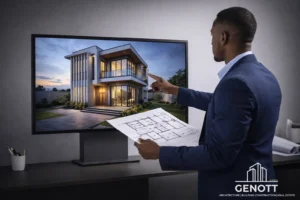
Architect presenting a high-end 3D walkthrough on screen with floor plans
Choosing an Architect in Nigeria: Deliverables Checklist, Red Flags & Contract Basics
What to demand (deliverables)
-
Clear scope: concept, approvals, construction drawings, site supervision (if included)
-
Signed drawings by qualified professionals (architect + engineers as required)
-
Revision policy (how many rounds)
-
Timeline and payment milestones
Red flags Nigerians should avoid
-
No written scope
-
“Approval guaranteed” promises
-
Unclear fees with endless variations
-
Designs that don’t match site reality (drainage, setbacks, access)
Professional regulation exists for architectural practice in Nigeria through the Architects Registration Council of Nigeria (ARCON).
Common Mistakes Nigerians Make in Design and Architecture (That Cause Cost Overruns)
-
Starting without a clear brief and budget range
-
Copying Pinterest/Instagram designs without climate adaptation
-
Underestimating approvals and documentation requirements
-
Poor drainage planning (especially in high rainfall zones)
-
Ignoring MEP coordination until construction
-
Designing too big without a phased build strategy
-
Not planning utility spaces (tanks, generator, inverter/solar, refuse)
Expert Recommendations: How to Get Investor-Grade Outcomes
-
Treat design as a financial control system, not decoration
-
Use a site-first design approach (drainage, orientation, access)
-
Coordinate architectural + structural + MEP early
-
Build for Nigeria’s infrastructure reality (power, water, roads)
-
Use 3D visualization to lock decisions before construction
-
Create a compliance pathway early (state/FCT requirements vary, but planning ahead reduces delays)
Future Trends in Nigerian Architecture (2026+): Where Smart Projects Are Going
-
More climate-responsive “tropical modern” design
-
Increased demand for energy resilience (solar + efficient cooling)
-
Greater use of 3D walkthroughs for client alignment and pre-sales
-
Better planning compliance as authorities digitize processes (e.g., portal-based submissions)
-
Mixed-use growth along major corridors (Lagos-Ibadan, Abuja-Kaduna, Enugu-Onitsha)
FAQs
1) What does “design and architecture” cover in Nigeria?
It includes concept design, drawings for approvals, construction documentation, coordination with engineers, and (optionally) site supervision.
2) How long does architectural design take in Nigeria?
Simple residential projects may take weeks; complex commercial projects take longer due to coordination and approvals. Timelines depend on scope, revisions, and authority processes.
3) What documents are usually needed for building plan approval in Nigeria?
Requirements vary, but commonly include evidence of title, survey plan, and a full set of drawings submitted to the relevant planning authority.
4) Is building plan approval different in Lagos and Abuja?
Yes—states and the FCT use different authorities and workflows, including digital permit systems in Lagos and development control structures in the FCT.
5) Why is 3D architectural visualization important?
It reduces misunderstanding, speeds decisions, and helps align expectations before construction begins—especially useful for developers and diaspora clients.
6) What is the biggest cause of redesign and cost overruns?
Poor briefing and weak coordination—when MEP and structural needs are not integrated early, redesign happens during construction.
7) What’s the best house design style for Nigeria’s climate?
Climate-responsive modern (tropical modern) often performs best: shading, ventilation, moisture control, and drainage planning tailored to the zone.
8) How do I verify professional credibility for architectural services?
Nigeria has a formal architectural regulator (ARCON). Working with properly registered professionals reduces regulatory and quality risks.
CONCLUSION
In Nigeria, successful design and architecture is measured by more than how a building looks—it’s measured by whether it becomes approvable, buildable, comfortable, and financially controlled. When the process is done properly—briefing, concept, coordinated drawings, compliance planning, and climate-smart detailing—you reduce redesign, shorten approval friction, and protect your construction budget.
Whether you’re building a family home in Enugu, a duplex in Abuja, or a commercial facility serving the Lagos market, the smartest projects treat design as the stage where most risks are removed—before construction money is spent.
For professional support, GENOTT LTD provides expert guidance in architectural design in Nigeria, residential and commercial design development, planning approval documentation, 3D visualization, and construction-ready drawings—helping clients deliver projects that are compliant, cost-smart, and climate-resilient.

 GENOTT LTD Editorial Team