 GENOTT LTD Editorial Team
Hidden construction costs in Nigeria are one of the primary reasons residential and commercial projects exceed their initial budgets. Many developers focus only on visible costs such as cement, blocks, roofing, and labour — but the true financial pressure often comes from unexpected building expenses that emerge mid-project.
Across Lagos, Abuja, Enugu, Port Harcourt, Nasarawa, and other growing cities, house construction budget mistakes Nigeria builders make typically stem from underestimating indirect costs. From soil testing requirements to fluctuating material prices and finishing-stage upgrades, these hidden expenses can disrupt even well-planned projects.
This guide reveals the real hidden costs when building a house in Nigeria, explains why construction budget overruns occur, and provides a practical checklist to help you implement effective construction contingency planning Nigeria strategies.
Hidden Cost Overview Table
| Cost Category | Typical Range (₦) | Risk Level | Often Ignored? |
|---|---|---|---|
| Soil Testing | 200k – 700k | High | Yes |
| Plan Approval | 500k – 2M | Medium | Yes |
| Material Price Increase | 1M – 5M | High | Yes |
| Transportation | 300k – 2M | Medium | Yes |
| Finishing Upgrades | 3M – 10M | High | Very Often |
| Professional Fees | 500k – 3M | Medium | Frequently |
Why Hidden Costs Are So Common in Nigeria
Construction in Nigeria operates in a dynamic economic environment influenced by:
-
Exchange rate volatility
-
Imported material dependency
-
Fuel price changes
-
Regulatory differences across states
-
Labour productivity variations
Because pricing is not fixed long-term, building project hidden fees developers face are often due to mid-project cost changes.
Detailed Breakdown of Hidden Construction Costs
1. Soil Testing & Foundation Adjustments
Many builders skip soil testing to save money, but this creates major financial risk.
If soil conditions require:
-
Deeper excavation
-
Extra reinforcement steel
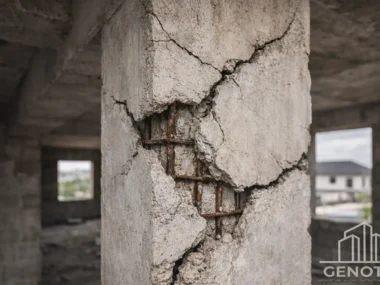
Foundation to finishing extra costs can increase significantly.
Professional insight: A ₦400k soil test can prevent ₦4M structural correction later.
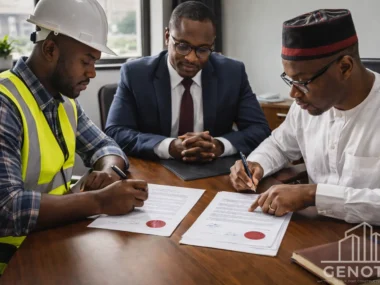
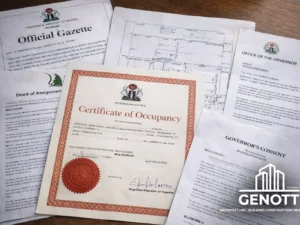
2. Government Approval & Regulatory Fees
Approval processes vary:
-
Abuja Development Control
-
Lagos State Planning Permit Authority
-
State Environmental Agencies
Fees often include:
-
Architectural approval
-
Structural vetting
-
Environmental impact clearance
Many builders underestimate these legal costs.
3. Material Price Fluctuations
Building materials cost continues to fluctuate due to:
-
Dollar exchange rate
-
Cement production changes
-
Steel import dependency
A project budgeted at ₦30M can increase to ₦35M within months due to inflation alone.
4. Transportation & Logistics
Costs increase due to:
-
Distance from suppliers
-
Fuel price changes
-
Access road challenges
-
Urban congestion (Lagos especially)
This often falls under extra building expenses Nigeria projects face.
5. Design Changes During Construction
Mid-project changes cause:
-
Demolition of completed work
-
Additional material purchase
-
Labour extension costs
Even minor layout changes can increase total budget by 5–10%.
6. Finishing Stage Escalation
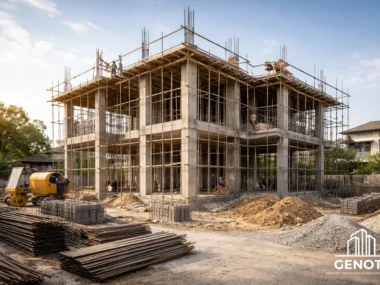
Finishing is the most dangerous stage for budget overruns, this may also include roofing sheets/materials.
Examples:
-
Upgrading from ceramic to porcelain tiles
-
Imported lighting fixtures
-
Custom cabinetry
-
Smart home systems
Finishing upgrades often account for the largest hidden construction costs in Nigeria.
7. Professional & Supervision Costs
Often ignored fees:
-
Quantity surveyor cost analysis
-
Structural inspections
-
Interior designer fees
-
Project management supervision
These services reduce risk but must be included in cost planning for house construction Nigeria.
Realistic Budget Overrun Scenario
Example mid-range 3-bedroom house:
Initial Budget: ₦35M
Hidden Costs Additions:
-
Soil adjustments: ₦1M
-
Material price increase: ₦3M
-
Finishing upgrade: ₦4M
-
Logistics: ₦1.5M
New Total: ₦44.5M
Without contingency planning, this leads to funding crisis.
How to Prevent Construction Budget Overruns
1. Detailed Cost Breakdown Before Starting
2. Include 15–20% Contingency Fund
3. Avoid Mid-Project Design Changes
4. Monitor Weekly Cost Trends
5. Hire Quantity Surveyor for Accurate Estimation
Common Budgeting Mistakes in Nigerian Construction Projects
-
Ignoring indirect costs
-
Underestimating finishing
-
Starting without full financing
-
Choosing cheapest contractor without evaluation
-
Failing to track spending
FAQs
1. What hidden costs appear when building in Nigeria?
Soil testing, approvals, logistics, inflation, finishing upgrades, and supervision fees.
2. How much contingency fund is enough?
Between 10% and 20% of total budget.
3. Why do projects get abandoned?
Most often due to underestimating hidden construction costs.
4. Which stage has most unexpected expenses?
Finishing stage and foundation adjustments.
Expert Recommendations
-
Always conduct soil analysis.
-
Budget approvals before construction.
-
Include price fluctuation buffer.
-
Avoid emotional upgrades mid-project.
-
Use professional cost management.
Future Trends Increasing Hidden Costs
-
Stricter building regulations
-
Rising compliance fees
-
Smart home installations
-
Sustainability requirements
-
Energy efficiency standards
Conclusion
Hidden construction costs in Nigeria are predictable if you understand the construction ecosystem. Builders who plan for contingencies, monitor market trends, and engage professional cost management avoid budget overruns and incomplete projects. Awareness transforms hidden expenses into controlled investments rather than financial disasters.
For professional architecture, construction cost management, and integrated project planning tailored to Nigerian conditions, GENOTT LTD provides expert guidance from planning to completion.

 GENOTT LTD Editorial Team