 GENOTT LTD Editorial Team
Goat farming investment Nigeria offers a relatively low-capital entry into livestock agribusiness with strong local demand for chevon (goat meat). Startup costs range from ₦1.5 million to ₦10 million depending on scale, breed selection, and feeding systems. Well-managed goat farms can achieve 20–35% annual ROI due to high reproduction rates and festive market demand.
Nigeria’s livestock sector presents significant opportunities for investors seeking scalable agricultural ventures, and goat farming stands out as one of the most accessible entry points. Goat farming investment Nigeria opportunities continue to grow due to increasing demand for chevon, rising population consumption patterns, and strong seasonal markets during festive periods such as Eid celebrations, weddings, and cultural events.
Unlike large livestock such as cattle, goats require relatively lower startup capital, smaller land area, and flexible feeding systems — making small ruminant farming in Nigeria an attractive option for both beginners and commercial investors. However, many new entrants underestimate factors such as breeding management, disease control, feed cost planning, and market positioning.
This comprehensive investment guide explores goat farming startup cost Nigeria requirements, breeding cycles, feeding strategies, festive season demand dynamics, and realistic goat breeding profitability Nigeria expectations. Whether you aim to establish a small-scale backyard operation or a commercial livestock enterprise, this article provides structured expert insights tailored to Nigerian conditions.
SUMMARY TABLE
| Area | Key Insight | Notes |
|---|---|---|
| Startup Cost | ₦1.5M – ₦10M+ | Scale dependent |
| ROI | 20–35% annually | High breeding rate |
| Feeding | Flexible systems | Low maintenance |
| Market Demand | Strong festive sales | Urban markets growing |
| Entry Barrier | Relatively low | Suitable for beginners |
Why Goat Farming is a Strategic Investment in Nigeria
Small ruminant/goat farming Nigeria offers advantages including:
-
High adaptability to Nigerian climate.
-
Lower feed cost compared to cattle.
-
Fast reproduction cycles.
-
Strong cultural and festive demand.
Urbanization in Lagos, Abuja, Kano, and Enugu has increased demand for goat meat due to restaurants, event catering, and household consumption.
Step-by-Step Guide to Starting a Goat Farm
1. Selecting Goat Breeds
Popular breeds in Nigeria:
-
West African Dwarf Goat.
-
Red Sokoto (Maradi goat).
-
Sahelian breed.
Breed selection affects growth rate and profitability.
2. Breeding Cycles (Core Profit Driver)
Goats reproduce quickly compared to other livestock.
Key facts:
-
Gestation period: ~150 days.
-
Twins common in healthy breeding programs.
-
Multiple breeding cycles per year possible.
Effective breeding management improves goat breeding profitability Nigeria investors expect.
3. Feeding Systems
Feeding strategies include:
-
Free grazing.
-
Semi-intensive feeding.
-
Zero-grazing system.
Common feed sources:
-
Grass and shrubs.
-
Agricultural by-products.
-
Supplementary concentrates.
Nigeria’s climate allows year-round feeding flexibility.
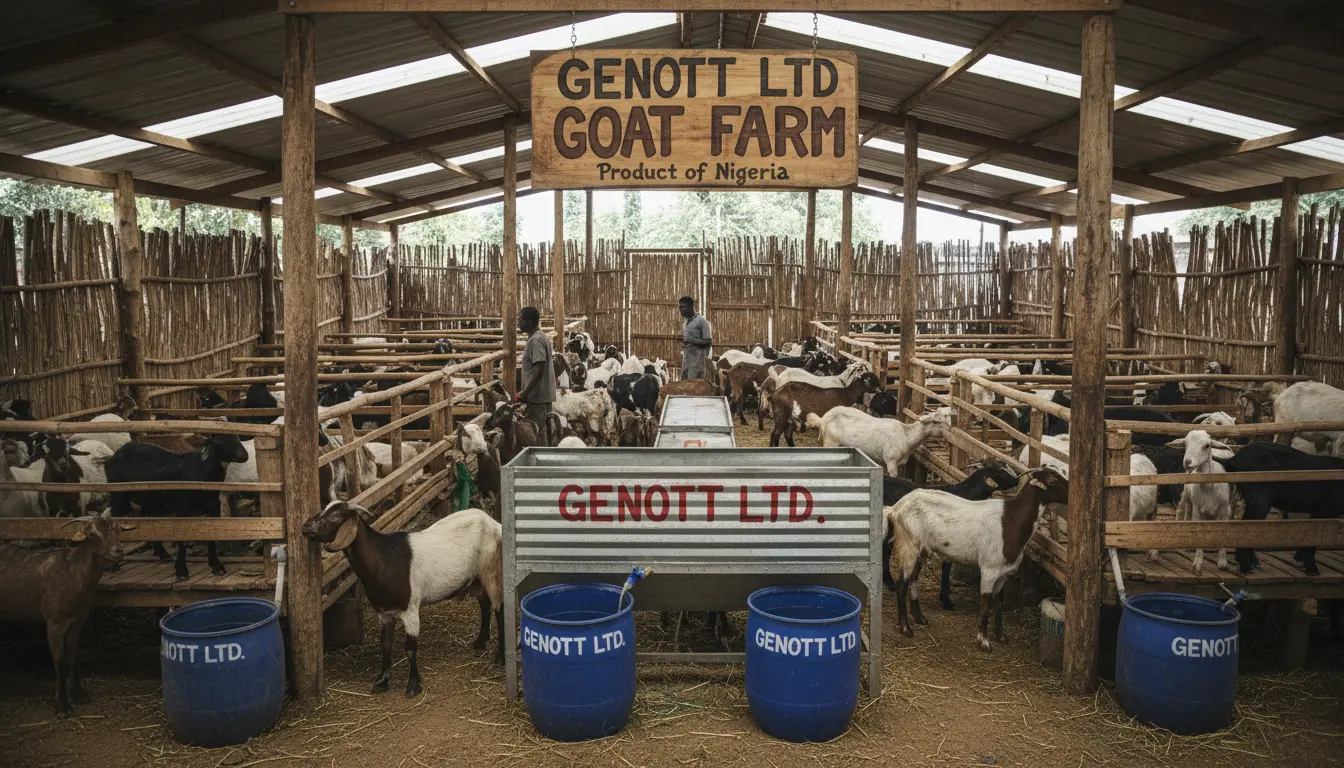
4. Housing & Infrastructure
Simple housing structures reduce disease risk.
Key considerations:
-
Proper ventilation.
-
Elevated flooring.
-
Drainage during rainy season.
5. Festive Season Demand (Market Advantage)
Peak demand periods:
-
Eid celebrations.
-
Christmas/New Year.
-
Weddings and cultural events.
Prices often increase significantly during festive seasons, boosting ROI.
6. Low-Capital Entry Model
Unlike commercial poultry or fish farming, goat farming allows gradual expansion.
Example entry model:
-
Start with 10–20 breeding goats.
-
Expand herd through natural reproduction.
Cost Analysis & Investment Insights
Example medium-scale goat farm:
| Expense Category | Estimated Cost |
|---|---|
| Breeding stock | ₦2M |
| Housing | ₦1M |
| Feed & supplements | ₦1.5M |
| Veterinary care | ₦300k |
| Labour | ₦700k |
| Miscellaneous | ₦500k |
| Total Startup | ~₦6M |
Projected annual revenue:
₦8M – ₦10M depending on herd growth and market timing.
Goat Farming vs Other Livestock
| Factor | Goat | Cattle | Poultry |
|---|---|---|---|
| Startup Cost | Low | High | Medium |
| Reproduction Rate | High | Low | Medium |
| Feed Requirement | Moderate | High | High |
| Market Stability | Strong | Strong | Strong |
Common Mistakes Nigerians Make
-
Poor breeding management.
-
Overcrowding housing.
-
Ignoring veterinary care.
-
Lack of market planning.
-
Selling outside peak demand periods.
Expert Recommendations
-
Maintain breeding records.
-
Diversify feed sources.
-
Target festive markets.
-
Gradually scale herd size.
-
Explore value addition such as meat processing.
Future Trends in Goat Farming Nigeria
-
Commercial ranching systems.
-
Organic meat production.
-
Export opportunities within West Africa.
-
Integrated livestock and crop farming.
-
Digital livestock tracking.
FAQs
1. Is goat farming profitable in Nigeria?
Yes, due to strong demand and fast breeding cycles.
2. How much capital is needed?
Small-scale operations can start from ₦1.5M.
3. Which goat breed is best?
Red Sokoto goats are widely preferred.
4. How long before profit?
Typically within 12–18 months depending on breeding strategy.
5. Is goat farming suitable for beginners?
Yes — it has relatively low entry barriers.
CONCLUSION
Goat farming investment Nigeria represents a practical and scalable entry into the livestock agribusiness sector. With relatively low startup costs, strong festive market demand, and high reproduction rates, goat farming offers attractive opportunities for both new and experienced investors. Proper breeding management, feeding strategies, and market positioning remain essential for maximizing profitability and ensuring long-term sustainability.
For professional agribusiness planning, livestock farm infrastructure development, and investment strategy tailored to Nigerian conditions, GENOTT LTD provides expert support from concept to execution.


 GENOTT LTD Editorial Team