 GENOTT LTD Editorial Team
Certificate of Occupancy (C of O) in Nigeria: Full Investor Guide to Safe Land Ownership
Learn what a Certificate of Occupancy (C of O) means in Nigeria, how to verify it, avoid scams, and invest safely in residential or farmland.
Introduction
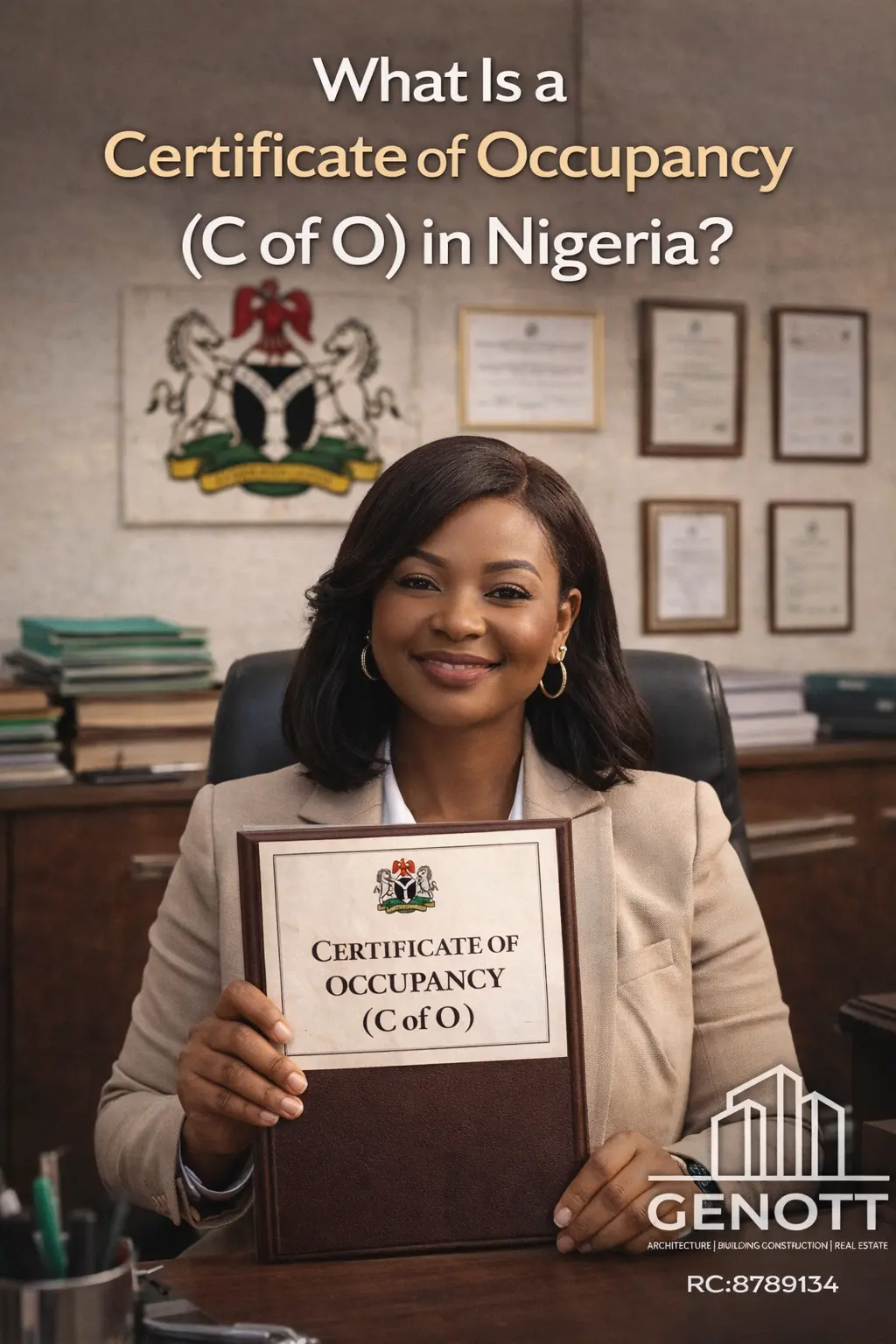
A Certificate of Occupancy (C of O) in Nigeria is one of the most important legal documents that confirms a government-recognized right to occupy and use land. For investors, land buyers, and diaspora Nigerians, understanding the C of O is essential for safe land ownership, whether the land is for residential development or farmland investment. This guide explains what a C of O means, how to verify it, how to avoid fraud, and how GENOTT LTD helps buyers invest legally and confidently.
This guide covers:
⇒ Meaning of C of O
⇒ Verification process
⇒ Scam prevention
⇒ Residential + farmland relevance
⇒ Investor best practices
⇒ GENOTT LTD ownership support
C of O Meaning in One Sentence
A Certificate of Occupancy is a document issued by a Nigerian state government granting legal right of occupancy over land under the Land Use Act.
What is a Certificate of Occupancy (C of O) in Nigeria?
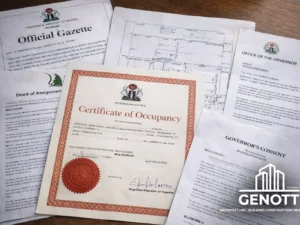
A Certificate of Occupancy (C of O) is an official document issued by a state government confirming that an individual or organization has been granted the legal right to occupy a piece of land for a specified period.
Legal Foundation
The concept of the C of O comes from the Nigerian Land Use Act, which vests land ownership in each state under the control of the Governor.
This means:
-
Land is administered by the government
-
Individuals receive legal rights to occupy and use land
-
Titles must be properly documented for security
A C of O is therefore a major pillar of property ownership legality in Nigeria.
Why the Certificate of Occupancy Matters for Safe Land Investment in Nigeria
Many investors ask: Is land investment profitable in Nigeria?
Yes—but only when the land is legally secure.
A C of O is important because it strengthens:
Ownership Security
It confirms government recognition of occupancy rights.
Investor Confidence
Buyers and banks trust land with clear documentation.
Higher Resale and Development Value
Land with C of O typically attracts better pricing and faster transactions.
Protection Against Disputes
Proper titles reduce risk of multiple claims or community conflict.
Whether you’re buying estate plots or farmland investment in Nigeria, documentation remains the foundation of safety.
Is a C of O Proof of Ownership or Right of Occupancy?
This is one of the most misunderstood questions in Nigerian real estate.
A C of O is Not Absolute Ownership
Instead, it is proof of:
-
Legal right of occupancy
-
Government acknowledgment of land allocation
-
A recognized interest in land
Why Due Diligence Still Matters
Even with a C of O, risks may still exist such as:
-
Forged certificates
-
Land under government acquisition
-
Improper transfer history
-
Disputed boundaries
So while many ask: “Is C of O proof of ownership?”
The accurate answer is:
⇒ It is strong evidence of recognized rights
⇒ But verification remains essential
Certificate of Occupancy vs Governor’s Consent (Investor Comparison)
Many investors confuse these two documents.
| Feature | Certificate of Occupancy (C of O) | Governor’s Consent |
|---|---|---|
| Purpose | First title issued on land | Approval for transfer of titled land |
| Applies When | Government grants occupancy | Land is being sold/assigned |
| Investor Use | Shows land is recognized | Makes transfer legally valid |
| Key Role | Establishes occupancy right | Perfects title after sale |
Key Insight:
A C of O is foundational, but Governor’s Consent is often required for legal transfer.
This is part of the title perfection process in Nigeria.
How to Verify a Certificate of Occupancy in Nigeria (Step-by-Step)
This is the most important section for investor safety.
Step-by-Step Verification Process
Step 1: Conduct a Land Registry Search
Visit the State Ministry of Lands to confirm:
-
Certificate number
-
File reference
-
Registered ownership name
This is the core of land title verification in Nigeria.
Step 2: Confirm the File Number and Document Authenticity
Every genuine C of O has traceable government records.
Forgery is common—verification is mandatory.
Step 3: Match the Survey Plan Coordinates
A professional surveyor should confirm:
-
Land boundaries
-
Coordinates alignment
-
No overlap with disputed land
Step 4: Check for Government Acquisition
Some lands fall under:
-
Road expansion
-
Public projects
-
Federal or state acquisition zones
Even with documents, such land may be unsafe.
Step 5: Use a Qualified Property Lawyer
A lawyer confirms:
-
Ownership chain
-
Legal transfer status
-
Proper title perfection requirements
Never rely on seller assurances alone.
Fake C of O Warning Signs (Scam Checklist)
Land scams in Nigeria often involve forged or misleading documents.
Red Flags Investors Must Watch
-
Seller refuses registry verification
-
Document has no traceable file number
-
“Urgent sale” pressure tactics
-
Only photocopies provided
-
Survey plan coordinates don’t match site
-
Community disputes or multiple claimants
-
Land is suspiciously underpriced
If any red flag appears, pause immediately.
Can Farmland Have a Certificate of Occupancy in Nigeria?
Yes—farmland can have a C of O, but the land must be properly designated.
Farmland Title Documents in Nigeria
Agricultural land titles may include:
-
Agricultural C of O
-
Government allocations
-
Farm estate approvals
-
Excision or gazette (where applicable)
Important Zoning Note
Land zoned for agriculture may not automatically be used for housing without conversion approval.
For investors in agro-real estate, zoning clarity is critical.
Top 5 Documents to Check Alongside a C of O
A C of O alone is not enough.
Full Land Documentation Checklist
-
Survey Plan (Registered and Verifiable)
-
Deed of Assignment
-
Governor’s Consent (For Transfers)
-
Excision or Gazette (For Certain Lands)
-
Land Registry Clearance Report
Additional documents may include:
-
Sales agreement
-
Allocation letter
-
Tax receipts
-
Approved layout (estate lands)
Disclaimer: Always consult licensed professionals for legal verification.
Investor Mistakes to Avoid When Buying Land With C of O
Many buyers make costly assumptions.
Common Errors
-
Assuming C of O removes all risk
-
Skipping registry verification
-
Ignoring title perfection
-
Buying land under acquisition
-
Failing to confirm zoning
-
Purchasing without legal guidance
Safe land ownership is built on discipline, not haste.
Best Practices for Safe and Profitable Land Ownership (Residential + Farmland)
To make money from land in Nigeria safely:
Investor Best Practices
-
Inspect land physically before commitment
-
Verify documents before payment
-
Use traceable payment channels
-
Work with trusted advisory firms
-
Plan your land use clearly (farm vs estate vs resale)
-
Perfect your title immediately after purchase
A clear strategy is the best land investment strategy in Nigeria.
Case Example: Fake vs Real Certificate of Occupancy (C of O)
Many land buyers in Nigeria assume that once a seller shows a Certificate of Occupancy, the land is automatically safe.
Unfortunately, this is one of the most common traps in Nigerian property transactions.
Below is a clear real-world example of how a fake C of O scam differs from a properly documented, verifiable one.
Case 1: Fake C of O Scenario (Investor Risk Example)
A diaspora investor was offered a “titled land” deal in a fast-growing area at a very attractive price.
The seller presented:
-
A printed Certificate of Occupancy
-
A stamped cover page
-
A claim that “the land is fully government approved”
What Went Wrong
When verification began:
-
The certificate number had no trace at the state land registry
-
The survey coordinates did not match the actual land location
-
The land was found to be under government acquisition
-
The seller insisted that “registry search is not necessary”
Outcome:
The investor avoided a major loss only because verification was done before payment.
⇒ Lesson: A document shown is not a document confirmed.
Case 2: Real C of O Scenario (Safe Investor Transaction)
A business owner wanted to buy farmland for agro-investment and future estate expansion.
Through a structured verification process, the buyer received:
-
A Certificate of Occupancy with proper file references
-
A registered survey plan
-
Land registry confirmation
-
Lawyer-reviewed deed documentation
What Was Done Correctly
The buyer worked with professionals to confirm:
-
The C of O was registered and genuine
-
The land had no disputes or acquisition risk
-
The zoning aligned with agricultural use
-
Ownership transfer would be legally perfected
Outcome:
The investor secured land with strong legal protection and long-term value.
⇒ Lesson: A real C of O must be verifiable, not just visible.
Quick Investor Takeaway: Fake vs Real C of O
| Feature | Fake C of O | Real C of O |
|---|---|---|
| Registry Trace | No record found | Confirmed in land registry |
| Survey Match | Coordinates inconsistent | Survey aligns with land |
| Seller Behavior | Pushes urgency, avoids checks | Encourages due diligence |
| Acquisition Status | Often unsafe or unclear | Confirmed safe and zoned |
| Investor Risk | Extremely high | Legally secure transaction |
How GENOTT LTD Helps Buyers Invest in Verified Land With Proper Documentation
GENOTT LTD exists to make land ownership easier for everyone—for productive and lawful reasons. GENOTT_Verification_Pack_Fillable_Web.pdf
Read Also:
» The Complete Guide to Land Investment in Nigeria
The GENOTT Verified Ownership Promise
Every opportunity we provide is checked for:
⇒ Authentic ownership
⇒ Survey confirmation
⇒ Title clarity
⇒ Legal transfer readiness
⇒ Correct zoning
⇒ Transparent processes
⇒ Diaspora-friendly support
We help:
-
First-time buyers
-
Real estate investors
-
Farmland and agro-investors
-
Diaspora Nigerians buying remotely
-
Families building generational security
With GENOTT LTD, you don’t just buy land—you secure lawful ownership.
FAQs:
1. What is a Certificate of Occupancy in Nigeria?
It is a government-issued document confirming legal right of occupancy over land.
2. Is a C of O proof of ownership?
It is strong evidence of legal occupancy rights, but verification is still required.
3. How do I verify a Certificate of Occupancy in Nigeria?
Conduct a land registry search, confirm file numbers, match survey coordinates, and use legal support.
4. What is the difference between C of O and deed of assignment?
C of O is issued by government; deed of assignment transfers ownership interest between parties.
5. How long does it take to get a C of O in Nigeria?
Timelines vary by state and process, so professional guidance is recommended.
6. Can land be sold without a C of O?
Yes, but it carries higher risk and requires deeper due diligence.
7. Does farmland require a C of O?
Not always, but having proper agricultural title documentation increases safety and value.
8. Is a C of O the best land title in Nigeria?
It is one of the strongest, but complete due diligence and title perfection remain essential.
Conclusion
A Certificate of Occupancy (C of O) in Nigeria is one of the most important documents for safe land investment, whether for residential development, land banking, or farmland productivity. However, legal safety comes not just from holding a certificate—but from proper verification, due diligence, and lawful transfer.
Land is only truly secure when acquired strategically and professionally.
GENOTT LTD is committed to making land and property ownership easier for everyone—for productive and lawful reasons.
Consider working with GENOTT LTD for verified land opportunities and guided ownership support.


 GENOTT LTD Editorial Team