 GENOTT LTD Editorial Team
Cattle farming investment Nigeria offers strong long-term returns through beef production and dairy farming opportunities. Startup costs range from ₦15 million to ₦150 million depending on scale, ranching model, and processing infrastructure. Well-managed commercial livestock farms can achieve 15–30% ROI annually.
Nigeria’s livestock industry is undergoing transformation as population growth, rising protein demand, and government agricultural policies increase opportunities for commercial farming. Among livestock ventures, cattle farming investment Nigeria stands out due to its dual revenue streams — beef production and dairy processing. Investors are increasingly exploring ranching investment Nigeria models as alternatives to traditional grazing systems, driven by land management challenges, urban expansion, and modernization of agricultural practices.
However, cattle farming requires significant planning, capital investment, and technical knowledge. Many new investors underestimate veterinary costs, feed supply logistics, climate considerations, and operational risks, leading to reduced profitability.
This comprehensive guide explores beef production business Nigeria models, dairy farming Nigeria profitability insights, ranching vs grazing comparisons, Northern Nigeria strategic advantages, veterinary cost structures, and long-term commercial livestock strategies. Whether you aim to develop a commercial ranch or integrate dairy production into your agribusiness portfolio, this guide provides structured expert insights tailored for Nigerian conditions.
SUMMARY TABLE
| Area | Key Insight | Notes |
|---|---|---|
| Startup Cost | ₦15M – ₦150M+ | Scale dependent |
| ROI | 15–30% annually | Long-term investment |
| Dairy Potential | High growth sector | Import substitution |
| Northern Advantage | Grazing resources | Lower land cost |
| Ranch Model | Increasing adoption | Sustainable approach |
Why Cattle Farming is a Strategic Investment in Nigeria
Cattle farming contributes significantly to Nigeria’s food supply chain. Key growth drivers include:
-
Increasing demand for beef and dairy products.
-
Government policies promoting ranching systems.
-
Opportunities to reduce milk imports.
-
Rising middle-class consumption patterns.
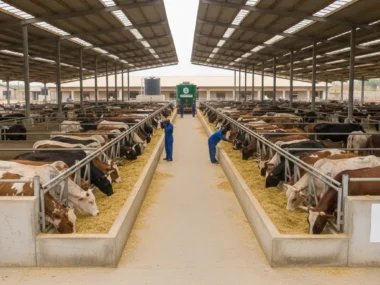
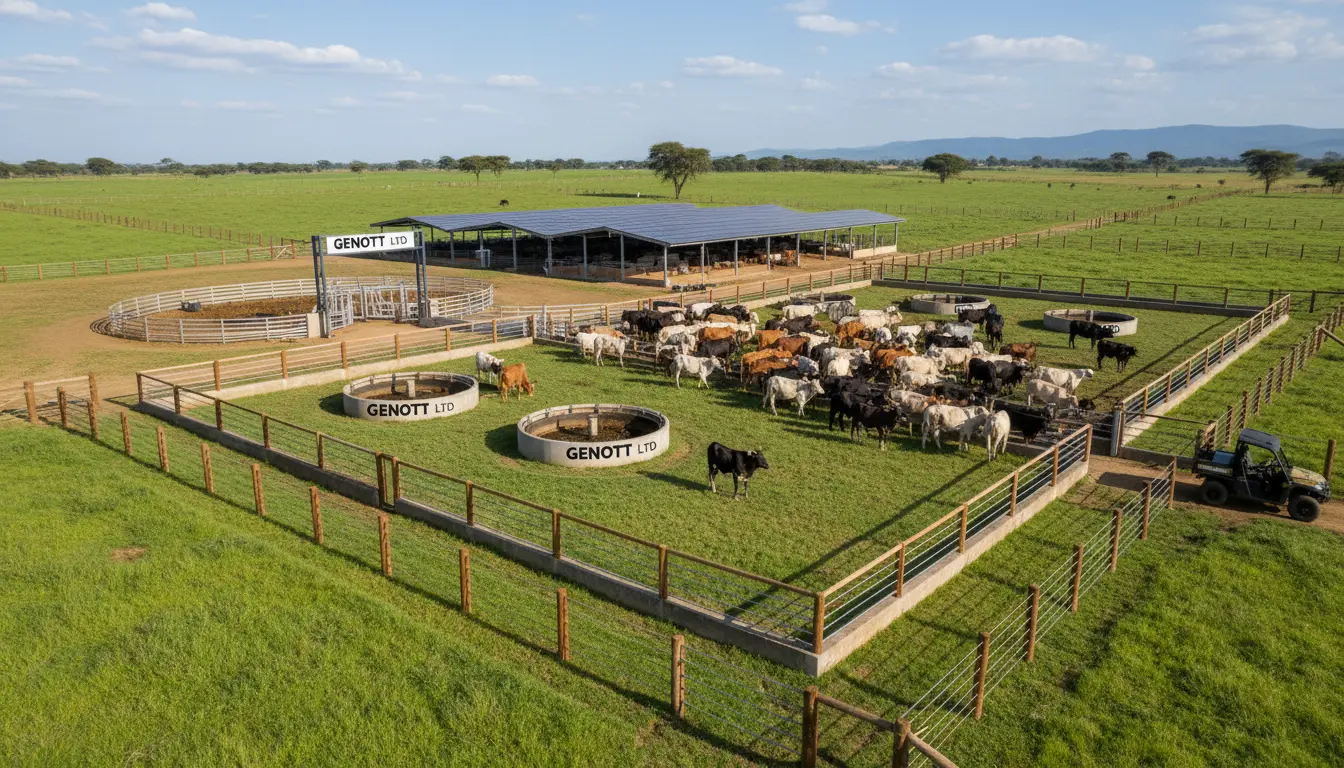
Livestock commercial farming Nigeria is shifting toward structured ranch systems to improve productivity and reduce conflicts associated with open grazing.
Step-by-Step Guide to Starting a Cattle Farm
1. Define Production Focus
Choose between:
-
Beef production business in Nigeria.
-
Dairy farming Nigeria profitability model.
Each requires different breed selection and infrastructure.
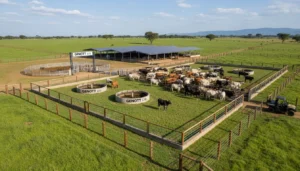
2. Ranch Model vs Grazing System
| Model | Advantages | Challenges |
|---|---|---|
| Traditional Grazing | Lower capital | Land conflict risks |
| Ranching | Controlled feeding, higher productivity | Higher startup cost |
Ranching investment Nigeria is gaining popularity due to sustainability and efficiency benefits.
3. Land Selection & Northern Nigeria Advantage
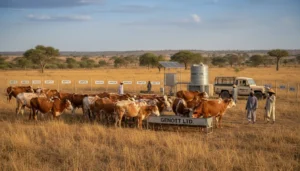
Northern regions such as Kaduna, Plateau, Kano, and Bauchi offer:
-
Extensive grazing land.
-
Lower land acquisition cost.
-
Favorable climate for cattle.
Southern markets like Lagos and Abuja offer premium selling prices.
4. Breed Selection
Common breeds:
-
White Fulani.
-
Sokoto Gudali.
-
Imported dairy breeds (Friesian crossbreeds).
Breed selection influences growth rate and milk yield.
5. Veterinary Cost Structure
Typical expenses:
-
Vaccinations.
-
Parasite control.
-
Regular health monitoring.
-
Artificial insemination (for dairy operations).
Preventive care reduces mortality and increases ROI.
Cost Analysis & Investment Insights
Example medium-scale ranch:
| Expense Category | Estimated Cost |
|---|---|
| Land acquisition | ₦20M |
| Infrastructure | ₦15M |
| Cattle stock | ₦30M |
| Feed & supplements | ₦10M annually |
| Veterinary care | ₦2M annually |
| Labour | ₦5M annually |
Projected revenue:
-
Beef sales: ₦40M – ₦70M yearly.
-
Dairy production (optional): Additional revenue stream.
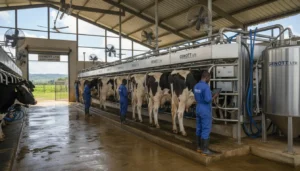
Dairy Processing Value Chain
Dairy farming offers strong import substitution potential.
Value chain opportunities:
-
Fresh milk supply.
-
Yogurt production.
-
Cheese processing.
-
Milk powder processing.
Processing increases margins compared to raw milk sales.
Beef vs Dairy Investment Comparison
| Factor | Beef Production | Dairy Farming |
|---|---|---|
| Capital Requirement | Medium | High |
| Revenue Frequency | Seasonal | Continuous |
| Management Complexity | Moderate | High |
| Market Demand | Strong | Growing rapidly |
Common Mistakes Nigerians Make
-
Underestimating feed cost.
-
Poor breed selection.
-
Lack of veterinary planning.
-
No clear market strategy.
-
Ignoring climate stress factors.
Expert Recommendations
-
Adopt semi-intensive or ranch models.
-
Integrate feed crop production.
-
Invest in water infrastructure.
-
Build partnerships with dairy processors.
-
Use technology for herd tracking.
Future Trends in Nigerian Cattle Farming
-
Commercial ranch development.
-
Climate-smart livestock management.
-
Dairy processing expansion.
-
Crossbreeding programs.
-
Integrated livestock value chains.
FAQs
1. Is cattle farming profitable in Nigeria?
Yes, especially when combined with dairy production.
2. How much capital is required?
Commercial operations may require ₦15M+ startup capital.
3. Which region is best for cattle farming?
Northern Nigeria offers favorable grazing conditions.
4. What is the biggest cost?
Feed and infrastructure.
5. Is ranching better than grazing?
Ranching provides better productivity and sustainability.
CONCLUSION
Cattle farming investment Nigeria presents strong long-term opportunities for investors seeking scalable livestock ventures. With growing demand for beef and dairy products, structured ranching models and integrated value chains offer significant profitability potential. Success depends on strategic planning, breed selection, feed management, and market positioning.
For professional livestock planning, ranch infrastructure development, and agribusiness investment strategy tailored to Nigerian conditions, GENOTT LTD provides expert guidance from concept to execution.


 GENOTT LTD Editorial Team