If you’re researching how to build a commercial ranch in Nigeria, you’re already thinking beyond “buy land and keep animals.” In Nigeria, a ranch succeeds or fails on infrastructure and compliance: water reliability in dry months, all-season truck access, security design, pasture planning, and the ability to move animals legally without delays at control points.
This is why serious investors are shifting toward more organised livestock systems. Nigeria’s National Livestock Transformation Plan (NLTP) is explicitly aimed at modernising livestock production, reducing unmanaged movement, and improving productivity across the value chain. But policy direction alone doesn’t build profitability—engineering and operations do.
Commercial ranching also has “Nigerian realities” you must design for: land title documentation (C of O and Governor’s Consent workflows), community issues, borehole licensing expectations for non-domestic water abstraction, climate pressure, and security risks that can erase margins overnight.
This guide is written in a builder-investor tone. It breaks ranch development into feasibility → land → site selection → masterplan → fencing → borehole/water grid → pens → internal roads → biosecurity/compliance → staffing/operations, with Nigeria-specific cost logic in ₦ and decision frameworks you can actually execute in Abuja, Lagos, Enugu and key ranch corridors.
SUMMARY TABLE
Topic
Key Insight
Notes
Feasibility
Ranch ROI is driven by water + feed + access + security
Start with a model + market route
Land titles
C of O/Deed/Survey + Governor’s Consent process matters
Don’t build on “weak title”
Water
Commercial boreholes may require permits/registration
NESREA regs address drilling permits
Pasture capacity
Stocking rate depends on ecology; measure carrying capacity
Example research reports ~0.6 TLU/ha/yr in Adamawa sites
Fencing
Perimeter is your biggest protection + cost lever
Choose spec based on threat level
Pens
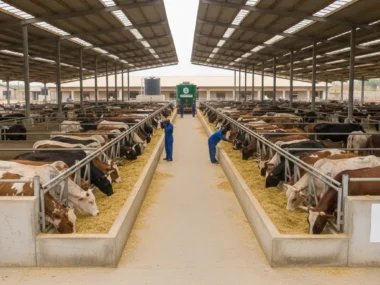
In tropics, open-sided ventilation and dry floors reduce disease
FAO housing guidance
Roads
If trucks can’t enter in rainy season, you lose money
Design drainage + culverts first
Compliance
Animal movement permits/health controls exist in law
Animal Diseases (Control) Act
What “Commercial Ranching in Nigeria” Really Means (and Why It’s Rising)
Commercial ranching in Nigeria is not just grazing on land. It’s an integrated asset that combines:
Land (real estate value + legal title strength)
Water system (boreholes, storage, distribution, redundancy)
Health + compliance (quarantine, vet plan, movement documentation)
Market access (abattoirs, processors, wholesalers, large buyers)
Nigeria’s NLTP is part of a national push toward organised livestock production and value chain modernisation. For investors, this signals that “structured systems” (ranches, feedlots, integrated models) are increasingly the reference point—not unmanaged production.
Investor truth: when people search how to build a commercial ranch in Nigeria, what they really need is an execution plan that survives:
dry season water stress,
feed price shocks,
rainy season logistics,
theft/security threats,
paperwork delays for animal movement.
Detailed Step-by-Step Breakdown: How to Build a Commercial Ranch in Nigeria (Investor Workflow)
Step 1: Commercial Ranch Feasibility Study (Market, Model, ROI Assumptions)
Before land purchase, lock 5 decisions:
Your livestock category Cattle-only, mixed cattle + sheep/goat, dairy, or finishing/aggregation.
Enugu/Anambra/Ebonyi belt: regional markets + cross-state distribution
Your water plan (non-negotiable) If water is weak, ranching fails. Nigeria’s water governance includes licensing/regulatory oversight for significant abstraction, and environmental regulations address borehole drilling permits/registration.
Your security profile Security isn’t a “later” item. It shapes fencing spec, staffing, lighting, and layout.
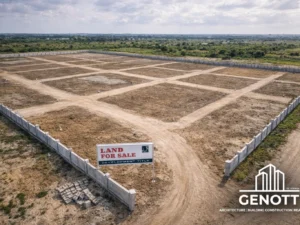
Step 2: Land Acquisition for Ranching (C of O, Survey Plan, Deed, Governor’s Consent + Community Issues)
This is the part many investors rush—then regret for years.
Core legal reality (high level):
Nigeria’s land tenure system is heavily influenced by the Land Use Act framework, and “Governor’s consent” requirements commonly arise in transfers of statutory rights of occupancy (practically, this shows up in many state workflows).
A commercial ranch site is “good” only if it passes these tests:
A) Water feasibility
Hydrogeology and borehole yield expectations
Storage capacity sized for herd + staff + cleaning
Redundancy (backup pump, backup storage)
B) Soil and flood risk
Avoid low-lying flood-prone zones for your core infrastructure
Plan drainage and erosion control from day one
C) Grazing capacity (carry your animals, not your emotions)
Stocking rate depends on rainfall, pasture species, management, and season. Nigeria research on grazing sites can show stocking rate metrics around ~0.58–0.62 Tropical Livestock Unit (TLU) per hectare per year in specific Adamawa sites—use as a reminder that carrying capacity can be lower than many people assume. Investor move: measure biomass / forage plan, then stock conservatively.
Keep grazing cells simple shapes where possible (reduces fence length)
Plan water access: grazing system references often recommend keeping travel distance to water short; NRCS guidance cites a goal of <800 ft for beef cattle in many designs (contextual benchmark). Use it as a design reference—then adjust to your terrain, herd class, and water cost.
How to Build a Commercial Ranch in Nigeria
Step 5: Ranch Fencing in Nigeria (Chain Link vs Barbed Wire vs Electric Fence)
Your fence is:
security,
animal control, and
property boundary enforcement.
Fence options (decision table)
Fence type
Best use
Pros
Cons
Typical Nigeria use-case
Barbed wire + posts
Large perimeters
Lowest cost per meter
Weaker against serious intruders
Low-to-medium threat areas
Chain link
Core zones
Stronger physical barrier
Higher material + labor
Farm headquarters perimeter
Electric fence
Inner paddocks/anti-intrusion layers
Effective deterrent when designed right
Needs power, maintenance, professional install
High-value ranch cores
Cost reality: fencing prices vary by state, steel prices, labor, and security risk. Use a BoQ method:
Perimeter length × (materials per meter + labor per meter) + gates + corners + lighting + contingency.
If you need “market quote anchors,” some Nigeria-specific vendor guides publish broad ranges, but treat them as indicative only and verify locally. Investor rule: never approve fence cost without a site perimeter measurement + BoQ.
How to Build a Commercial Ranch in Nigeria
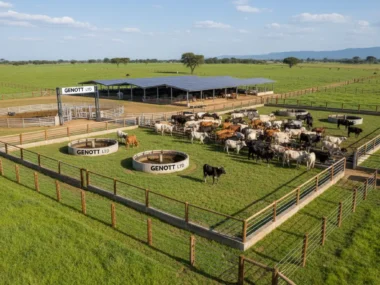
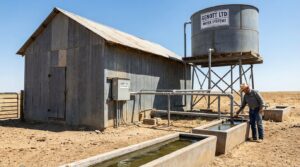
Step 6: Borehole & Water Grid Design (Yield Tests, Storage, Troughs, Solar Pumps)
Water is your ranch’s “electricity.” No water = no livestock.
Compliance and licensing (Nigeria context)
Nigeria’s environmental regulations address borehole drilling permits and registration, with exemptions typically framed around personal domestic use—commercial ranching is not “domestic.” Nigeria also has water governance institutions that license and regulate significant abstraction.
Cost anchors (Nigeria example)
Oyo State announced a controlled rate of ₦14,000 per meter for borehole drilling (statewide control price), illustrating how pricing and regulation can be state-specific.
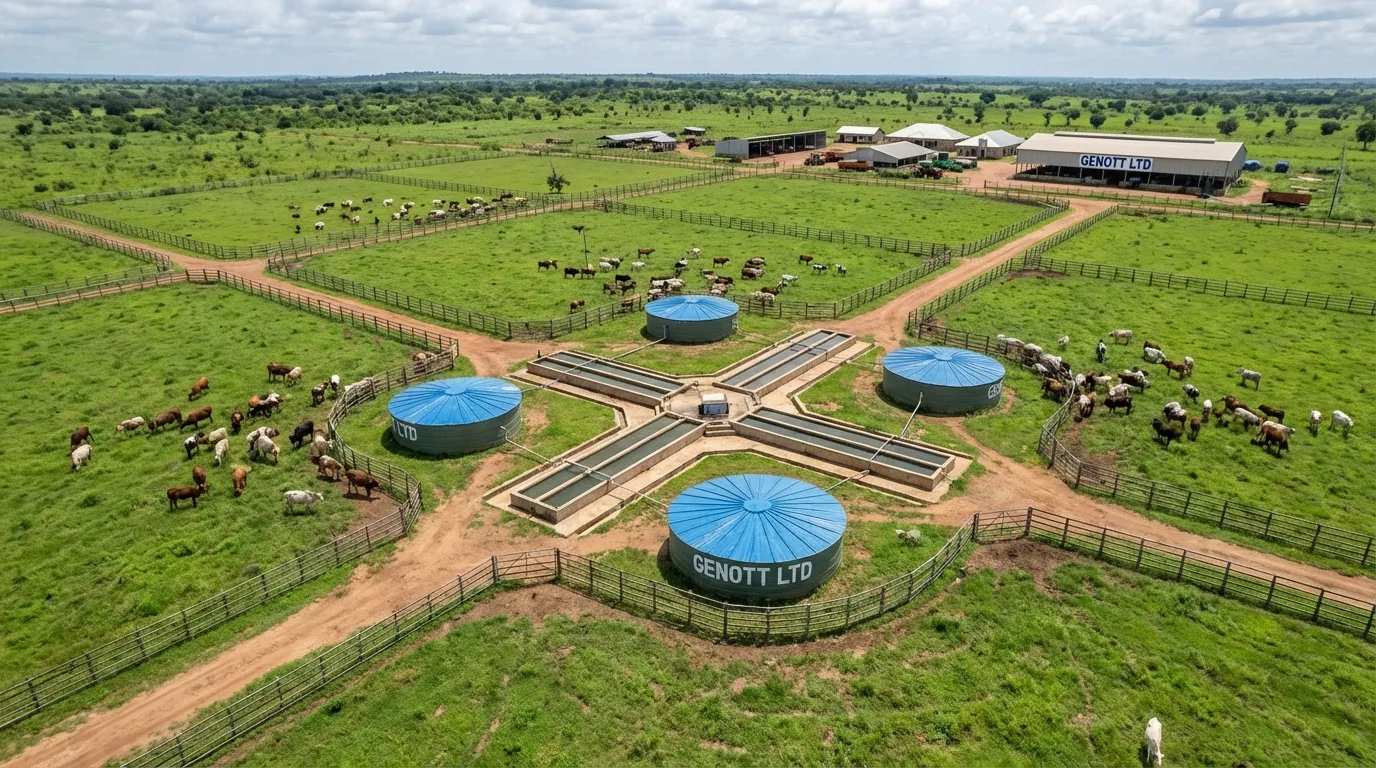
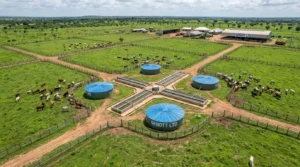
Water grid design (bankable minimum)
Borehole(s) sized for peak demand
Overhead tank storage + reserve tank
Trough network (distributed to reduce walking distance)
Backup power plan (solar + generator hybrid for critical systems)
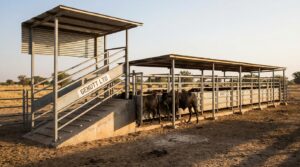
Tropical housing principles
FAO livestock housing guidance notes that in the tropics, sufficient airflow is often achieved using open-sided structures, with ventilation designed to remove heat and moisture. Practical build implications:
Nigeria ranches don’t fail only from “animal problems.” They fail because trucks can’t enter during rains.
Road design decisions
Laterite roads: cheaper, require drainage and periodic maintenance
Concrete segments: expensive but strategic for high-traffic areas (loading bay, core roads)
Minimum engineering rule: drainage first.
Side drains
Culverts at crossing points
Stabilised base at soft spots
Investor KPI: If your design can’t handle rainy-season operations, your market access collapses when prices may be best.
Step 9: Biosecurity & Animal Movement Compliance (Quarantine, Vet Checks, Permits, Records)
Commercial ranches must run like regulated systems.
Animal movement compliance
Nigeria’s Animal Diseases (Control) framework includes inspection stations/control posts and movement permit expectations for trade animals. Practical implication:
Maintain health records
Plan for vet checks
Keep documentation ready during transport
Biosecurity minimum SOP
Quarantine new animals (separate pen, tools, water point)
D) Cost “math” investors should use (instead of guessing)
Fencing cost = Perimeter length × cost per meter + gates + corners + lighting + contingency
Water cost = (borehole drilling + casing + pump + tanks) + distribution network + backup
Road cost = length × road type + culverts + drainage + maintenance plan
Comparisons & Alternatives (Tables): Ranch vs Feedlot vs Hybrid
Model
Best fit in Nigeria
Advantage
Main risk
Ranch (managed grazing)
Land-advantaged areas
Lower feed purchase exposure
Water + security + pasture capacity
Feedlot (intensive)
Near Lagos/Abuja markets
Fast turnover, uniform finishing
Feed price volatility
Hybrid
Most scalable
Balanced risk, stronger cashflow
Requires discipline + planning
If your main concern is price shocks, hybrid systems often give the best resilience (pasture base + finishing strategy).
Common Mistakes Nigerians Make When Building Ranches
Buying land first, then “figuring out water later” (fatal)
Building pens without drainage (wet floors = health costs)
Underestimating perimeter and fencing cost (perimeter math ignored)
No rainy-season access plan (trucks fail you when you need sales)
Weak title documentation and no professional due diligence
No quarantine pen (disease introduction risk)
No movement documentation discipline (delays at control points)
Security treated as optional (losses destroy ROI)
Expert Recommendations
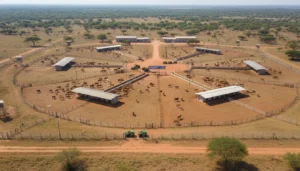
1) Build a “ranch masterplan” before construction
paddocks, laneways, water points, HQ core, handling facility, roads
expansion-ready design (phase 1 → phase 2)
2) Use a BoQ (Bill of Quantities) and cost controls
line-by-line materials and labour
procurement plan (cement, steel, pipes, pumps)
10–15% contingency (Nigeria price volatility)
3) Treat compliance as part of engineering
water licensing/registration expectations for non-domestic abstraction
animal movement permit readiness
4) Consider environmental approvals for large projects
Nigeria has an Environmental Impact Assessment (EIA) framework; larger developments may need EIA processes/certification depending on category and location.
Future Trends & Strategic Insights (2026+)
More organised livestock systems aligned with NLTP direction
Stronger water governance and licensing focus on abstraction sustainability
Traceability and compliance increasingly required for serious offtake and cross-state supply
FAQs
1) What is the first step in how to build a commercial ranch in Nigeria?
Start with a feasibility study that locks your model, market route, water plan, perimeter size, and security profile before buying land.
2) What land documents are important for ranch land requirements in Nigeria?
Common requirements include survey plan, deed of assignment, title verification, and consent/registration workflows depending on state and transaction structure.
3) How much does ranch fencing cost in Nigeria?
It depends on perimeter length and fence spec (barbed wire vs chain link vs electric). The investor method is BoQ-based: perimeter × unit rate + gates + corners + lighting + contingency.
4) What is the borehole cost for a ranch in Nigeria?
Costs depend on depth, geology, casing, pumps, and storage. Some states have announced benchmark control pricing (example: Oyo pegged ₦14,000 per meter).
5) Do I need permits to drill boreholes for a commercial ranch?
Environmental regulations and water governance frameworks address borehole drilling permits/registration and licensing for significant abstraction—commercial ranching should plan for compliance early.
6) What is the best pen design approach in Nigeria’s climate?
Open-sided, well-ventilated housing with strong drainage and shade generally performs well in tropical conditions.
7) What documents are needed when transporting livestock across states?
Nigeria’s Animal Diseases (Control) framework includes movement permit expectations for trade animals at inspection stations/control posts.
CONCLUSION
Learning how to build a commercial ranch in Nigeria is really about learning how to build a system—not just buying land and keeping animals. The bankable ranch is the one that can operate through rainy-season access problems, dry-season water stress, security risks, and compliance realities. When you get the fundamentals right—strong land documentation, measured pasture capacity, a redundant water grid, practical fencing, ventilated pens, and engineered internal roads—you turn ranching into an investable asset with predictable operations.
Build it in phases, keep records like a commercial operator, and treat infrastructure as your “profit protection layer.”
For professional support, GENOTT LTD provides expert guidance in ranch feasibility studies, land/site due diligence, ranch masterplanning, fencing and security design, borehole and water-grid planning, pen construction, and all-season farm road access design.
 GENOTT LTD Editorial Team

 GENOTT LTD Editorial Team