 GENOTT LTD Editorial Team
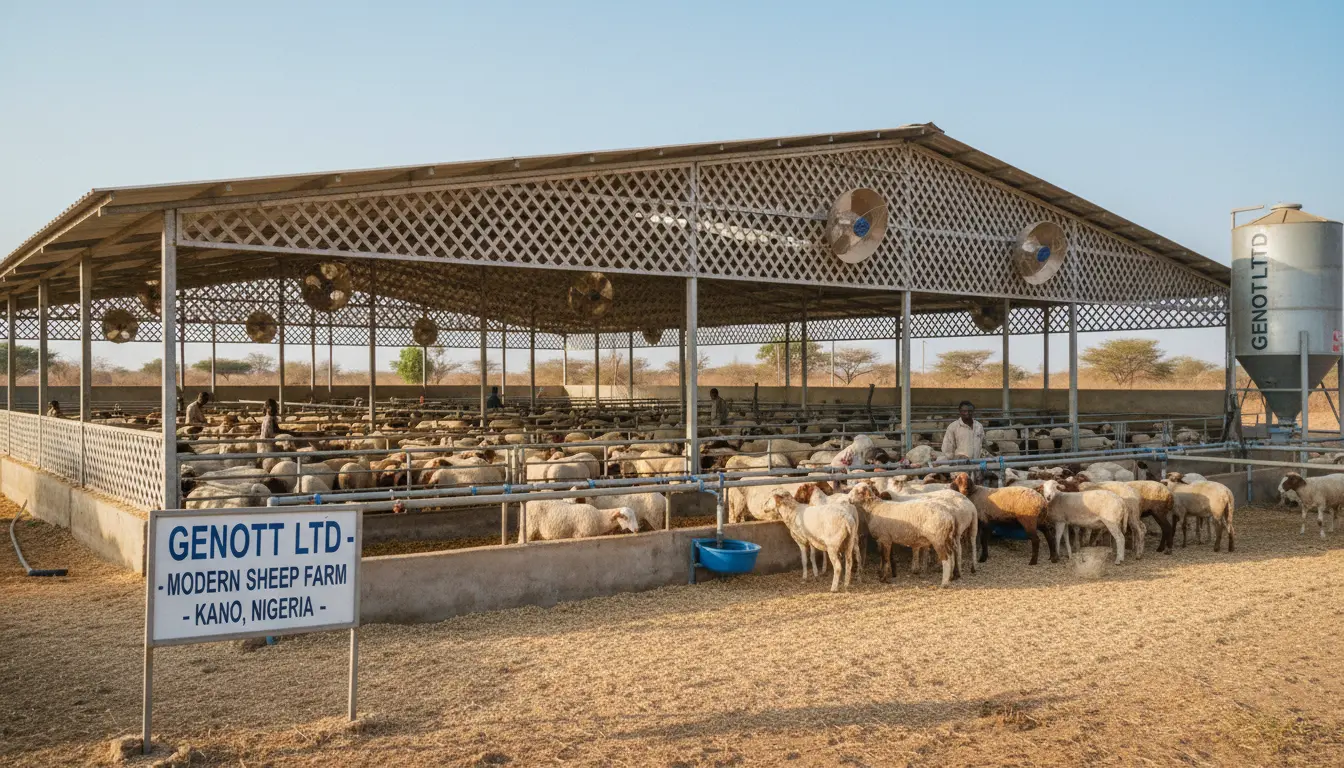
Sheep farming investment Nigeria is one of the few agribusiness plays where timing can matter almost as much as technique. If you’ve ever watched ram prices in Lagos, Abuja, or Enugu jump as major festivities approach, you already understand the core opportunity: sheep has predictable demand spikes (especially around Eid al-Adha/Sallah) and steady year-round demand from homes, restaurants, and event catering.
But Nigeria’s reality also punishes sloppy planning. Feed price volatility, theft risk, transport stress, and weak housing design (poor ventilation, wet floors, overcrowding) can quietly erase profits. Many new farmers also buy the wrong breed for their climate zone or start too big without cashflow discipline.
This guide breaks the investment down the way a serious investor would: production model → location choice (including semi-arid zones) → breed and breeding structure → infrastructure and cost → revenue timing → risk/legal compliance → profitability scenarios. Nigeria’s sheep population and value chain are already massive—recent national farm survey reporting puts sheep in the tens of millions, underscoring the market’s depth.
SUMMARY TABLE
| Topic | Key Insight | Notes |
|---|---|---|
| Market timing | Biggest price spike is usually Eid al-Adha | Plan finishing to hit peak weeks; avoid forced “rush feeding” |
| Best zones | Semi-arid North favors pasture-based growth | Sokoto/Katsina/Kano axis has strong livestock culture |
| Breed choice | Match breed to climate + goal (meat size vs hardiness) | Balami/Uda larger; WAD thrives in humid zones |
| Breeding math | Gestation averages ~146–147 days | Enables planned lambing cycles |
| Biggest cost leak | Feed + health issues + weak housing design | Wet floors = parasites; poor fencing = theft |
| Compliance | Animal movement may require permits/health checks | Movement permit framework exists in law |
Sheep Farming Investment in Nigeria: Why It’s Still a Strong Bet
Nigeria’s sheep economy is driven by three durable forces:
-
Cultural + festive demand
Sheep (especially rams) are strongly tied to Eid al-Adha, and demand remains resilient even when prices rise. Recent reporting shows buyers adjusting by buying smaller rams or pooling funds, but demand still holds. -
Urban protein demand
Cities like Lagos and Abuja keep meat demand high through restaurants, suya spots, pepper-soup joints, and event caterers. That demand doesn’t disappear after festive peaks—it just normalizes. -
A large national base and wide value chain
Nigeria’s livestock numbers are huge, with sheep counted prominently in national farm survey reporting—meaning there’s an established ecosystem of traders, abattoirs, transporters, feed suppliers, and veterinary services.
The investor mindset: you’re not “just rearing sheep.” You’re building a small value chain: land (real estate) + housing (construction) + production (agriculture) + movement (transport/logistics). Done right, it’s one of the most “systems-driven” livestock businesses in Nigeria.
Nigeria’s Sheep Market: Seasonal Pricing Cycles, Demand Spikes & What They Mean for Profit
1) The “Eid effect” (the biggest spike)
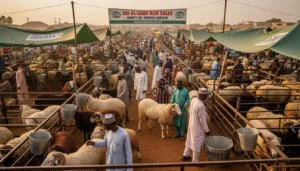
Across Nigeria, ram pricing can surge sharply approaching Sallah. Reports from 2025 show rams commonly starting from hundreds of thousands of naira, with wide variation by size and market.
This matters because your profit is often made in 3–6 weeks of timing, not in 12 months of effort.
Actionable takeaway:
-
If you’re fattening, structure your purchase and feeding so animals peak 4–8 weeks before Eid, then hold/market into the peak window (without overcrowding or stress).
2) Secondary peaks: Christmas/New Year + wedding/event season
-
December demand rises from holiday celebrations, family travel, and events.
-
“Weekend markets” spike around paydays in Lagos/Abuja corridors.
3) Off-season realities (where smart farmers buy, not sell)
The off-season is typically when:
-
breeding stock is easier to find,
-
prices are less emotional,
-
you can negotiate transport and supply more calmly.
Investor rule: Sell into emotion (peak demand). Buy into calm (off-season).
Step-by-Step: How to Start Sheep Farming in Nigeria the “Investor Way”
Step 1: Choose your model (this determines your costs)
A) Breeding model (slow build, compounding returns)
-
You keep breeding ewes, sell weaners/fattened rams, and expand herd size.
B) Fattening model (faster cash cycles)
-
You buy lean rams/weaners, feed intensively for 60–120 days, sell into peak markets.
C) Hybrid (best for many Nigerians)
-
A breeding base (ewes) + seasonal fattening batches for Eid/December.
Step 2: Pick a location based on (Market + Feed + Security + Water)
Your land choice is a real estate decision as much as an agricultural one. Prioritize:
-
Access to a major market route (e.g., Abuja–Kaduna–Kano corridor, Lagos–Ibadan axis, Enugu–Onitsha axis)
-
All-season road access (transport cost is a silent killer)
-
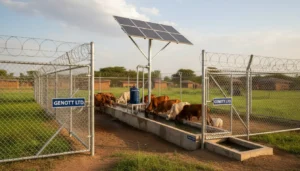
Reliable water (borehole/solar pump planning)
Sheep Farming Investment Nigeria
Step 3: Set your target market before buying animals
-
Eid ram buyers: want size, appearance, and weight.
-
Butchers/abattoirs: care about dressed yield and consistency.
-
Restaurants: want regular supply, not only festive peaks.
Step 4: Build housing that matches Nigeria’s climate (don’t copy random pen designs)
Bad housing causes:
-
pneumonia (poor ventilation),
-
foot rot (wet floors),
-
parasite load (dirty bedding),
-
slow growth (heat stress).
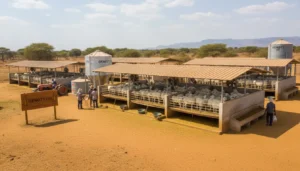
Minimum standard (semi-intensive):
-
Raised/sloped floor or well-drained concrete with bedding management
-
Cross-ventilation and shade
-
Dry feed storage
-
Quarantine corner for new animals
(This is where GENOTT LTD’s construction and farm layout expertise becomes a competitive advantage.)
Breeding Structure: Breeds, Flock Composition & Reproduction Planning
1) Common Nigerian breeds and what they’re best for
-
Balami: known as a large, fast-growing northern breed with strong weights reported in literature.
-
Uda: distinctive coat pattern; commonly kept in northern systems and valued for meat.
-
Yankasa: widespread and adaptable across many Nigerian systems (mid-size, hardy).
-
West African Dwarf (WAD): strongly associated with humid/sub-humid zones, suited to southern environments.
Practical Nigeria rule:
-
North / semi-arid: Balami/Uda/Yankasa do well, with pasture advantage.
-
South / humid: WAD or crosses can outperform due to humidity tolerance.
2) Gestation, lambing, and planning your calendar
Sheep gestation is commonly around 146–147 days (about 5 months), with normal variation.
This lets you plan lambing so that:
-
weaners are ready for fattening into Eid/December, or
-
you stagger lambing to spread cashflow.
3) A simple flock structure for profitability
For a hybrid model:
-
60–70% breeding ewes
-
2–5% breeding rams (depending on management)
-
rest = growers/fattening stock
Record-keeping is non-negotiable: breeding date, lambing date, treatments, weights, mortalities. You can’t optimize what you don’t measure.
Semi-Arid Farming Zones: Where Sheep Farming Performs Best (and Why)
Nigeria’s semi-arid and savanna belts often provide:
-
more natural grazing resources,
-
lower humidity pressure (fewer moisture-driven parasite problems),
-
established livestock market culture.
High potential zones:
Sokoto, Katsina, Kano, Jigawa, Kebbi, Zamfara, Kaduna (parts), Bauchi, Gombe, Yobe, Borno (security-dependent).
But: profitability is not “North only.” Southern farms can win by:
-
tighter housing design,
-
deliberate parasite control,
-
cut-and-carry fodder systems,
-
stronger proximity to high-paying urban buyers (Lagos/PH/Enugu).
Cost Analysis: Startup Cost & Running Cost (₦) for Small, Medium, and Commercial Setups
Important: Nigeria’s prices move with inflation, FX, seasonality, and location. Treat these as realistic planning ranges—your job is to price locally and build a buffer.
A) Typical startup cost drivers
-
Land access (lease or purchase)
-
Lease is often smarter for beginners; purchase makes sense if you’re building a long-term integrated farm estate.
-
Housing + fencing (construction-heavy)
-
Pens, drainage, roofing, feeding troughs, store, water system
-
Security lighting and perimeter fencing (theft risk is real)
-
Foundation stock
-
Ewes + ram(s) or fattening stock batch
-
Working capital
-
Feed, vet, transport, labor for at least 2–4 months
B) Sample budget table (planning ranges)
| Scale | Example Herd | Housing + Fence | Stock Purchase | Water/Storage | Working Capital | Rough Total Range |
|---|---|---|---|---|---|---|
| Small | 10 ewes + 1 ram | ₦600k–₦1.8m | ₦900k–₦2.2m | ₦250k–₦900k | ₦400k–₦1.2m | ₦2.15m–₦6.1m |
| Medium | 50 ewes + 2 rams | ₦2.5m–₦7m | ₦4.5m–₦10m | ₦600k–₦2m | ₦1.5m–₦4m | ₦9.1m–₦23m |
| Commercial | 200 ewes + 8 rams | ₦10m–₦28m | ₦18m–₦45m | ₦2m–₦6m | ₦6m–₦15m | ₦36m–₦94m |
C) Monthly operating cost snapshot (big buckets)
-
Feed supplementation (especially dry season)
-
Vet + deworming schedule + occasional treatments
-
Labor (herdsman/attendant)
-
Transport (to markets, vet visits, input pickup)
-
Bedding/cleaning and repairs
Studies on small ruminant production in Nigeria consistently highlight capital/credit, land access, pests/diseases, and feed shortages as top constraints—so cost planning must treat these as “core,” not “afterthought.”
Profitability: How Sheep Farms Actually Make Money in Nigeria (With Realistic Scenarios)
Profit in sheep farming comes from one or more of these:
1) Fattening profit (fast-cycle)
Concept: Buy lean animals off-season → feed for 60–120 days → sell into festive peak.
Your profit levers:
-
buying price timing,
-
feed efficiency,
-
mortality control,
-
market channel (direct buyers pay more than middlemen).
2) Breeding profit (compounding)
Concept: Each ewe is a “production unit.” Over time, your herd can grow while you sell surplus males and cull older females.
Your profit levers:
-
lamb survival rate,
-
lambing interval management,
-
forage planning to reduce purchased feed.
A well-finished ram sold during peak demand can command significantly higher prices than the same animal in an off-peak month; reporting around Sallah shows the market can be volatile and expensive for buyers.
So, serious farms plan finishing cycles like a business plans inventory.
A simple profitability reality check
A sheep business is attractive when you can consistently achieve:
-
high survival rates (management discipline),
-
low feed waste (storage + ration control),
-
planned sales windows (avoid distress selling).
Legal/Regulatory & Risk Management Nigerians Ignore (Until It Costs Them)
1) Animal movement and documentation
When moving livestock for trade across routes/control points, Nigeria’s legal framework includes movement permits and related compliance expectations for trade animals.
In practical terms, large-scale movement may involve engagement with veterinary/animal health authorities—especially if you’re supplying institutional buyers or transporting across long distances.
2) Business and land structure (investor-grade)
-
CAC registration (for access to contracts, financing, and credibility)
-
Clear land documentation (lease agreements, community approvals, survey where needed)
-
Basic insurance exploration (where available) for theft/fire
3) Biosecurity (your cheapest insurance)
-
Quarantine new arrivals
-
Control visitor movement
-
Clean water source
-
Routine health schedule (with a vet or trained extension officer)
Comparisons & Alternatives: Sheep vs Goat vs Cattle vs Poultry (Nigeria Investor View)
| Factor | Sheep | Goat | Cattle | Poultry |
|---|---|---|---|---|
| Startup scale | Flexible | Very flexible | Capital-heavy | Flexible |
| Market peaks | Very strong (Eid) | Strong | Strong but expensive | Constant demand |
| Feed pressure | Medium–High | Medium | Very High | High (concentrates) |
| Disease risk | Moderate (parasites) | Moderate | High impact events | High (outbreak sensitivity) |
| Best for | Eid + steady meat | Hardy, browse feeders | Big capital players | Fast cycles |
Investor takeaway:
If your edge is timing + housing + logistics, sheep is often one of the best “structure + market cycle” businesses in Nigeria.
Common Mistakes Nigerians Make in Sheep Farming (That Kill Profit)
-
Buying the wrong breed for the zone (humid south + northern breed with weak housing = losses)
-
Underbuilding housing (poor drainage/ventilation leads to slow growth and health issues)
-
No finishing plan (selling randomly instead of into peak windows)
-
No feed strategy for dry season (fodder scarcity forces expensive last-minute buying)
-
Weak fencing/security (theft wipes out months of work)
-
No records (you can’t identify your profitable animals or fix leakages)
-
Transport stress ignored (overcrowding + heat → weight loss before sale)
-
Overexpansion (starting big without working capital buffer)
Expert Recommendations (GENOTT LTD Standard): How to Build a Profitable Sheep Operation
1) Design the farm like an “asset,” not a hobby
-
Layout: pens, quarantine, store, water point, loading bay, manure zone
-
Drainage: keep pens dry (especially in Lagos/Enugu rainy months)
-
Security: perimeter fence + lighting + controlled entry
Sheep Farming Investment Nigeria
2) Build a feed plan around your ecology
-
Semi-arid: pasture + strategic supplementation
-
Humid south: cut-and-carry fodder + tighter parasite control (WAD/cross advantage)
3) Market channel strategy (this is where margins widen)
-
Direct sales to families (especially pre-Eid)
-
Restaurants/butchers on contract supply
-
Bulk buyers in Lagos/Abuja who pay for consistency
Sheep Farming Investment Nigeria
4) Treat transport as part of production
Stress during transport can reduce weight and value. If you’re scaling, plan:
-
loading space and ramps,
-
shaded waiting area,
-
reliable vehicle access (farm road/parking design).
Future Trends & Strategic Insights (2026 and Beyond)
-
More intensive “urban-edge” farms supplying Lagos/Abuja with consistent volumes
-
Better data and farm surveys shaping policy and investment (Nigeria is pushing data-driven agriculture planning).
-
Feed innovation and pasture development to reduce dependence on expensive concentrates
-
Digital livestock marketplaces (more price transparency; faster buyer matching)
-
Higher compliance expectations for large-scale movement and institutional supply
FAQs
1. What is the minimum capital to start sheep farming investment in Nigeria?
You can start small, but a realistic, well-structured setup often needs working capital plus basic housing—commonly ₦2m+ depending on location and stock quality.
2. Which Nigerian states are best for sheep farming?
Semi-arid and savanna states (e.g., Sokoto, Katsina, Kano, Jigawa, Kebbi) often have strong pasture advantages, while southern states can still perform with better housing and parasite control.
3. Which sheep breed is best for Lagos or the humid South?
West African Dwarf (WAD) and suitable crosses are commonly associated with humid/sub-humid suitability.
4. How long does it take for sheep to reproduce?
Gestation is commonly around 146–147 days, so breeding can be planned in cycles.
5. When is the best time to sell rams in Nigeria?
The strongest seasonal peak is typically Eid al-Adha (Sallah), with additional demand in December. Recent reporting shows Sallah periods can push ram prices very high.
6. Is sheep fattening more profitable than breeding in Nigeria?
Fattening can return cash faster, while breeding compounds herd value over time. Many Nigerian farms do best with a hybrid model (breeding base + seasonal fattening).
7. Do I need documents to transport sheep across states in Nigeria?
For trade movement, Nigeria’s legal framework includes movement permits and related compliance for trade animals.
8. What is the biggest risk in sheep farming in Nigeria?
Usually a mix of feed cost volatility, disease/parasites, and theft/security—all of which are manageable with planning and infrastructure.
CONCLUSION
Sheep farming can be a strong Nigerian investment when you treat it like a planned supply business, not an emotional “keep animals and hope” project. The winning formula is consistent: right zone + right breed + dry housing + disciplined feed strategy + planned selling into peak demand. Sallah demand spikes can be powerful, but they only reward farmers who prepared months earlier—not those rushing to “finish” animals in the final weeks.
If you build the operation with investor-grade infrastructure and a real sales calendar, sheep farming investment in Nigeria can deliver steady cashflow, scalable herd growth, and predictable seasonal profit windows.
For professional support, GENOTT LTD provides expert guidance in farm site selection, livestock farm layout, pen construction, fencing, water systems, access road planning, and logistics strategy—helping you build a sheep operation that is profitable, compliant, and scalable.

 GENOTT LTD Editorial Team